teakettle31

A Site To Catalog My Aircraft Adventures

  • About
    • About This Website
    • About Me
    • About My Favorite Aircraft
  • Aircraft I’ve Flown Organized By…
    • Mil/Civ Type
      • Airplane Single-engine Piston
      • Airplane Multi-engine Piston
      • Airplane Single-engine Turboprop
      • Airplane Multi-engine Turboprop
      • Tactical Jets
      • Large Jets
      • Business Jets
      • Helicopters
      • Gliders
      • Lighter than air
      • Other
    • Order Flown
      • Order Flown: 1-25
      • Order Flown: 26-50
      • Order Flown: 51-75
      • Order Flown: 76-100
      • Order Flown 101-125
      • Order Flown: 126-150
      • Order Flown: 151-175
      • Order Flown: 176+
  • Other Content
    • Favorite Links
    • Documents
    • My Store
  • Flight Test Services

Cessna 208 Caravan

July 22, 2026 by Bob Stoney Leave a Comment

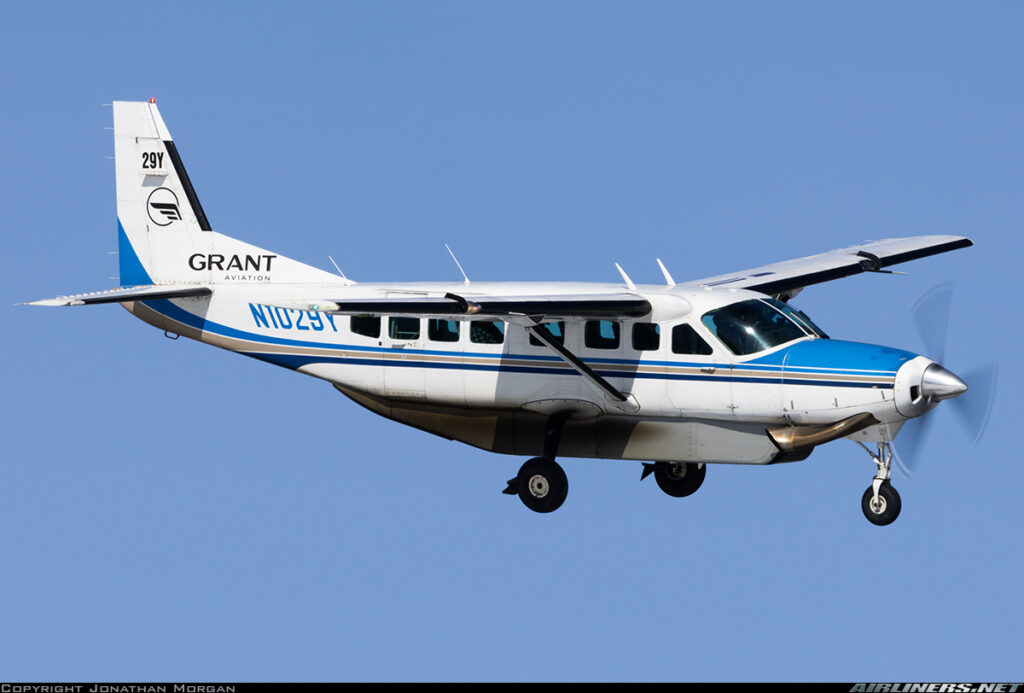
Cessna 208 Caravan I (stock photo)
(c) airliners.net, Jonathan Morgan

Aircraft Information
> Aircraft Make: Cessna Model: 208. Nickname: Caravan
> Aircraft Mil Civ Description: Airplane SE Turboprop
> FAA Category and Class: Airplane SE Land
> Engine Description: Single P&W PT6

Aircraft Experience
> As of: 11/2/2024
> Number of Hours Flown: 14
> Number of Times Flown: 10
> Other Aircraft Models Associated: 208, 208A, 208B

First Flown Information
> Sequence First Flown: 125
> Date First Flown: 6/21/2002
> Location First Flown: Wichita Mid-Continent Airport, KS (KICT)
> Who and/or What Organization First Flown With: Cessna Aircraft, Dale Bleakney

Recollections: My first flight in the Caravan was to evaluate a system in development called “Flight Information Service-Broadcast” (FIS-B).  FIS-B is a series of ground stations that transmit information about weather and traffic to aircraft equipped with the proper receiver and displayed on an aircraft’s multi-function display (MFD).  This system is now fully established and very useful…back then it was new, and magic.  I do not recall who the manufacturer of the FIS-B equipment was when I flew in the Caravan, but it was likely either Garmin or King (Honeywell).  I was lucky enough to be in flight test in Wichita when many of these new avionics systems were being developed and, coming out of the military, I learned a LOT.
Filed Under: 101-125, Airplane SE Turboprop, Complete

Quest Kodiak 100

July 22, 2026 by Bob Stoney Leave a Comment

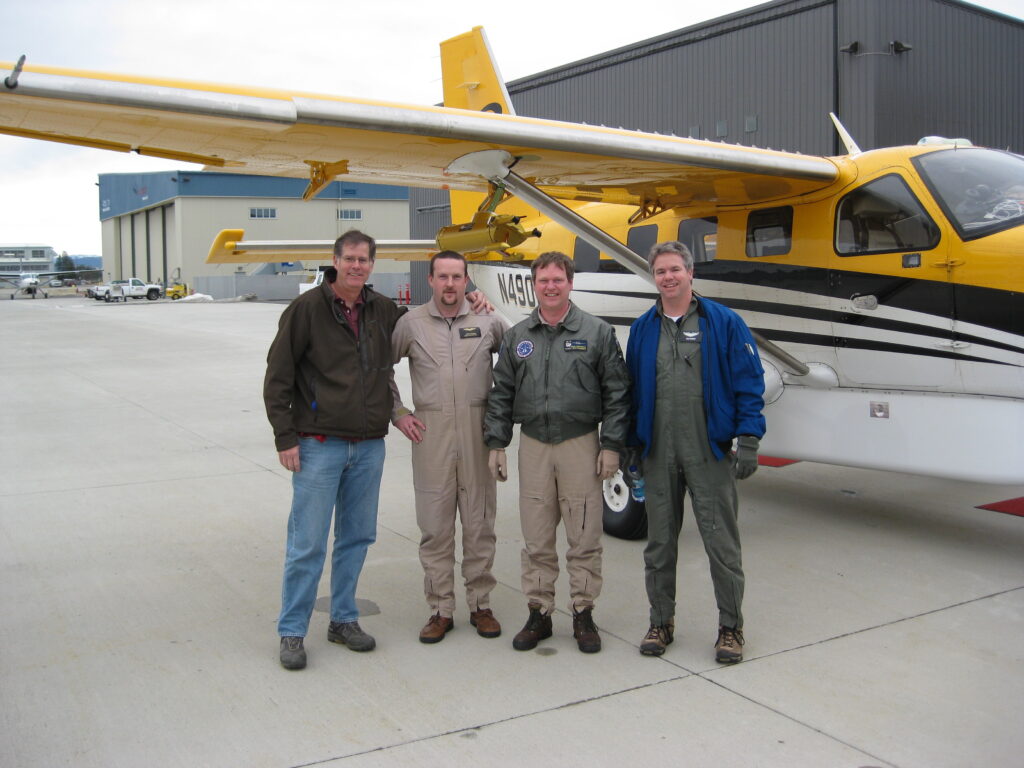
Kodiak 100 Natural Icing test crew 2010
(c) Bob Stoney

Aircraft Information
> Aircraft Make: Quest (Later Daher) Model: 100 Nickname: Kodiak
> Aircraft Mil Civ Description: Airplane SE Turboprop
> FAA Category and Class: Airplane SE Land
> Engine Description: Single P&W PT6A-34

Aircraft Experience
> As of: 11/2/2024
> Number of Hours Flown: 48
> Number of Times Flown: 20
> Other Aircraft Models Associated: Kodiak 200

First Flown Information
> Sequence First Flown: 160
> Date First Flown: 5/30/2007
> Location First Flown: Washington State Airports in the Cascade Mountains
> Who and/or What Organization First Flown With: Quest Aircraft, Bruce Barrett, Steve Zaat, John Hed

Recollections: Quest Aircraft Company was founded by Tom Hamilton and David Voetmann in the early 2000’s to design, fly and produce aircraft for Missionary use.  One of their designers was Evan Mortenson, the son of Carl Mortenson (refer to my writeup on the Angel Model 44 Missionary aircraft).  By 2007 the basic aircraft had been Type Certified by the FAA, no small feat for a relatively small company located in Sandpoint, Idaho.  The FAA website shows that the type certificate was awarded on May 31, 2007 and my first flight was the day before, performing “Function and Reliability” (F&R) testing.  Reviewing my logbook, I also flew on May 31 and Jun 1, also doing F&R.  This last-minute rush is not atypical of many certification programs.  The companies need to sell their product and they promise their customers a certain date for the TC.  It’s very common for the airplane to be initially certified with notable limitations such as Day only, VFR only, no flight in icing, etc.  The FAA has a potentially difficult job to both NOT cut corners, while providing timely service to US manufacturers.  Flight test (including F&R) is often the last step but Flight Testers are very good and compartmentalizing their jobs and not bowing to inappropriate pressure.

My first flight in the Kodiak involved an F&R profile called (in the Test Plan) “Backcountry Workhorse”.  I flew the airplane, for the first time into 7 airfields in the course of a 3.8 hour flight (BFI, PWT, W28, S43, S31, WA09, ORS, BFI).  An amazing demonstration for me.  All the while we (the FAA flight test team generally includes a Flight Test Engineer and on this flight I was accompanied by John Hed) were taking notes, evaluating the airplane and–mostly–looking for things that broke or didn’t work.  My recollection is that the flight was clean, with no issues.  I had flown the similarly configured Cessna Caravan and the Kodiak was–like the Cessna–a very solid and easy to fly airplane.  I liked its ground handling better than the Caravan (which has a tendency for high pedal forces when doing tight turns on the ground) and the Caravan had a “thrust cliff” often seen during final approach to land where a small reduction in power flattened the prop enough and to cause a nonlinear and relatively large increase in drag.  The Kodiak did not exhibit this characteristics.  The flight included landings on very rough grass and dirt fields.

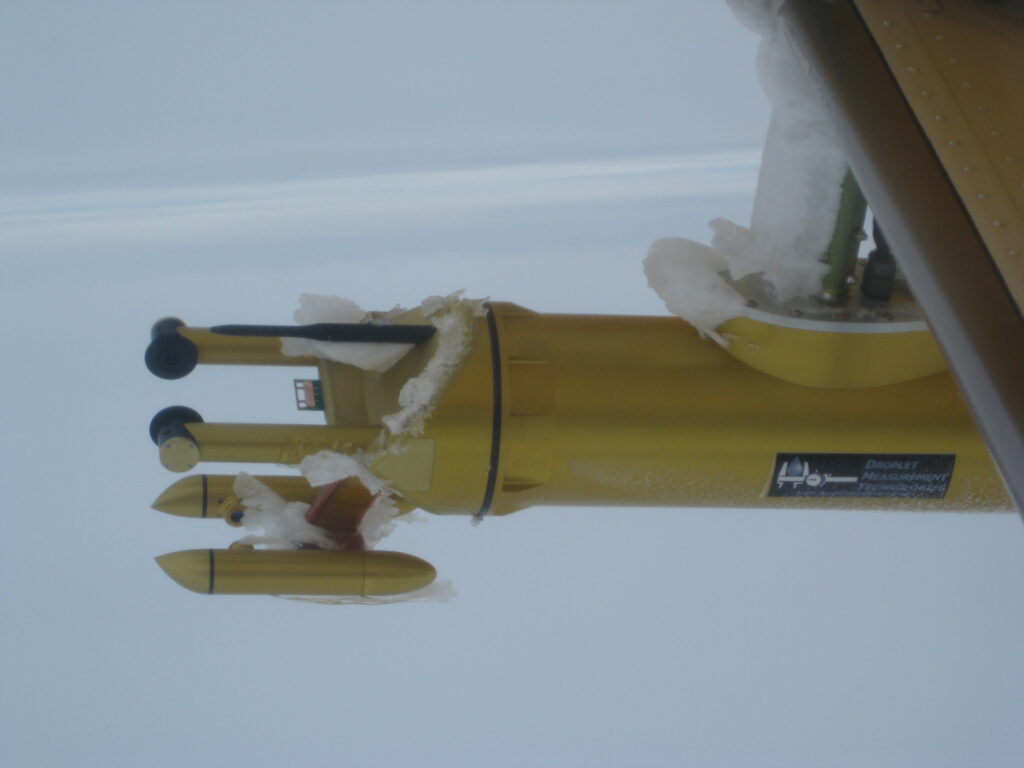
Kodiak 100 Icing Instrumentation
(c) Bob Stoney

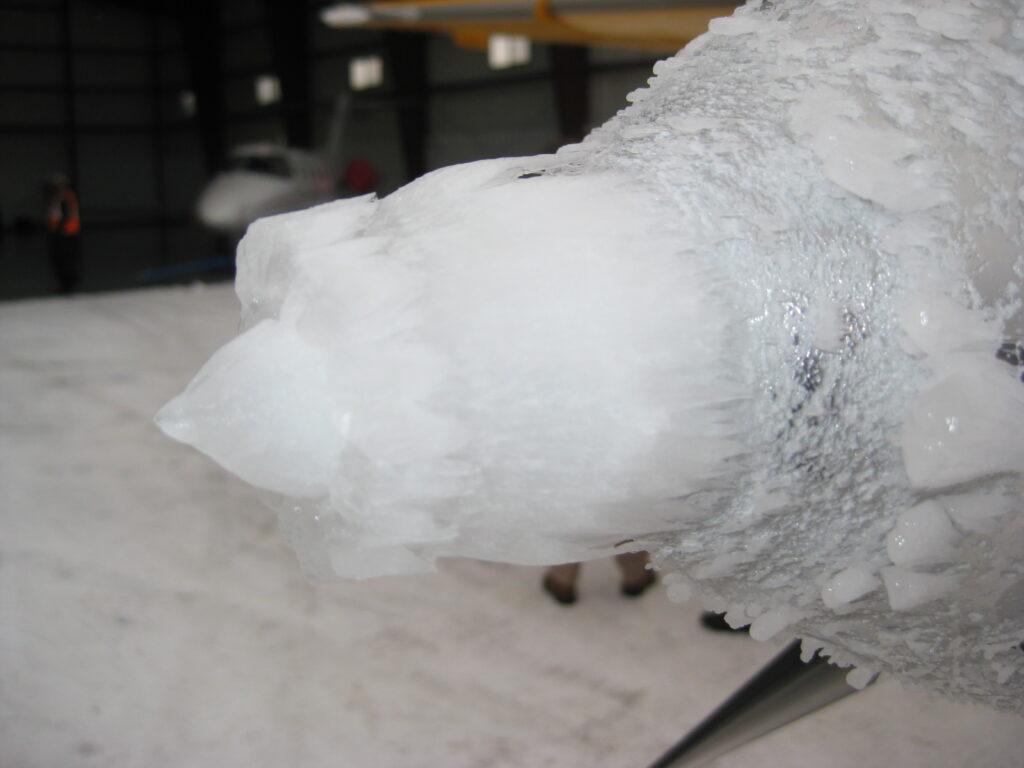
The initial TC prohibited flight into known icing conditions and my involvement continued into the winter of 2009/2010 with a “natural icing campaign” to achieve certification to fly in icing conditions.  This series of tests was challenging (trying to find the “right” kind of icing) and rewarding.  The Kodiak has a TKS ice protection system, which uses a special fluid to prevent or reduce ice accumulation.  The disadvantages of having to carry fluid (which can run out if not properly managed) is, in my opinion, overshadowed by its excellent ability to protect the airplane from icing.  This was my second TKS project and, like the first, the airplane’s ice protection system passed the requirements. I’ve flown “boots” (the leading edge of the wing is protected by a rubber boot which expands when pressurized, breaking off ice) and TKS. For keeping the ice off, I prefer TKS.

Kodiak 100 prop spinner ice accretion
(c) Bob Stoney

Filed Under: 151-175, Airplane SE Turboprop, Complete, Status

Daher Kodiak 200 (900)

July 22, 2026 by Bob Stoney Leave a Comment

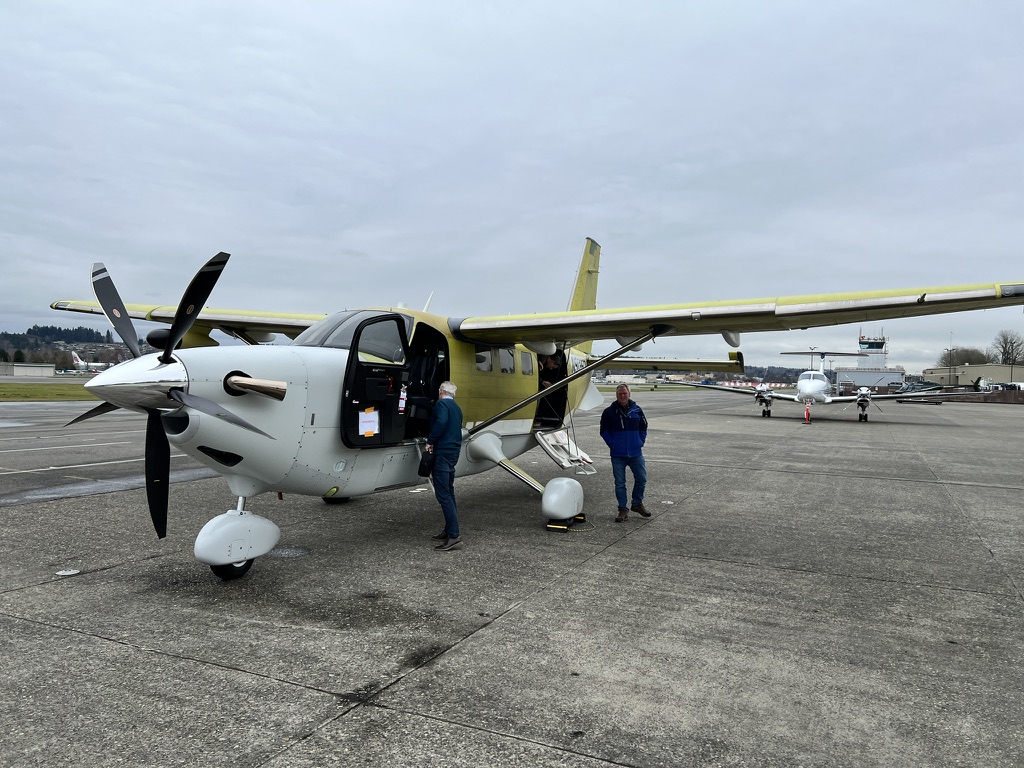
Kodiak 200 at Renton Airport for Function and Reliability (F&R) Testing
(c) Bob Stoney

Aircraft Information
> Aircraft Make: Daher (previously Quest Aircraft) Model: 200. Nickname: Kodiak
> Aircraft Mil Civ Description: Airplane SE Turboprop
> FAA Category and Class: Single Engine Land
> Engine Description: Single PT-6A-140

Aircraft Experience
> As of: 11/2/2024
> Number of Hours Flown: 33
> Number of Times Flown: 15
> Other Aircraft Models Associated: Quest Kodiak 100

First Flown Information
> Sequence First Flown: 186
> Date First Flown: 2/1/2022
> Location First Flown: Renton Airport, WA (KRNT)
> Who and/or What Organization First Flown With:
Daher/Kodiak, Marcel “Frenchy” LeBlanc, Rob Wells, Dave Webber

Recollections: Refer also to my write-up on the Kodiak 100.

The Kodiak 200 (which is the designation on the Type Certificate but it’s marketing name is Kodiak 900, I think because it sounds cooler) is a “bigger, heavier, more powerful” brother of the 100.  It has 150 more horsepower (750–>900) and the gross weight is approximately 1200 lb more.  While they appear similar, there are differences.  One could argue that the 100 and 200 should be counted (for the “how many aircraft have you flown?” contest) as ONE airplane.  But, I’ve chosen to break them apart because my involvement with them (separated by over a decade) were different.

One of the interesting aspects of the 200 (900) program was the secrecy that surrounded it.  The FAA was asked, in no uncertain terms, to keep a lid on the program, even during the final Function and Reliability (F&R) stage.  The airplane was photographed by somebody (not associated with the company or the FAA) during its stay at the Renton, WA airport and posted on Facebook.  It was fun reading the comments and the amateur analysis of what this airplane was (the most obvious differences included the wheel pants and 5 bladed propeller).  Still, we were mum.

Like the 100, the 200 (900) was a pleasure to fly and, in a “small world” moment, it was a pleasure to fly again with Frenchy LeBlanc (the Kodiak Chief Test Pilot), who had been a student of mine at USNTPS in 1999.

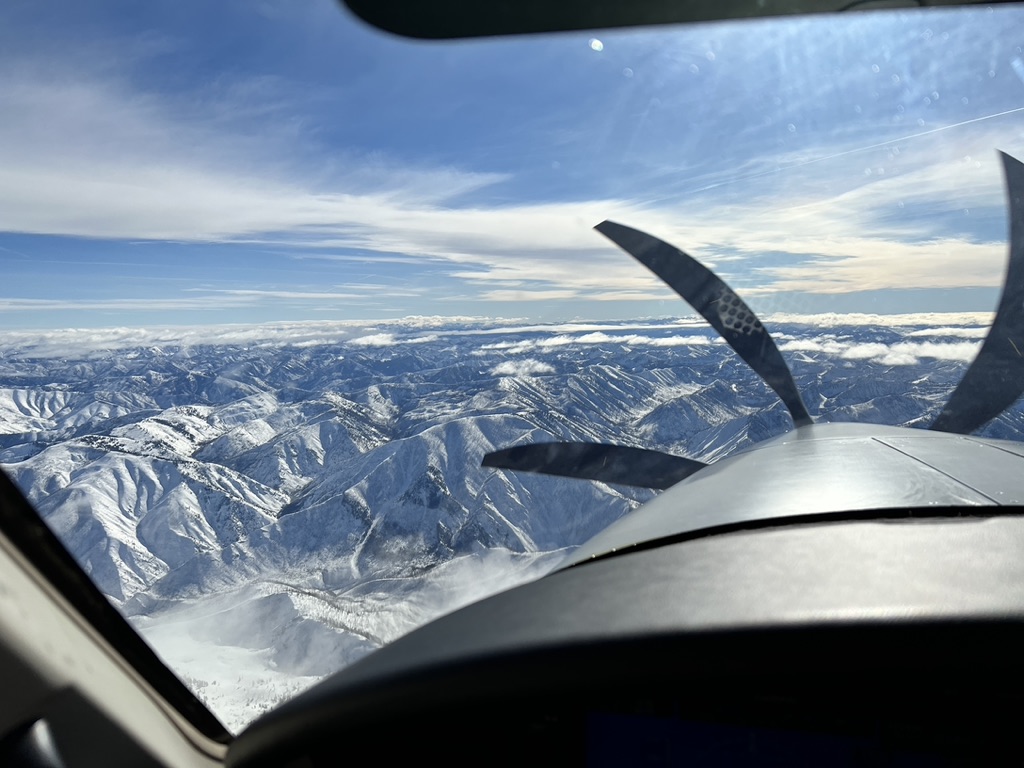
Kodiak 200 over the Rockies during F&R
(c) Bob Stoney

Filed Under: 176+, Airplane SE Turboprop, Complete

Beechcraft T-34C Turbomentor

July 22, 2026 by Bob Stoney Leave a Comment

Aircraft Information
> Aircraft Make: Beechcraft. Model: T-34C. Nickname: Turbomentor
> Aircraft Mil Civ Description: Airplane SE Turboprop
> FAA Category and Class: Airplane SE Land
> Engine Description: Single P&W PT-6A (550 HP)

Aircraft Experience
> As of: 11/2/2024
> Number of Hours Flown: 2
> Number of Times Flown: 1
> Other Aircraft Models Associated: T-34B

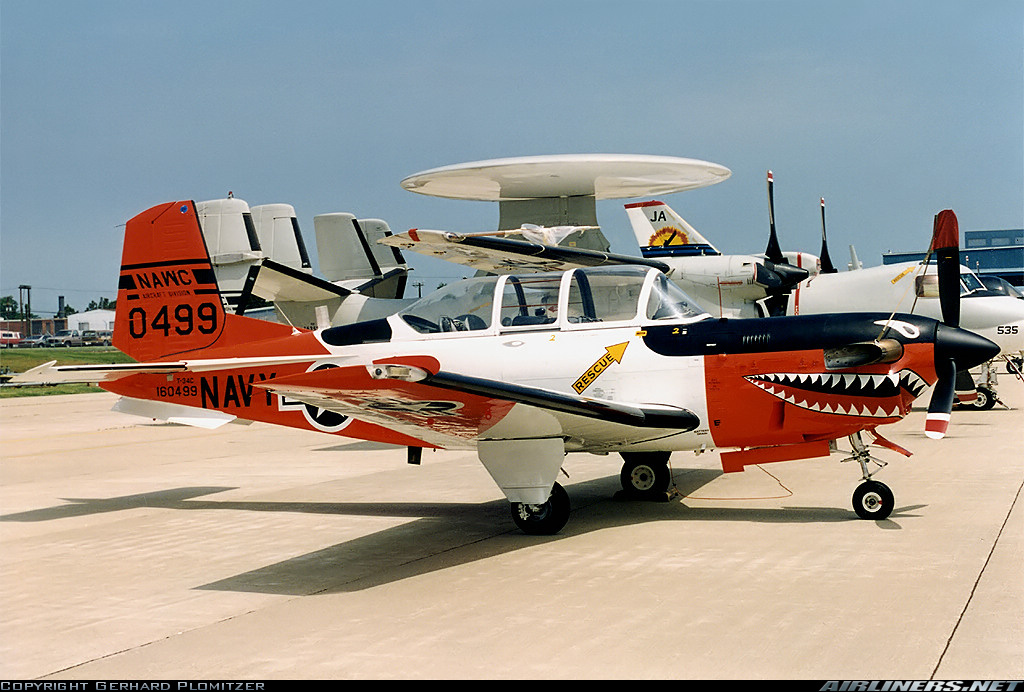
T-34C BuNo 160499 at Force Warfare (stock photo)
(c) airliners.net

First Flown Information
> Sequence First Flown: 52
> Date First Flown: 1/3/1989
> Location First Flown: NAS Patuxent River, MD (KNHK)
> Who and/or What Organization First Flown With: Pete Baumann, Force Warfare Aircraft Test Squadron

Recollections: I have flown the “Turbomentor” just once, on a good-deal flight with my TPS classmate Pete “Bullethead” Bauman.  At the time, Pete was a helicopter test pilot assigned to the Rotary Wing test squadron but was able to stay fixed wing current flying the T-34C at Force Warfare.  

If I remember correctly, I think Pete let me sit up front and fly much of the flight.  My logbook shows 8 landings.  As an SNA (Student Naval Aviator) in 1980/1981 flying the might T-28 Trojan, I had looked down my nose (literally…the T-28 sits WAY up high compared to the T-34C) at the turbomentor, but I’m glad I got to fly with Pete.  He and I only flew one other time together and that was during TPS, in a T-2C jet.   Never flew a helo with him.  Gotta fix that!

Filed Under: 51-75, Airplane SE Turboprop, Complete

  • « Previous Page
  • 1
  • 2

Recent Comments

  • Bob Stoney on Grumman OV-1 Mohawk
  • Brian Paul on Grumman OV-1 Mohawk
  • Bob Stoney on Raytheon 390 Premier I

Contact Me.

Click Here.

Visitor Count

9490

Copyright © 2026 · Outreach Pro on Genesis Framework · WordPress · Log in