(c) Bob Stoney
Aircraft Information
> Aircraft Make: Quest (Later Daher) Model: 100 Nickname: Kodiak
> Aircraft Mil Civ Description: Airplane SE Turboprop
> FAA Category and Class: Airplane SE Land
> Engine Description: Single P&W PT6A-34
Aircraft Experience
> As of: 11/2/2024
> Number of Hours Flown: 48
> Number of Times Flown: 20
> Other Aircraft Models Associated: Kodiak 200
First Flown Information
> Sequence First Flown: 160
> Date First Flown: 5/30/2007
> Location First Flown: Washington State Airports in the Cascade Mountains
> Who and/or What Organization First Flown With: Quest Aircraft, Bruce Barrett, Steve Zaat, John Hed
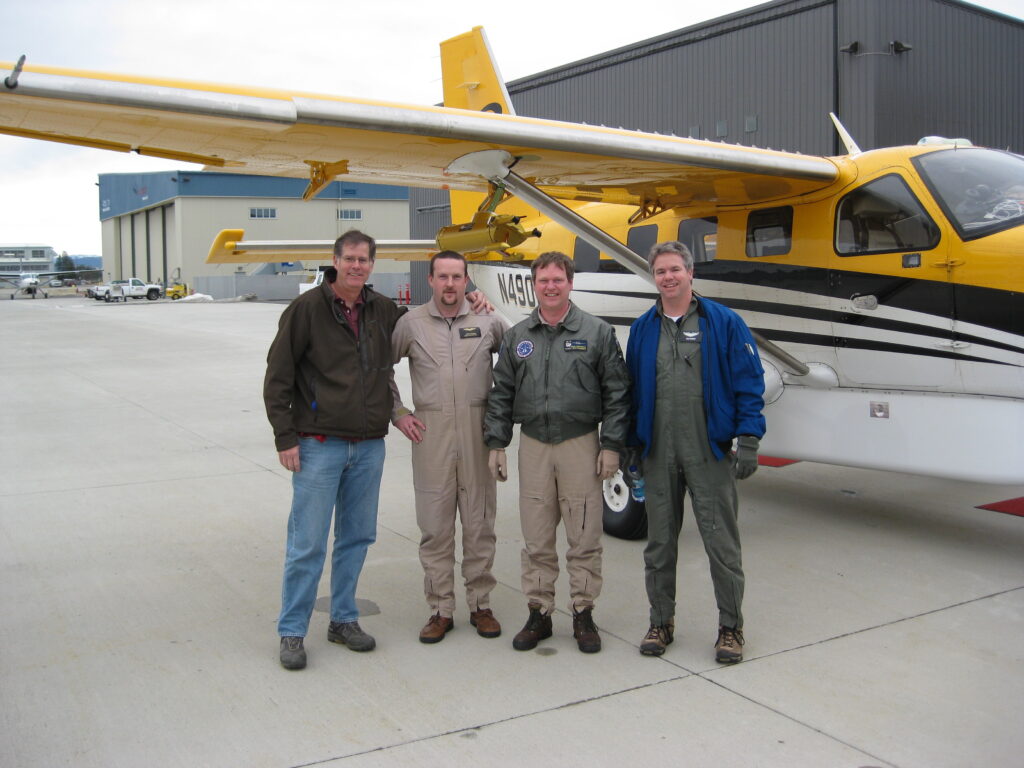
Recollections: Quest Aircraft Company was founded by Tom Hamilton and David Voetmann in the early 2000’s to design, fly and produce aircraft for Missionary use. One of their designers was Evan Mortenson, the son of Carl Mortenson (refer to my writeup on the Angel Model 44 Missionary aircraft). By 2007 the basic aircraft had been Type Certified by the FAA, no small feat for a relatively small company located in Sandpoint, Idaho. The FAA website shows that the type certificate was awarded on May 31, 2007 and my first flight was the day before, performing “Function and Reliability” (F&R) testing. Reviewing my logbook, I also flew on May 31 and Jun 1, also doing F&R. This last-minute rush is not atypical of many certification programs. The companies need to sell their product and they promise their customers a certain date for the TC. It’s very common for the airplane to be initially certified with notable limitations such as Day only, VFR only, no flight in icing, etc. The FAA has a potentially difficult job to both NOT cut corners, while providing timely service to US manufacturers. Flight test (including F&R) is often the last step but Flight Testers are very good and compartmentalizing their jobs and not bowing to inappropriate pressure.
My first flight in the Kodiak involved an F&R profile called (in the Test Plan) “Backcountry Workhorse”. I flew the airplane, for the first time into 7 airfields in the course of a 3.8 hour flight (BFI, PWT, W28, S43, S31, WA09, ORS, BFI). An amazing demonstration for me. All the while we (the FAA flight test team generally includes a Flight Test Engineer and on this flight I was accompanied by John Hed) were taking notes, evaluating the airplane and–mostly–looking for things that broke or didn’t work. My recollection is that the flight was clean, with no issues. I had flown the similarly configured Cessna Caravan and the Kodiak was–like the Cessna–a very solid and easy to fly airplane. I liked its ground handling better than the Caravan (which has a tendency for high pedal forces when doing tight turns on the ground) and the Caravan had a “thrust cliff” often seen during final approach to land where a small reduction in power flattened the prop enough and to cause a nonlinear and relatively large increase in drag. The Kodiak did not exhibit this characteristics. The flight included landings on very rough grass and dirt fields.
(c) Bob Stoney
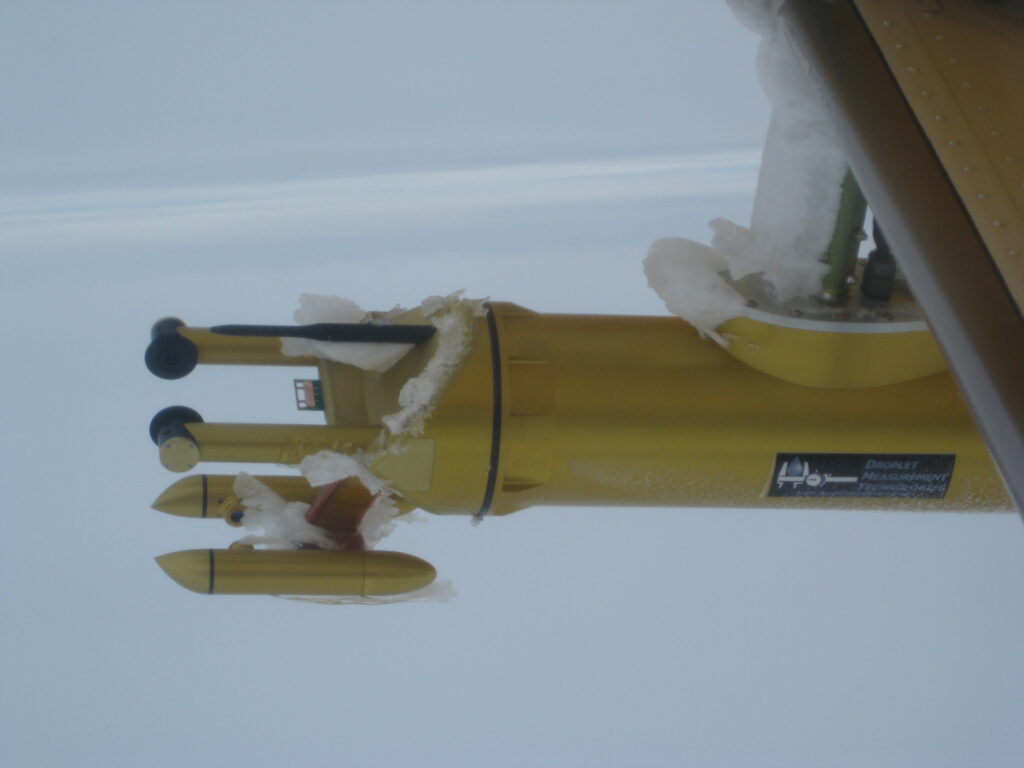
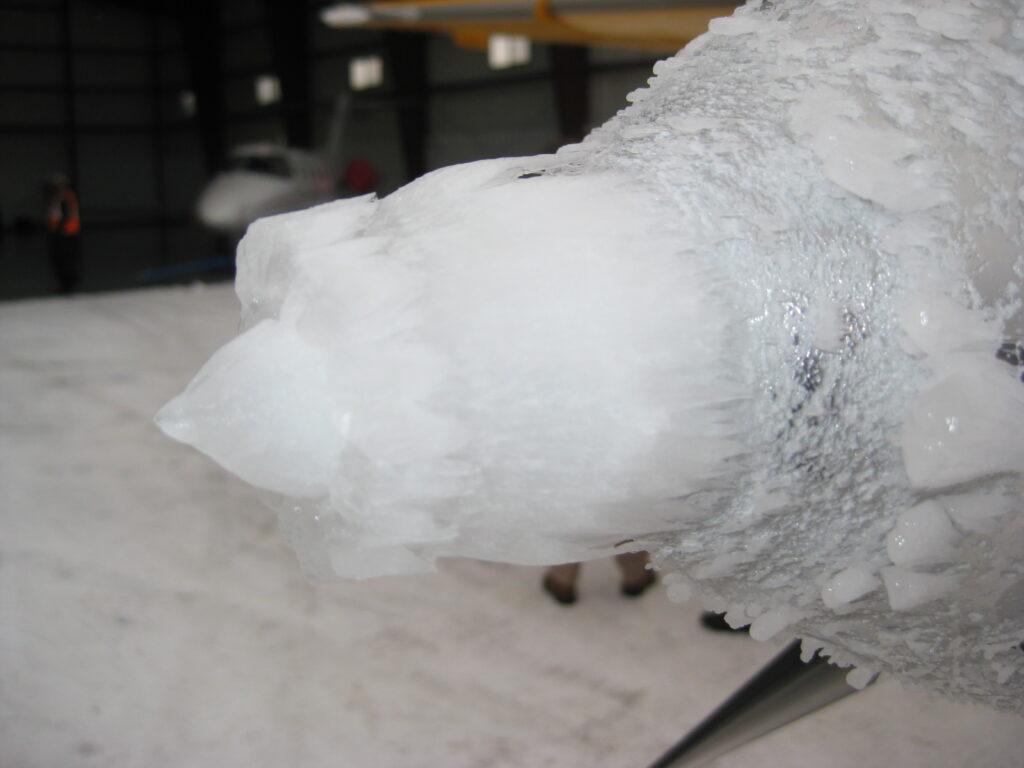
The initial TC prohibited flight into known icing conditions and my involvement continued into the winter of 2009/2010 with a “natural icing campaign” to achieve certification to fly in icing conditions. This series of tests was challenging (trying to find the “right” kind of icing) and rewarding. The Kodiak has a TKS ice protection system, which uses a special fluid to prevent or reduce ice accumulation. The disadvantages of having to carry fluid (which can run out if not properly managed) is, in my opinion, overshadowed by its excellent ability to protect the airplane from icing. This was my second TKS project and, like the first, the airplane’s ice protection system passed the requirements. I’ve flown “boots” (the leading edge of the wing is protected by a rubber boot which expands when pressurized, breaking off ice) and TKS. For keeping the ice off, I prefer TKS.
(c) Bob Stoney
Filed Under: Airplane SE Turboprop, 151-175
Leave a Reply