teakettle31

A Site To Catalog My Aircraft Adventures

  • About
    • About This Website
    • About Me
    • About My Favorite Aircraft
  • Aircraft I’ve Flown Organized By…
    • Mil/Civ Type
      • Airplane Single-engine Piston
      • Airplane Multi-engine Piston
      • Airplane Single-engine Turboprop
      • Airplane Multi-engine Turboprop
      • Tactical Jets
      • Large Jets
      • Business Jets
      • Helicopters
      • Gliders
      • Lighter than air
      • Other
    • Order Flown
      • Order Flown: 1-25
      • Order Flown: 26-50
      • Order Flown: 51-75
      • Order Flown: 76-100
      • Order Flown 101-125
      • Order Flown: 126-150
      • Order Flown: 151-175
      • Order Flown: 176+
  • Other Content
    • Favorite Links
    • Documents
    • My Store
  • Flight Test Services

Cessna 177RG Cardinal

January 25, 2025 by Bob Stoney Leave a Comment

Aircraft Information
> Aircraft Make: Cessna Model: 177RG. Nickname: Cardinal
> Aircraft Mil Civ Description: Airplane SE Piston
> FAA Category and Class: Airplane Single Engine Land
> Engine Description: single piston

Aircraft Experience
> As of: 11/5/2024
> Number of Hours Flown: 20
> Number of Times Flown: 7
> Other Aircraft Models Associated: C-177 and C-177RG

First Flown Information
> Sequence First Flown: 79
> Date First Flown: 9/7/1992
> Location First Flown: Monterey, CA airport (KMRY)
> Who and/or What Organization First Flown With: Navy Monterey Flying Club

Recollections: Wikipedia has an excellent description of the Cardinal’s history, intended as a replacement for the C-172 Skyhawk.  There’s some great “test pilot stuff” in this wiki article.

While I didn’t write a technical report on the 177 from my 20 hours of flying it, I do remember thinking it was a bit more of a handful than the 172, particularly on landing.  I guess that’s why the 172 survives to this day, while the 177 was discontinued (albeit after almost 4300 were built, one-tenth as many as the 172).

For me, I flew the airplane as transportation to travel all over California while attending Navy Postgrad school in Monterey.  Much as I’d done during my tour at Moffett, I traveled fairly widely in California, which has to be one of the best places for personal flying in the world, owing to a tremendous variety of airports and generally predictable weather.
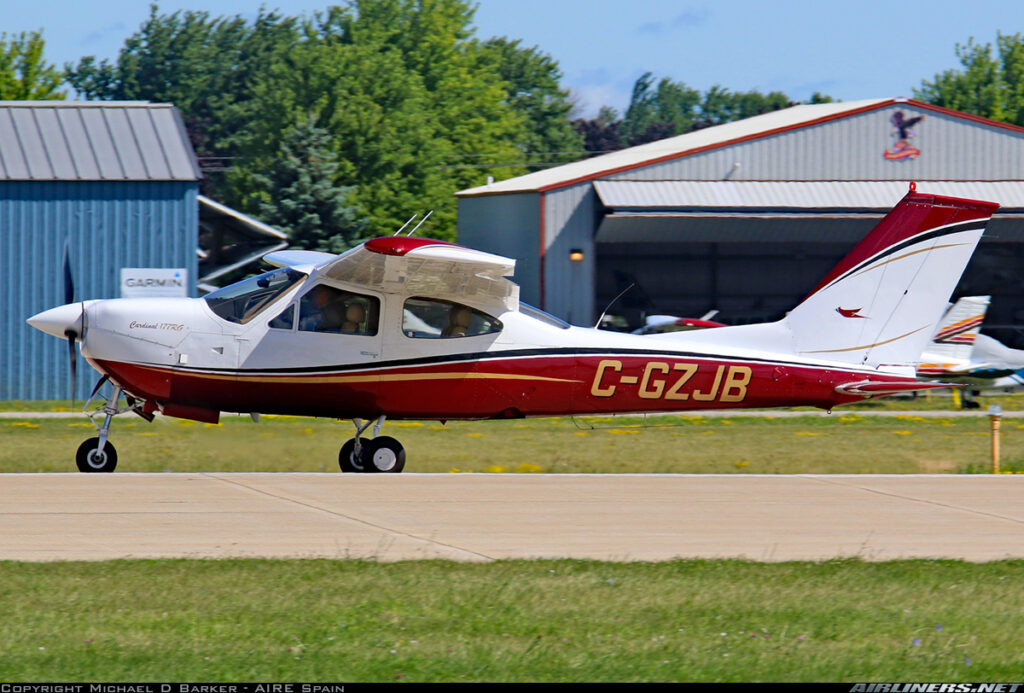
Cessna C-177RG Cardinal (stock photo)
(c) airliners.net

The C-177 I flew was an “RG” (Retractable Gear) model and I knew this was a setup for a gear-up landing (it’s a Cessna…the gear’s GOTTA be fixed, right?)  Luckily, I’m still in the “those who will” category (“there are two kinds of pilots: those who HAVE landed gear up and those that will”.  I live in fear of joining the “have” category…but I check the gear down at least twice every time I land, even in my fixed-gear Birddog). 
Filed Under: 76-100, Airplane SE Piston

Cessna 180/185 Skywagon

January 25, 2025 by Bob Stoney Leave a Comment

Aircraft Information
> Aircraft Make: Cessna. Model: 180/185. Nickname: Skywagon
> Aircraft Mil Civ Description: Airplane SE Piston
> FAA Category and Class: Airplane Single Engine Land (and Sea)
> Engine Description: single piston

Aircraft Experience
> As of: 11/5/2024
> Number of Hours Flown: 20
> Number of Times Flown: 63
> Other Aircraft Models Associated: C-180

First Flown Information
> Sequence First Flown: 89
> Date First Flown: 11/22/1996
> Location First Flown: NAS Patuxent River, MD (KNHK)
> Who and/or What Organization First Flown With: USNTPS Qual Eval (Seaplane from North Dakota State)

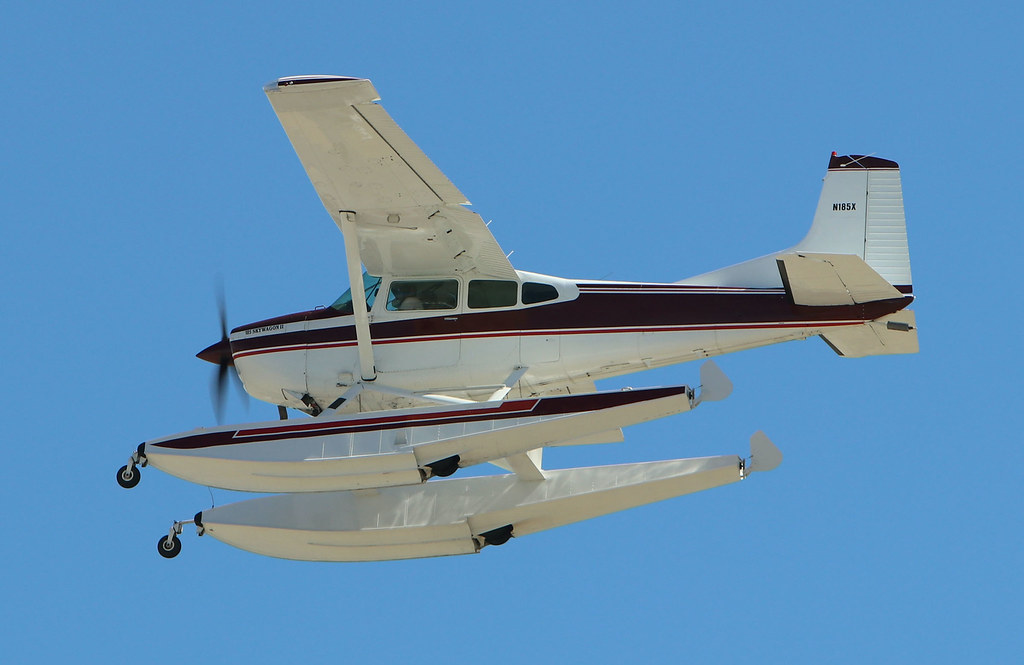
Recollections: My first flight in a C-185 was to fly with a Qual Eval with North Dakota State while assigned as the CFI at USNTPS.  The school hired a 185 Floatplane to come all the way out east and fly students (and staff). Not sure why we couldn’t find somebody closer (we also used the Department of Forestry’s Beaver from, I think, Minnesota). This may have been my first floatplane flight.

C-185 on floats (stock photo)
(c) flikr.com

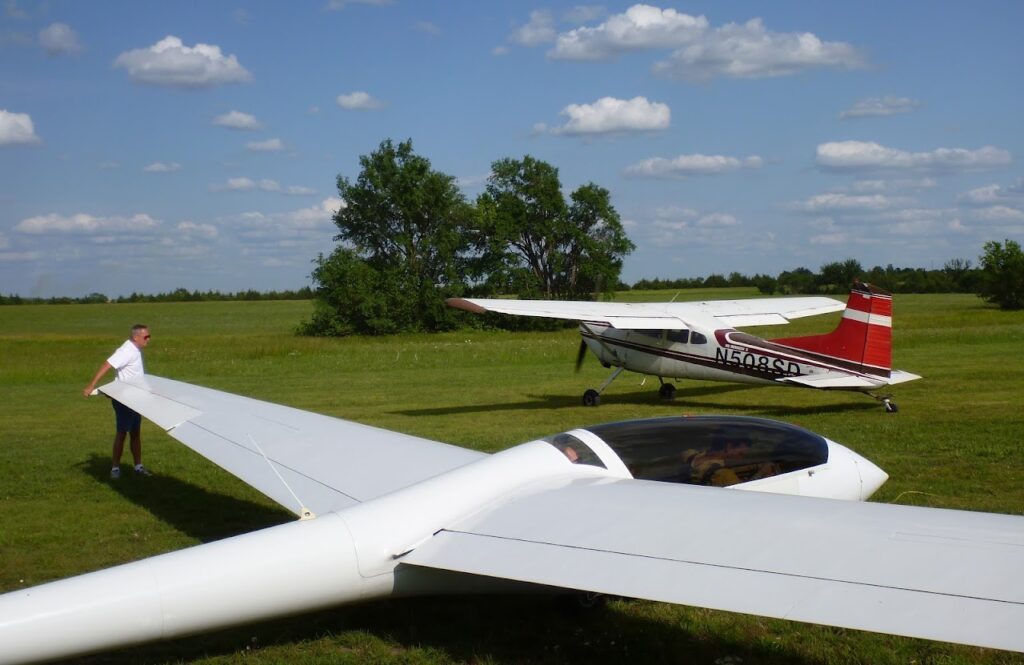
Next time was after retiring from the Navy and joining the FAA as a Test Pilot in their Wichita, KS office.  There I got checked out to tow gliders at McMaster Field, west of Wichita.  I don’t have a lot of time in the 185 but I believe it’s a wonderful airplane, honest handling and very capable. 

C-185 N508SD getting ready to tow at McMaster Field, Wichita, KS (stock photo)
(c) Wichita Glider Port

Filed Under: 76-100, Airplane SE Piston

Stinson V-77/AT-19 Reliant

January 24, 2025 by Bob Stoney Leave a Comment

Aircraft Information
> Aircraft Make: Stinson. Model: V-77 or AT-19. Nickname: Reliant or “Gullwing”
> Aircraft Mil Civ Description: Airplane SE Piston
> FAA Category and Class: Airplane Single Engine Land
> Engine Description: Single piston (radial)

Aircraft Experience
> As of: 11/4/2024
> Number of Hours Flown: 117
> Number of Times Flown: 106
> Other Aircraft Models Associated: a Million! See Wikipedia for the many model variants of the Gullwing.

First Flown Information
> Sequence First Flown: 78
> Date First Flown: 11/29/1991
> Location First Flown: Alta Mesa Airpark, Wilton, CA. (3CN7)
> Who and/or What Organization First Flown With: John Stoney, Brother and owner of N1943S

Recollections: The Stinson Gullwing is a BIG airplane for its class.  I have flown two Gullwings in my life, the first one being my brother John’s 1943 V-77 which I flew 56 times from 1991 until 2002 (with a gap between 1993 and 2002) and, since 2022, an AT-19 with the Commemorative Air Force’s Rainier Squadron, currently based at the Arlington, WA airport.

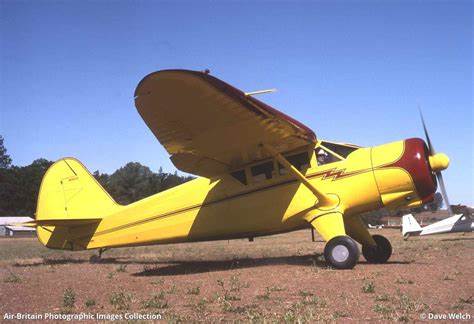
Stinson V-77 N1943S (stock photo)
(c) abpic.co.uk

The MAIN THING about the Gullwing is this: it’s a tough airplane to train in.  Why?  Because (1) it’s a tailwheel airplane (but, wait, there more!); (2) it’s tailwheel is neither steerable nor lockable, it’s free castoring (so you’re left with ONLY brakes and rudder for directional control…somewhat of an issue when landing and there’s little airflow over the rudder as you slow down) and (3) it only has brakes for the LEFT SEAT PILOT.  So, just imagine yourself as an instructor, trying to teach someone how to fly the Gullwing.  For sure, you wouldn’t START your tailwheel training in one.  But, even with a lot of tailwheel experience, every taildragger can be slightly different (this one, for sure) and it’s just a a tough plane to train in.

My brother John’s approach was to put me in the left seat and hope for the best.  I will never forget my first flight, where I had to, several times, judiciously use the brakes.  This brake use followed (thankfully closely followed) what a test pilot would call a “directional perturbation”.  I had enough awareness to not only make the appropriate brake correction but to sense my brother’s immediate tension, surprise and fear.  His eyes got huge.  We didn’t have any problems but I thought he had to be the bravest man alive.

Fast forward 30 years and now I’m the Gullwing instructor.  Not quite as brave as my brother, I require that pilots demonstrate proficiency in the right seat (which works on landing down to maybe 5-20 knots of groundspeed, depending on how much crosswind there is) before moving to the left seat.  We also spend a fair amount of time getting the feel for transitioning to use of brakes without over correcting.

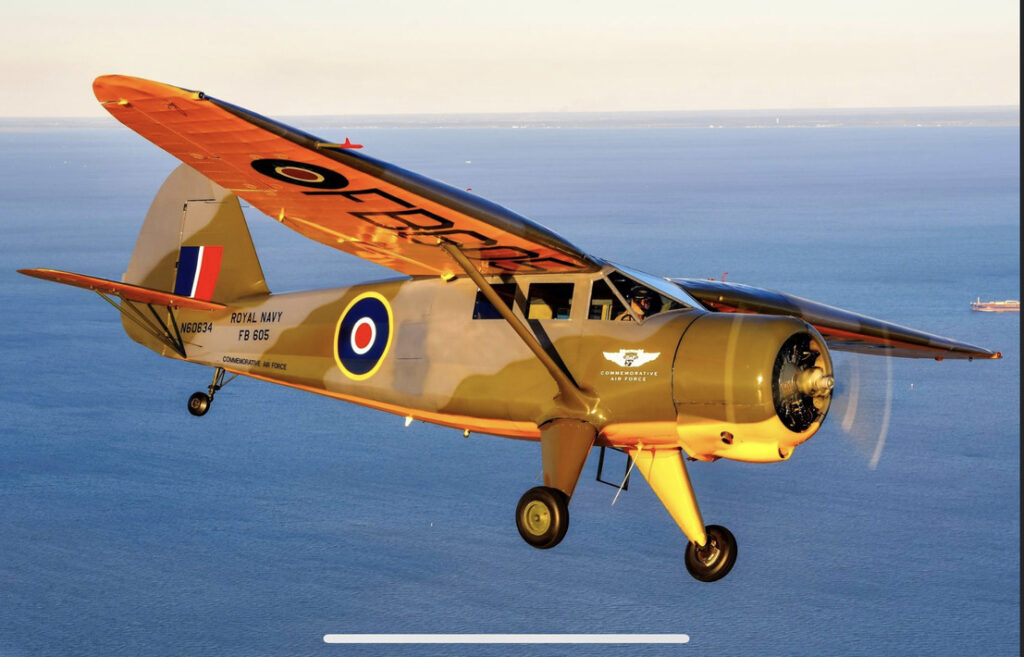
Stinson AT-19 N60634 Commemorative Air Force
(c) CAF Rainier Squadron

The Gullwing reminds me of a Cadillac from the 1950’s…large, somewhat lumbering but ultimately classic.  The engine (a 300 HP Lycoming R680, somewhat undersized for the machine) has–like most radials–a wondeful sound, feel and smell.  Oh, and the left pilot’s window (which is made of thick glass) rolls down, just like in the Cadillac.  

Filed Under: 76-100, Airplane SE Piston

Douglas A-26 Invader

January 24, 2025 by Bob Stoney Leave a Comment

Aircraft Information
> Aircraft Make: Douglas Aircraft. Model: A-26. Nickname: Invader
> Aircraft Mil Civ Description: Airplane ME Piston
> FAA Category and Class: Airplane multi-engine Land
> Engine Description: Twin piston (radial)

Aircraft Experience
> As of: 6/25/2024
> Number of Hours Flown: 1
> Number of Times Flown: 1
> Other Aircraft Models Associated: A-20 Havoc?

First Flown Information
> Sequence First Flown: 85
> Date First Flown: 9/28/1996
> Location First Flown: Santa Monica Airport (KSMO)?
> Who and/or What Organization First Flown With: USNTPS Qual Eval

Recollections:
My logbook on this one is sparse.  No location, no names, just the entry “QE”.  The Serial number is listed in my log as “BC538”.  No amount of googling has helped me remember more and–I’m a bit ashamed to say–I don’t remember much about this flight, even WHERE it occurred.   The flight occurred early in my time as the Chief Flight Instructor (CFI) at USNTPS and, I suspect, occurred in the LA area–probably Santa Monica, maybe Torrance, because it occurred the same day as a J-3 cub flight that I remember well.  Anyway, that’s all I have on this one, disappointingly!

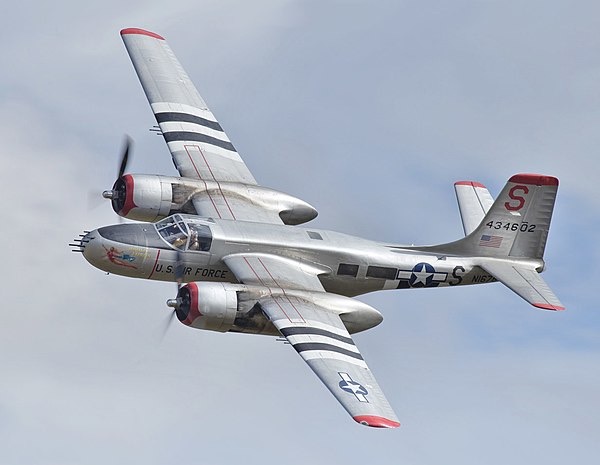
A-26 Invader (file photo)
(c) Wikipedia.org

Filed Under: 76-100, Airplane ME Piston

Douglas DC-3/C-47 Skytrain

January 23, 2025 by Bob Stoney Leave a Comment

Aircraft Information
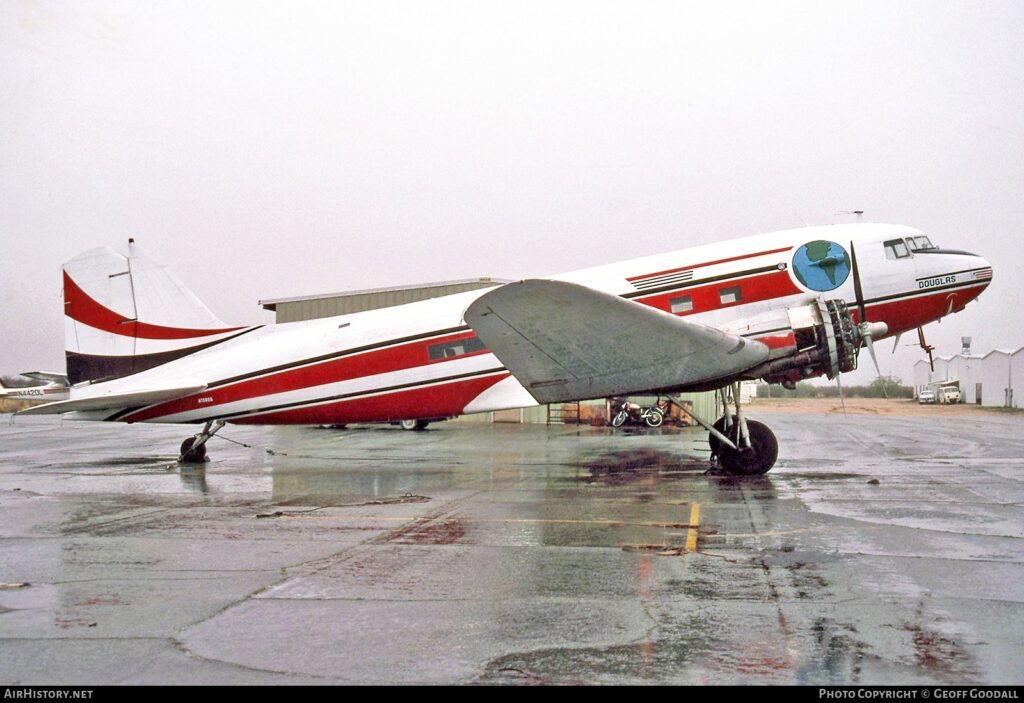
> Aircraft Make: Douglas. Model: DC-3. Nickname: Skytrain
> Aircraft Mil Civ Description: Airplane ME Piston
> FAA Category and Class: Airplane Multi-engine land
> Engine Description: twin piston

Aircraft Experience
> As of: 6/25/2024
> Number of Hours Flown: 1.4
> Number of Times Flown: 1
> Other Aircraft Models Associated: C-47

First Flown Information
> Sequence First Flown: 80
> Date First Flown: 9/30/1995
> Location First Flown: Santa Monica, CA Airport (KSMO)
> Who and/or What Organization First Flown With: USNTPS Qual Eval, with Jan Aarvik

Recollections: I flew DC-3 as part of a USNTPS “Qual Eval” session.  Like many of these Qual Evals, I was simply amazed that I was getting to fly an airplane I could only dream of flying.  This was no exception.  That said–and while I’m sure I did some “test pilot stuff” and likely wrote a “daily report” of my findings…the thing I remember most about the flight was the pilot I was flying with.  My log book didn’t record his name and all I remember was (1) he didn’t speak much english and (2) I distinctly remember him leaning over from the right seat on each takeoff, raising his right hand in front of my face with two fingers extended in a side-ways peace symbol and loudy saying over the intercom “wee-too”.  This was my signal that I could rotate, at “V2” (the takeoff safety speed).  Writing this recounting for my recollections, I came across the following AOPA article from the year before I flew: LINK TO ARTICLE

This article mentions the following: “The DC-3 based at Cloverfield Aviation at Santa Monica (California) Municipal Airport is owned by the husband-and-wife team of Jan (pronounced Yon, as in Don) and Britt Aarvik. Jan was a pilot in the Norwegian Air Force and has amassed more than 17,000 hours (4,000 in DC-3s).”  So, yes, I think I flew with Jan!  

DC-3 Serial Number 11693 (N7500A) (file photo)
(c) airhistory.net

Years later, after retiring from the FAA, I decided I’d once-again become a DC-3 pilot, this time paying for an SIC rating at the Historic Flight Foundation at Felts Field, WA.  This gorgeous museum, unfortunately went under before I could complete my rating, so it remains a “bucket list” item.  If I do ever fly the “skytrain” again, I’m convinced I’ll hear “WEE-TOO” as I rotate.

Filed Under: 76-100, Airplane ME Piston, Complete

  • « Previous Page
  • 1
  • 2
  • 3
  • Next Page »

Recent Comments

  • Bob Stoney on Grumman OV-1 Mohawk
  • Brian Paul on Grumman OV-1 Mohawk
  • Bob Stoney on Raytheon 390 Premier I

Contact Me.

Click Here.

Visitor Count

9490

Copyright © 2026 · Outreach Pro on Genesis Framework · WordPress · Log in