Aircraft Information
> Aircraft Make: Pilatus Model: PC-9. Nickname: Don’t know of one; this is an airplane that deserves a good nickname!
> Aircraft Mil Civ Description: Airplane SE Turboprop
> FAA Category and Class: Airplane SE Land
> Engine Description: Single P&W PT6A-62 (950 HP)
Aircraft Experience
> As of: 11/4/2024
> Number of Hours Flown: 6
> Number of Times Flown: 4
> Other Aircraft Models Associated: PC-9B, T-6 Texan II, and PC-7
First Flown Information
> Sequence First Flown: 33
> Date First Flown: 11/6/1986
> Location First Flown: Andrews Air Force Base, MD (KADW)
> Who and/or What Organization First Flown With: Pilatus Corporation, Klaus & Galli
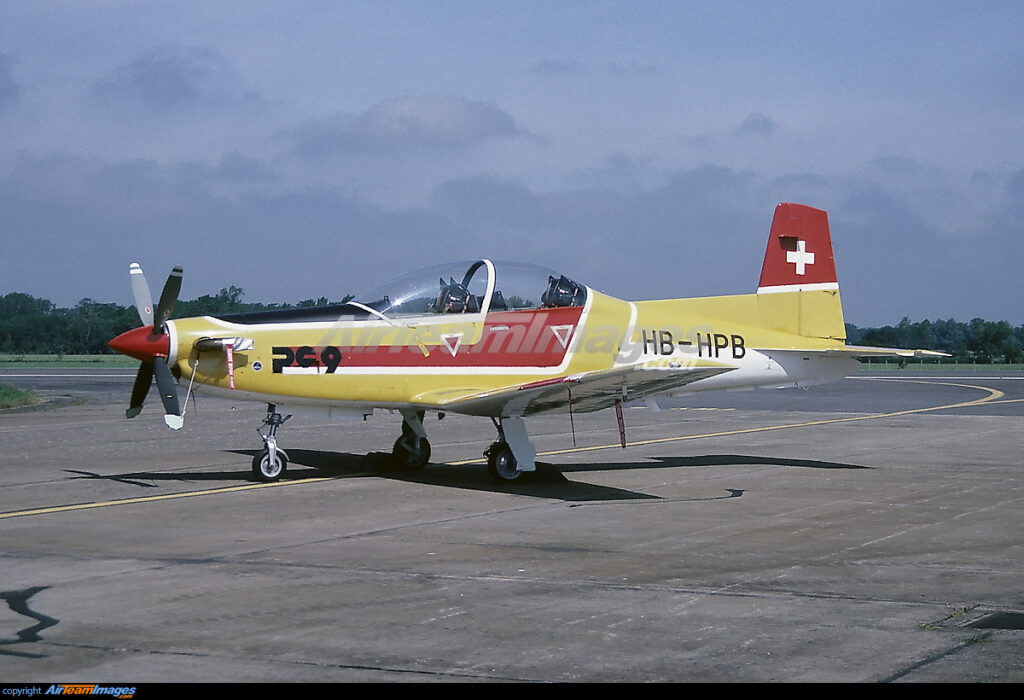
(c) Airteam Images
Recollections: In many other writeups, you will see that I flew various aircraft at an instructor at USNTPS for the purpose of being able to GRADE a student’s Developmental Testing Phase II (DT-II) report, the capstone event of the USNTPS curriculum wherein students are assigned an airplane they’ve never flown before, they write a full test plan, fly the aircraft and then write a full report on their findings, concluding on suitability for a given mission.
Well, the PC-9 was MY DT-II, as a student at TPS. My engineering partner in the event was Mark Heroux, a civilian Fixed Wing engineer. At that time at TPS, it was somewhat unusual for a pilot to be teamed with an engineer, which foreshadowed my strong life-long belief that the TP/FTE team is a “one plus one equals three” situation. Many years later, while serving with the FAA, I had to argue the important point concerning this team many times to leaders who had no clue about flight test. But I digress.
Students were asked to submit their “wish list” for their DT-II assignment. The staff combines this desire, with the student’s performance and their intended post-TPS assignment to piece together the DT-II assignments. Being a prop guy, the PC-9 was a natural fit for me and I put it high on my wish list. But, it was high on my list because I wanted to go to Switzerland to fly it. The idea of zorching around the Swiss Alps in this rocket-ship of an airplane was at the forefront of my thoughts. And, sure enough, Mark and I were assigned to the PC-9. We began preparing our test plan, and reading Swiss vacation journals. Unfortunately, the PC-9–which had relatively recently been certified by Pilatus–was on a world-wide marketing trip, flying the airplane to any potential customers to demonstrate the machine. One of those potential customers was the US Air Force and–you guessed it–this airplane (I believe the airplane we flew, registration HB-HPB was the second prototype, registration HB-HPA being the initial prototype) was scheduled to be at the Andrews AFB (just north of Pax River) the week of DT-II. So, Mark and I put our travel journals away and got ready to drive 30 minutes up Highway 235.
The airplane WAS a rocket ship. I flew it 4 times and I believe Mark did as well. One of my flights was with Hans Galli. For some reason (probably because I was very busy with the report), my log book lumps all 4 flights into one entry, which is very unusual for me. Anyway, I honestly don’t remember much about the flights, it was busy, we got a ton of data, we pulled all nighters writing the report and Mark and I both passed and graduated.
The PC-9 later morphed into the Beechcraft (later Textron) T-6 Texan II, which won the Joint Primary Aircraft Training System (JPATS) competition for a joint trainer and is still the primary trainer for both the US Air Force and Navy. The Texan II replaced, around the 2010 timeframe, both the USAF’s T-37B and the Navy’s T-34C.
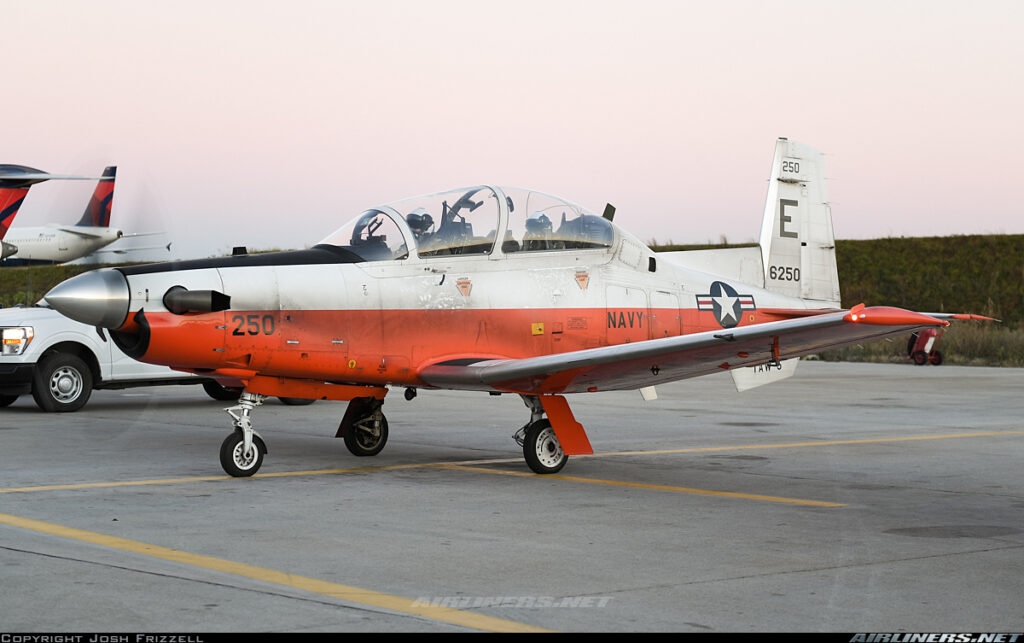
(c) airliners.net, Josh Frizzell