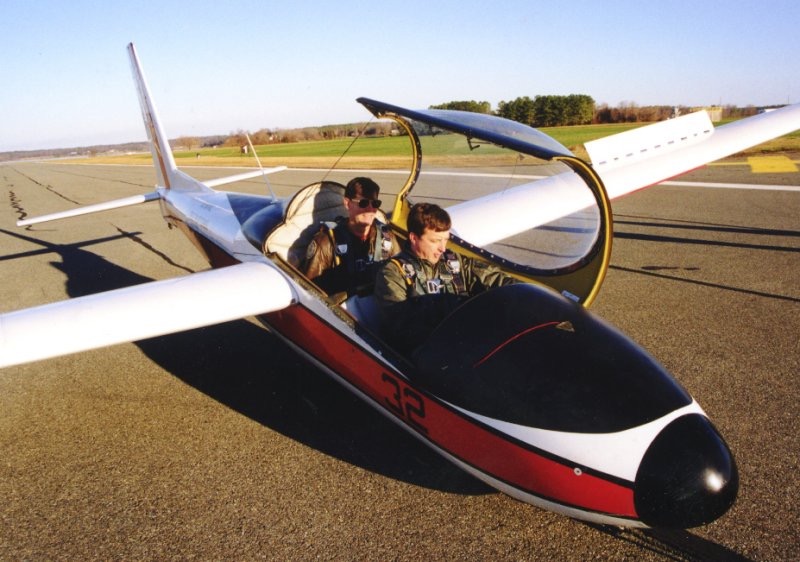
(c) US Navy Photo
Aircraft Information
> Aircraft Make:
Schweizer Aircraft Corporation Model: 2-32. Nickname: Frigate
> Aircraft Mil Civ Description: Glider
> FAA Category and Class: Glider
> Engine Description: none
Aircraft Experience
> As of: 6/27/2024
> Number of Hours Flown: 149
> Number of Times Flown: 112
> Other Aircraft Models Associated: X-26B
First Flown Information
> Sequence First Flown: 31
> Date First Flown: 11/3/1986
> Location First Flown: NAS Patuxent River, MD (KNHK)
> Who and/or What Organization First Flown With: Chris Wheal, US Naval Test Pilot School IP
Recollections: Yes, I’ve flown an “X-plane”. Sounds cool, until you realize it was just a Schweizer model 2-32. This glider is described by Wikipedia as follows: “The X-26A was used by the United States Navy to train test pilots in the condition of yaw/roll coupling. Since jet trainers were known to be dangerous in this condition, the X-26 was based on the Schweizer SGS 2-32 sailplane. Sailplanes react much slower and are easier to control than jet aircraft, making the X-26 a much safer training platform.”
While this is somewhat glorified and indirect, the essence of the USNTPS glider program is this: it teaches adaptability and it’s an excellent means to test student knowledge of the basic tenants of aerodynamics, particularly stability and control. The “adaptability” piece is discussed elsewhere on this website but the fact that each student, after 5 instructional flights, then goes on to solo the glider (this is done near the end of the year-long course) shows THEM just how far they’ve come. And, they don’t just “fly the glider”, they perform a series of tests which illustrate basics of aero theory….for example: the period of the phugoid is very short…because TAS is the predominant term in the formula for phugoid period. Dutch roll frequency is slow, due to low static directional stability (why? because that would take a bigger tail, which would defeat the glider’s mission focused on L/D, i.e. performance. The discussion goes on!).
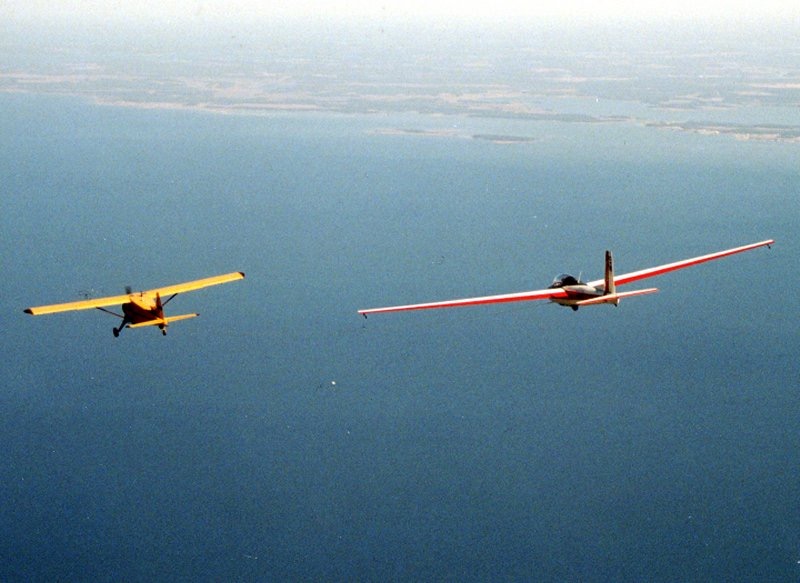
(c) US Navy photo
The “real X-plane” that looks like the school’s glider was the X-26B, an unusual powered glider, shown in one of the pictures.
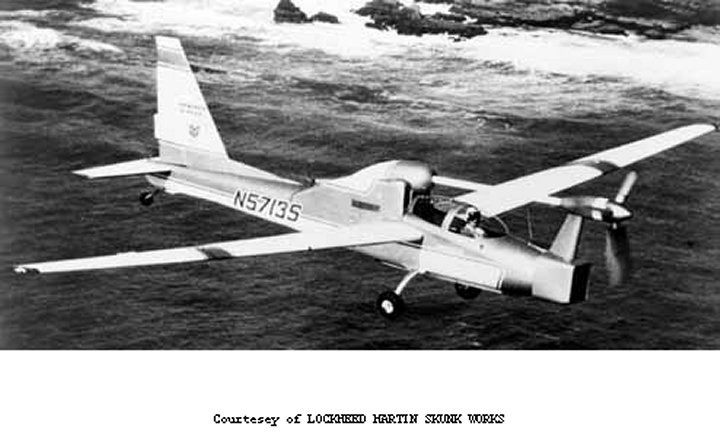
(c) Lockheed Martin
I first flew the X-26 with Chris Wheal, one of my favorite instructors. Chris was a Brit, a task master and–if he didn’t like you–would make your life hell. Fortunately for me, he liked me. I went on to instructor in the X-26 for almost a decade and it was one of my favorite school exercises, for the reasons discussed above.
As of this writing (2024), I understand that students no longer solo the X-26, which is a shame in my view, and reflects poor risk management in combination with the mission of training test pilots. That said, rolling back changes like “IP’s only will be PIC for the X-26” are difficult to reverse. Here, I think about some Test Pilot schools where (mostly because of insurance purposes) students are NEVER the Pilot in Command. I certainly hope that never happens at the Military TPS’s because the risk will just be shifted from the school, to the test community.
Leave a Reply