Aircraft Information
> Aircraft Make: General Dynamics Model: F-111 Nickname: Aardvark
> Aircraft Mil Civ Description: Tactical Jet
> FAA Category and Class: Airplane ME Land
> Engine Description: Twin jet
Aircraft Experience
> As of: 10/30/2024
> Number of Hours Flown: 5.4
> Number of Times Flown: 2
> Other Aircraft Models Associated: F-111, various models, FB-111
First Flown Information
> Sequence First Flown: 37
> Date First Flown: 11/12/1987
> Location First Flown: Not recorded.
> Who and/or What Organization First Flown With: USAF F-111D squadron in the northest, pilot “Bush”
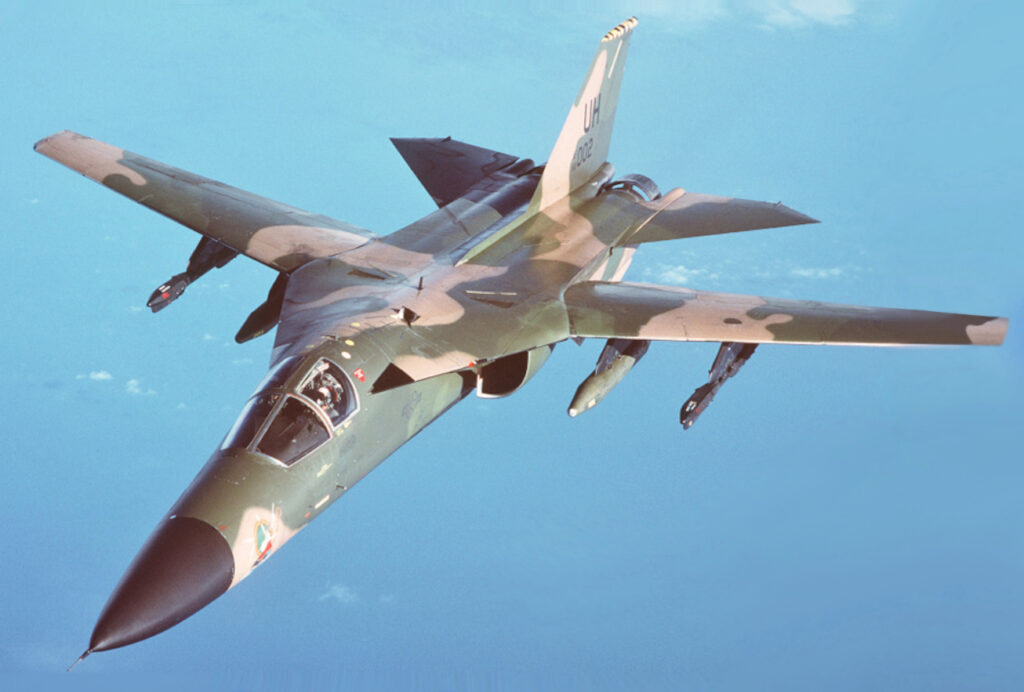
(c) wikipedia
Recollections: Got to fly the F-111 twice, 4 years apart. Both times were as a USNTPS IP, monitoring a DT-2 (the final exercise at TPS). Unfortunately, my logbook has limited information. I do remember three things about the flight:
(1) The pre-taxi flight control checks. You needed 3 or 4 hands to do the checks…I don’t remember the specifics but (my best recollection 37 years later) goes something like this: you had to hold a switch with your left hand (into a test position), pull and reset a circuit breaker with your right hand (and the cb was NOT conveniently located, required you to crane your arm back and to your right) and then move the control stick (no hands left, so you used your knees!). This screamed out for an automated BIT (Built in test) check!
(2) First time refueling from a USAF tanker. In this airplane, it was easy but, still a first (for “not easy”, refer to my description of my flight in the B-52).
(3) The thing was an absolute SLED. And it’s terrain following radar (a system which my father had worked, in the 1950’s and 60’s, to perfect) was perfect. I both hand flew and used the automation to fly at 200 ft, 480 knots indicated. Smooth ride (owing to the high wing loading of the swept wings) and a pleasure to fly.
Filed Under: Tactical Jet, 26-50
During my years at Grumman (1983 to 1989) I was the “Raven Maven” at Plant 7, the final “plant” (actually a hangar) where productions aircraft where given final checks and flown by the customer crews. The ALQ-99 jamming system was supported by a bunch of expert engineers; the rest of the airplane was by me and one other engineer. I also handled the tuning of the TFR system, as apparently I had “the touch.” I would lie on my back on a maintenance platform under the nose of an EF-111 with the nose radome swung open and the TFR humming away. Using my “tweaker” (all Grumman production support engineers had a small screwdriver in their pocket protector along with the pens and pencils) I would tune the transmitters’ klystron for optimum performance.
And no, I didn’t go blind.
You really are a GEEK, Bomber! 🙂