teakettle31

A Site To Catalog My Aircraft Adventures

  • About
    • About This Website
    • About Me
    • About My Favorite Aircraft
  • Aircraft I’ve Flown Organized By…
    • Mil/Civ Type
      • Airplane Single-engine Piston
      • Airplane Multi-engine Piston
      • Airplane Single-engine Turboprop
      • Airplane Multi-engine Turboprop
      • Tactical Jets
      • Large Jets
      • Business Jets
      • Helicopters
      • Gliders
      • Lighter than air
      • Other
    • Order Flown
      • Order Flown: 1-25
      • Order Flown: 26-50
      • Order Flown: 51-75
      • Order Flown: 76-100
      • Order Flown 101-125
      • Order Flown: 126-150
      • Order Flown: 151-175
      • Order Flown: 176+
  • Other Content
    • Favorite Links
    • Documents
    • My Store
  • Flight Test Services

British Aircraft Corporation 1-11

January 23, 2025 by Bob Stoney Leave a Comment

Aircraft Information
> Aircraft Make: British Aircraft Corporation (BAC) Model: 1-11. Nickname: One Eleven
> Aircraft Mil Civ Description: Large Jet
> FAA Category and Class: Airplane Multi-engine land
> Engine Description: Twin jet

Aircraft Experience
> As of: 9/2/2021
> Number of Hours Flown: 4
> Number of Times Flown: 3
> Other Aircraft Models Associated: BAC 1-11, BAC-111

First Flown Information
> Sequence First Flown: 62
> Date First Flown: 10/13/1989
> Location First Flown: Baltimore Washington International Airport (KBWI)
> Who and/or What Organization First Flown With: Westinghouse (Northrop Grumman) Flight Test

Recollections: The BAC 1-11 was the British airplane designed to compete with the Douglas DC-9 and the Boeing 737.  My three flights (once per year, 1989, 1990, 1991) in this design were all flown on an Experimental version which was an avionics test bed operated by Westinghouse (later Northrup Grumman) at their facility at the Baltimore-Washington International Airport.  Over the years, the Navy Test Pilot School has contracted with a variety of companies who operate “systems test bed” or “systems training” aircraft, to enable teaching the discipline of testing radars, FLIRS, and the like.  NG was used for many years, until replaced by an organic asset (a P-3 “flying systems classroom”).

The airplane, pretty much like all British Airplanes (and, for that matter, cars) handled very nicely. 
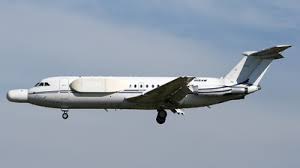
Northop Grumman BAC 1-11, N164W (Stock Photo)
(c) Jetphotos.com

Filed Under: 51-75, Complete, Large Jet

Cessna Citation X

January 23, 2025 by Bob Stoney Leave a Comment

Aircraft Information
> Aircraft Make: Cessna Model: 750. Nickname: Citation X
> Aircraft Mil Civ Description: Business Jet
> FAA Category and Class: Airplane Multi-engine land
> Engine Description: Twin jet

Aircraft Experience
> As of: 9/2/2021
> Number of Hours Flown: 8
> Number of Times Flown: 5
> Other Aircraft Models Associated: none

First Flown Information
> Sequence First Flown: 132
> Date First Flown: 10/29/2002
> Location First Flown: Mid-continent airport, Wichita, KS (KICT)
> Who and/or What Organization First Flown With: Cessna Flight Test

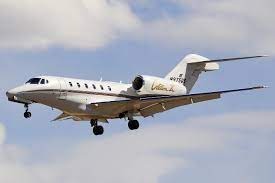
Recollections: When describing another Citation (the V), I made the statement “a Citation is a Citation”.  When one looks at the Citation X and its extremely complex and highly swept wing, it puts this statement to the test.  However, somehow, Cessna managed to design an airplane that–at the time–was the fastest production airplane (with a Max Mach of 0.92) that really flew and operated like all the straight-wind Cessnas that preceded it.  

The Citation 750 (“X”) stock photo
(c) Wikipedia

With two GIANT engines in pods near the tail, this airplane set the standard for speed and looks when it came out, and spurred a competition with Gulfstream to make “the fastest bizjet”.  

Even though I’m type-rated in the X, my experience level in the actual aircraft is low…consisting of a few avionics projects and production audits.

Filed Under: 126-150, Business Jet, Complete, Status

DeHavilland DHC-2/U-6 Beaver

January 10, 2025 by Bob Stoney Leave a Comment

Aircraft Information
> Aircraft Make: DeHavilland of Canada. Model: DHC-2 (Military: U-6). Nickname: Beaver
> Aircraft Mil Civ Description: Airplane SE Piston
> FAA Category and Class: airplane Single Engine Land
> Engine Description: Single Engine

Aircraft Experience
> As of: 11/4/2024
> Number of Hours Flown: 631
> Number of Times Flown: 368
> Other Aircraft Models Associated: U-6

First Flown Information
> Sequence First Flown: 22
> Date First Flown: 3/20/1986
> Location First Flown: NAS Patuxent River, MD (KNHK)
> Who and/or What Organization First Flown With: US Naval Test Pilot School, Baldwin

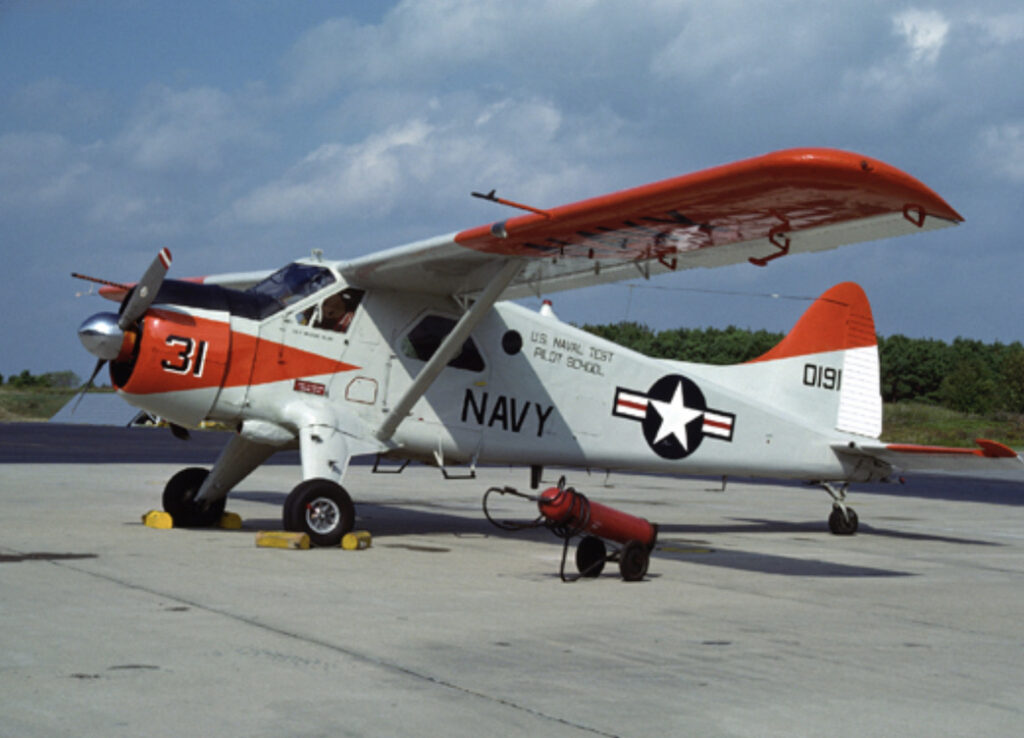
The original “Teakettle 31”, USNTPS U-6
(c) US Navy

Recollections: People often ask me “What’s your favorite aircraft?”  I usually answer with some variation of “Can’t pick just one”.  But, the short list ALWAYS includes the Beaver.  Why?  Because it’s a joy to fly but, beyond that, it is one of the best airplanes that the US Naval Test Pilot School (USNTPS) has in its curricula.  Period.  This statement often elicits skepticism.  I usually address this skepticism with the statement “The U-6 Beaver, as it’s used at TPS, is the perfect F-35 simulator.”  This generally confuses and/or adds to the skepticism.  I always go on to explain it this way:

     One of the missions of USNTPS is to begin to instill in its students “adaptability”.  The ability to adapt to new and foreign situations in the conduct of flight test.  Ultimately that’s what a tester does….adapts to a new aircraft, a new aerodynamic modification or engine, a new system installed in the aircraft.  They must PLAN for their test, CONDUCT the test, and REPORT on the test, all on something that may be very foreign to them.  They must adapt, and overcome–to one degree or another–that destabilizing feeling when you’re presented with something new or, to you, unusual.  The USNTPS curricula bakes this into their students by repetitive exposure to a huge variety of aircraft.  The students test plan, fly, and report on perhaps 20-25 different aircraft during the one year course.  And, perhaps the BEST at this role of teaching “adaptability” (at least for the Fixed Wing students) is the U-6 Beaver.  Think about it.  Most pilots and engineers/NFO’s come to USNTPS (even 30 years ago, and certainly today) without ever having flown a reciprocating-engined airplane.  Without operating an engine with 3 levers, just for one engine.  Certainly without ever having flown a tailwheel aircraft.  In that way, the “newness” of this admittedly 77 year old design is as foreign to a USNTPS student as the prototype F-35 was to the first cadre of its testers.  

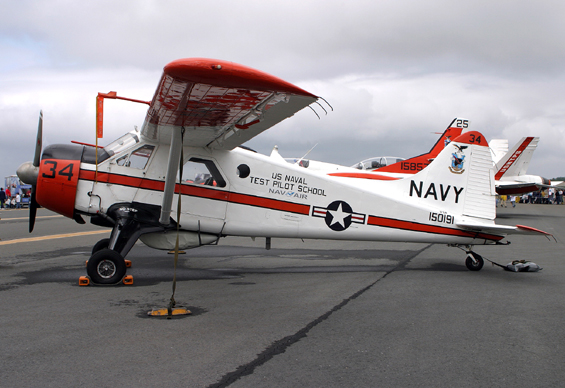
“Tester 34”, USNTPS U-6 (stock photo)
(c) US Navy

I always loved flying the Beaver, watching the students slowly learn how to fly it.  Thinking back on it, it’s amazing that the Navy let me do this because I wasn’t a “taildragger guy”.  It’s a testament to how forgiving the Beaver is and to the strength of the USNTPS Instructor checkout program.  

Flying the Beaver was also a lesson in variety.  My first flight in the Beaver (while a student) was with a Royal Navy helicopter pilot.  I flew it twice more as a student with an ex-Brit fighter pilot.  When I came back as an instructor, I was trained by Chris Wheal, Tom Russell, Jay Elliott, Mike Carriker and others.  I went on to fly it hundreds of times more, on Qual Eval 1 (the first chance for a student to evaluation how an airplane flies…it’s “handling qualities” and to communicate their perspective), Lateral-Directional intro and checkride flights (the U-6 has some interesting Lat-Dir characteristics) and on glider tow flights (the Beaver is a wonderful, if uneconomical, tow plane). 

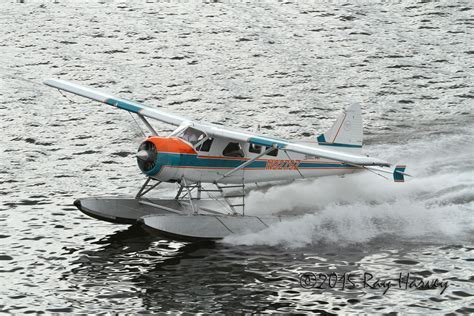
When my family asks me what I want for Christmas present, my answer is always “A DHC-2 Beaver on floats”.   I watch them fly by my house in the Seattle area almost daily and the sound is wonderful.  I’ve flown a Beaver on floats twice, both at the behest of the Navy.  USNTPS often hires a Beaver on floats for a Qual Eval (more of that “adaptability training”) and, in 1988, I flew one at Lake Tahoe to evaluate the idea of TPS buying their own set of floats and doing an exercise using our own floatplane (we already did our own float helicopter using an OH-58 equipped with floats).  I discovered that–as good as the Beaver is on wheels–it’s AMAZING on floats.  Almost bullet proof.  But, the CO decided against getting our own floatplane, concerned about currency and safety.  Rumor has it that TPS is modifying their U-1 to turbine power and purchasing floats.  Perhaps I’ll get recalled to be an instructor!

DHC-2 N9279Z (stock photo)
(c) Flickr.com

Filed Under: 1-25, Airplane SE Piston, Complete

Cessna 680 Sovereign

December 30, 2024 by Bob Stoney Leave a Comment

Aircraft Information
> Aircraft Make: Cessna Model: 680 Nickname: Sovereign
> Aircraft Mil Civ Description: Business Jet
> FAA Category and Class: Airplane Multi-engine Land
> Engine Description: Twin jet

Aircraft Experience
> As of: 9/2/2021
> Number of Hours Flown: 84
> Number of Times Flown: 35
> Other Aircraft Models Associated: none

First Flown Information
> Sequence First Flown: 134
> Date First Flown: 3/25/2003
> Location First Flown: Wichita Mid-continent airport (KICT)
> Who and/or What Organization First Flown With: Cessna Flight Test, Bob Rice

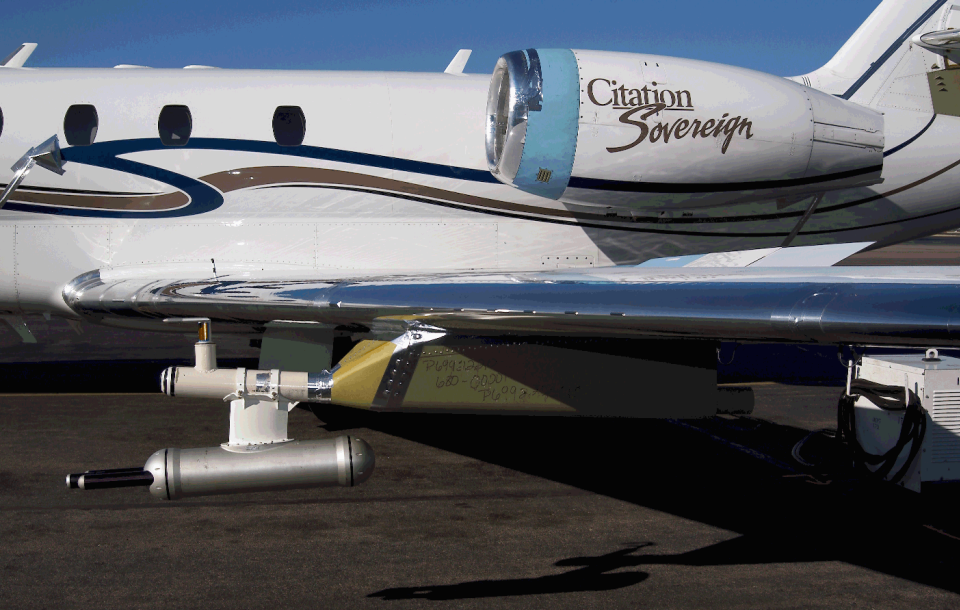
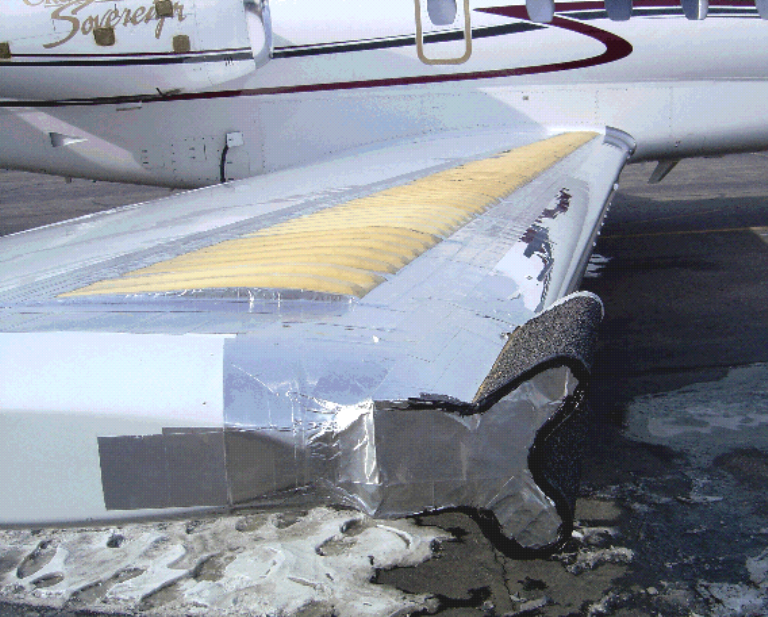
Recollections: The 680 was one of the first civilian flight test programs where I got extensive Part 25 testing experience.  My logbook from 2003 and 2004 shows that I did stall testing, inlet distortion, fuel system testing, systems testing at negative g, engine start testing, control system malfunction tests (Cessna does many of those in the airplane!), autopilot testing, and extensive testing to certify the airplane for flight in icing, including natural icing and “ice shapes” testing (see photos).

Cessna Sovereign Ice Instrumentation (c) Bob Stoney

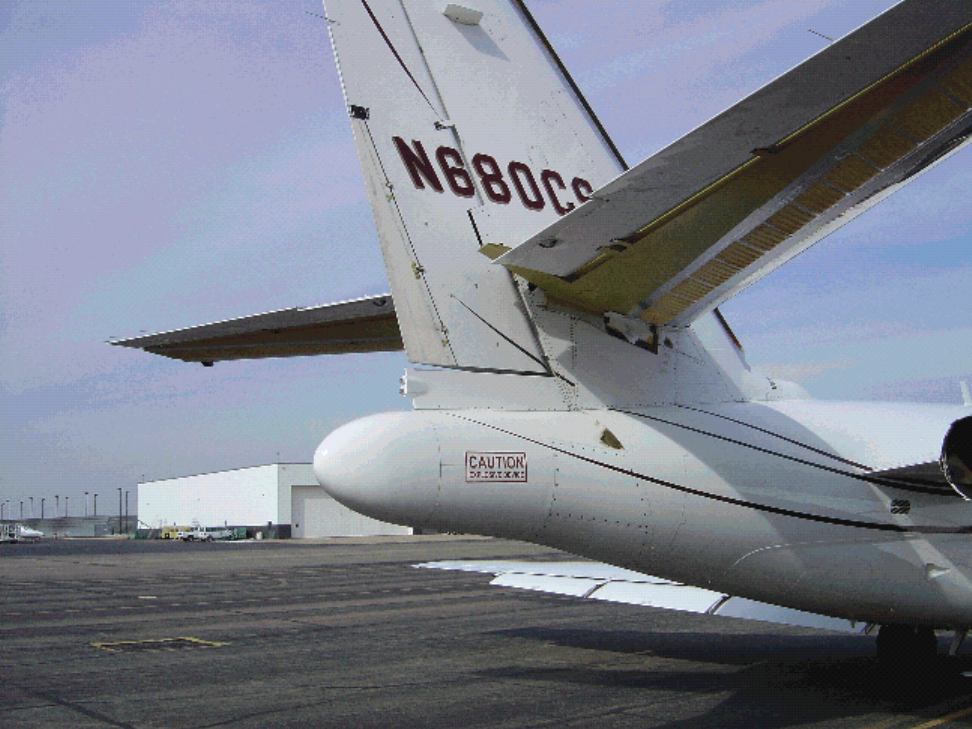
Cessna builds a solid airplane and the amazing thing is, from the smallest bizject (like the CJ) to the biggest (like high-mach Citation X) they are fly very similarly.  The Sovereign was no exception.

Cessna Sovereign Spin Chute (c) Bob Stoney

One unusual aspect of my time in the Sovereign was it’s the only civilian airplane where I got a type rating in the airplane itself…..and I did it with an FAA guy (FSDO inspector Dan Buerki) in the other seat (and the PIC, a Cessna pilot, riding in the back!).  Dan was a great pilot and instructor, one of the many ASI’s who make FAA Flight Standards look good!

Cessna Sovereign Wing Ice Shapes (c) Bob Stoney

Filed Under: 126-150, Business Jet, Complete

Grumman OV-1 Mohawk

May 7, 2020 by Erin 2 Comments

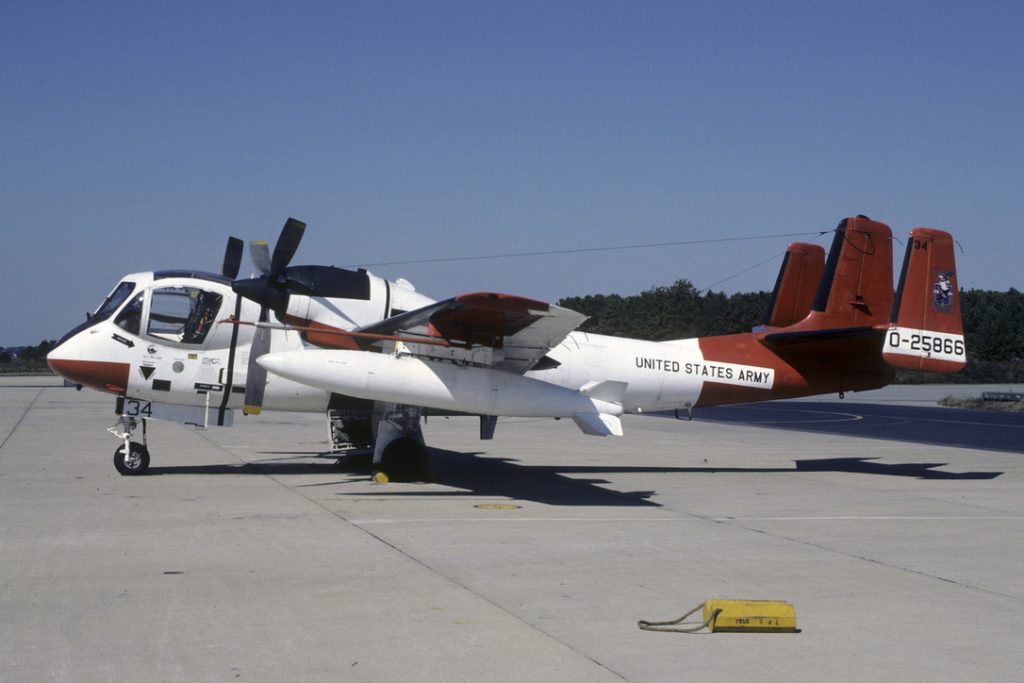
USNTPS OV-1 (File photo; rights paid)

Aircraft Information
Aircraft Make: Grumman
Aircraft Model: OV-1
Aircraft Nickname: Mohawk
Aircraft Mil Civ Description: Airplane ME Turboprop
Category: Airplane
Class: Multi Engine Land
Engine Description: Twin Engine

First Flown Information
Sequence First Flown: 23
Date First Flown: 03/31/1986
Location First Flown: NAS Patuxent River, MD
Who and/or What Organization First Flown With: Chris Wheal, USNTPS Instructor

Aircraft Experience
As of: 05/09/2020
Number of Hours Flown: 175
Number of Times Flown: 11
Other Aircraft Models Associated: OV-1B and OV-1D

Recollections:

–I’m one of the few (maybe only) Fixed Wing Syllabus students at TPS who flew the Mohawk as one of their “Group airplanes”. I flew the OV-1 instead of the A-4 because my Fam 1 in the A-4 I just did NOT fit in the machine. This was early in the year for me and I was sure I was going to get kicked out of the school. Instead, they dual-qualified me in the OV-1 AND the T-38. Along with (like everybody else) the T-2. I flew ALL THREE airplanes ALL YEAR. Lemonade out of lemons.
–My first flight in the Mohawk was with Chris Wheal. Chris was one of the finest pilots I ever flew with. Not everybody got along with him…he could be demanding. And impatient. But, if he liked you, you were golden. And he liked me. Every flight with him was a huge learning experience. My first four flights with Chris were in the T-38, NU-1B (2 flights), and the OV-1. Guess I didn’t scare him too badly.
–My relationship with the Mohawk was a “love/hate” relationship. I loved how unique it was (ejection seat Army airplane, left seat flew left-hand on stick with right hand on throttle; fully aerobatic twin engine prop machine, unique flight control system with springs and other unusual features.
–And I hated it because it killed two of my classmates, Captain Scott Paul, USMC and LT John “Mike” Yandell, USN. They died when the OV-1 they were flying got a small piece of “stuff” in the oil system, plugging the auto-feather oil supply line (which was used to “sense” or “determine” if an engine was running…in this case the engine was running just fine but the partially-blocked oil line told the auto-feather system the engine was bad and the system feathered a perfectly good engine), right as they were taking off from NAS Norfolk. They were unable to control the full asymmetry and we lost them. July 15, 1986. Many who heard about the mishap thought it was me in the airplane, because I (with my classmate Dave Porter) were the only ones on the schedule that morning in a Mohawk…Scott and Mike had “added on” and so when people checked the schedule to see “who was in the OV-1?” the answer was “Stoney/Porter”. Dave and I got a radio call from the Duty Officer (who had better SA on what had happened) to “Return to Base immediately”. I was sure we’d done something wrong and were in trouble. When we pulled back into the line, we learned the terrible news. That loss motivated in many of us a passion for safety, to honor Mike and Scott with our actions, that lasts to this day. While that passion is good…it was not worth the cost.

Filed Under: 1-25, Airplane ME Turboprop, Complete

  • « Previous Page
  • 1
  • …
  • 11
  • 12
  • 13

Recent Comments

  • Bob Stoney on Grumman OV-1 Mohawk
  • Brian Paul on Grumman OV-1 Mohawk
  • Bob Stoney on Raytheon 390 Premier I

Contact Me.

Click Here.

Visitor Count

9489

Copyright © 2026 · Outreach Pro on Genesis Framework · WordPress · Log in