teakettle31

A Site To Catalog My Aircraft Adventures

  • About
    • About This Website
    • About Me
    • About My Favorite Aircraft
  • Aircraft I’ve Flown Organized By…
    • Mil/Civ Type
      • Airplane Single-engine Piston
      • Airplane Multi-engine Piston
      • Airplane Single-engine Turboprop
      • Airplane Multi-engine Turboprop
      • Tactical Jets
      • Large Jets
      • Business Jets
      • Helicopters
      • Gliders
      • Lighter than air
      • Other
    • Order Flown
      • Order Flown: 1-25
      • Order Flown: 26-50
      • Order Flown: 51-75
      • Order Flown: 76-100
      • Order Flown 101-125
      • Order Flown: 126-150
      • Order Flown: 151-175
      • Order Flown: 176+
  • Other Content
    • Favorite Links
    • Documents
    • My Store
  • Flight Test Services

North American P-51 Mustang

January 27, 2025 by Bob Stoney Leave a Comment

Aircraft Information
> Aircraft Make: North American Aviation (NAA) Model: P-51 Nickname: Mustang
> Aircraft Mil Civ Description: Airplane SE Piston
> FAA Category and Class: Airplane Single Engine Land
> Engine Description: single (huge!) piston

Aircraft Experience
> As of: 6/25/2024
> Number of Hours Flown: 4
> Number of Times Flown: 3
> Other Aircraft Models Associated: none

First Flown Information
> Sequence First Flown: 30
> Date First Flown: 10/17/1986
> Location First Flown: NAS Patuxent River, MD (KNHK)
> Who and/or What Organization First Flown With: Bob Bryne (USNTPS Qual Eval)

Recollections: Yep, you’re reading it right…have flown the Mustang 3 times.  Twice in the Navy (first time as a USNTPS Student, doing Qual Eval 3, and later–with Doug Schultz in the same airplane) and one more time in 2022 as part of an FAA flight test “Upset Avoidance and Recovery Training” course, flown with John Black of the UAT company, who do an excellent job with upset training.  Not exactly a high time Mustang pilot (like those that own them or the lucky ones who somehow figure out how to fly one for somebody else), but enough to be comfortable in the plane.  Looking at my logbook, I see that I’ve landed it 17 times (4 on the first flight, 12 times with Doug–>I remember wanting to focus on landings during that flight, and then 1 most recently).
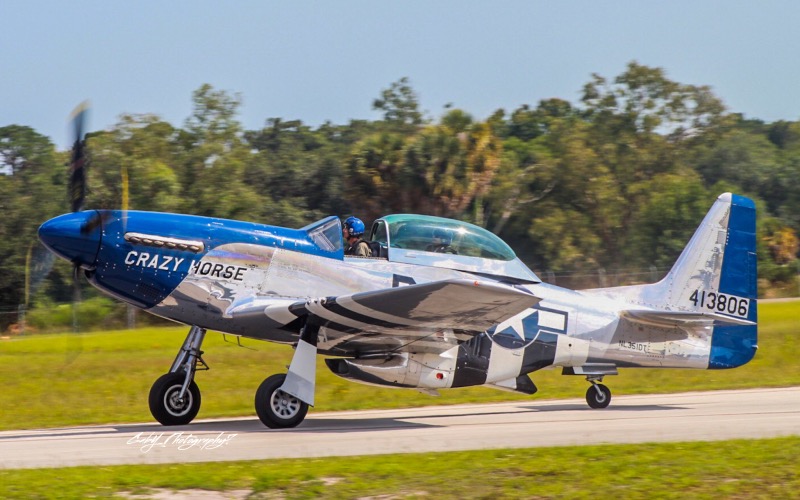
P-51D N851D “Crazy Horse” (stock photo)
(c) jet photos.com

Qual Eval 3–the exercise for which I first flew the P-51–followed “QE1 and QE2” are part of the over-arching “Qual Eval” program which is designed by USNTPS to breed a fundamental skill into it’s graduates…the skill of “adaptability”….being able to adapt to new aircraft, to understand what to study, how to prepare, how to test and how to report on the results of their testing.  This is a skill which is relatively easy to explain, but difficult to achieve and it requires students at the school to first conduct these “mini test programs” under the tutelage of an instructor, eventually transitioning to doing it on their own.  The learning NEVER ends, however.  38 years after graduating from USNTPS, I still conduct “Qual Evals”, both in my job and for pleasure. 
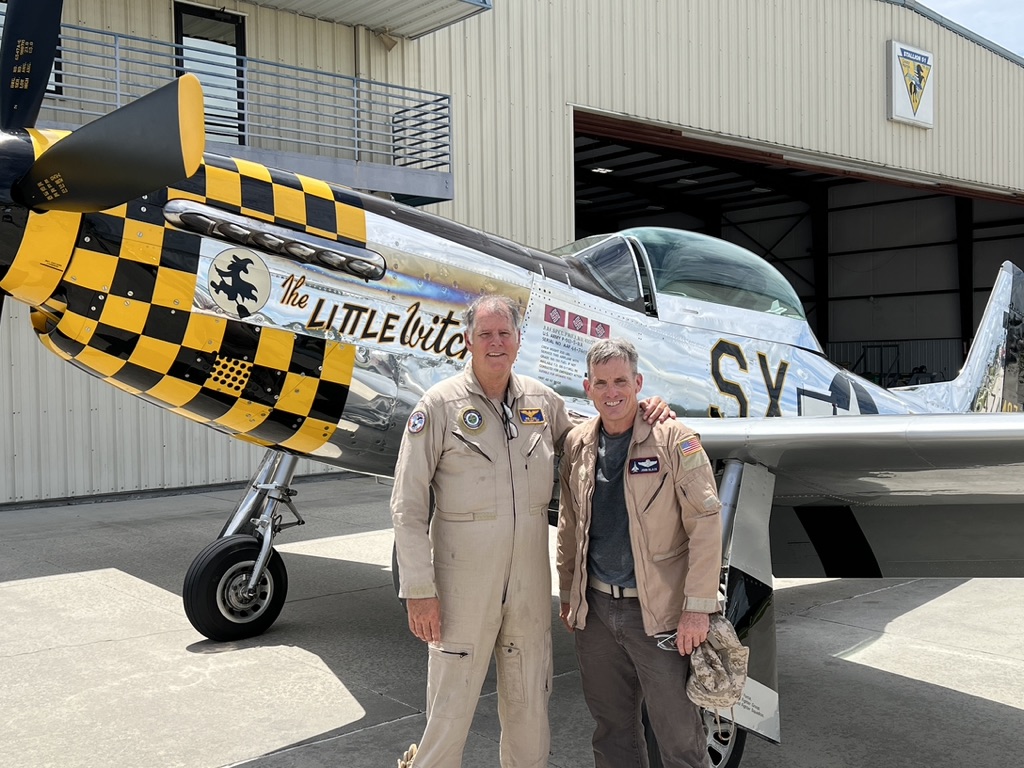
TF-51 N51LW upset training (VFR) w/UAT’s John Black
(c) Bob Stoney

The flight as a student at TPS required a test plan before and then a full report after.  In the report, I didn’t hold back, noting the extremely high control forces, very slow roll rate (at least compared to post-WW2 designs) and a bevy of human factors issues.  But, the report also contains a detailed paragraph on the “Device Indicating Condition of Korelation”….this device was bigger following that P-51 flight in 1986.  Much bigger.
Filed Under: 26-50, Airplane SE Piston

Aeronca 11AC Chief

January 27, 2025 by Bob Stoney Leave a Comment

Aircraft Information
> Aircraft Make: Aeronca Model: 11AC Nickname: Chief
> Aircraft Mil Civ Description: Airplane SE Piston
> FAA Category and Class: Airplane Single Engine Land
> Engine Description: single piston

Aircraft Experience
> As of: 6/25/2024
> Number of Hours Flown: 8
> Number of Times Flown: 9
> Other Aircraft Models Associated: Champ

First Flown Information
> Sequence First Flown: 38
> Date First Flown: 11/27/1987
> Location First Flown: Galt, CA (Wilton private airstrip)
> Who and/or What Organization First Flown With: John Stoney, owner

Recollections: This was my brother’s airplane.  At the time of flying it, I was NOT a high-time tailwheel pilot (by this time, I’d flown the Beaver at USNTPS as an instructor, but never in this small of an airplane).  The logbook shows two dual flights with brother John and then solo.  I distinctly remember that most of my time was spent in the landing pattern and that the airplane, somewhat surprisingly, was a real glider…pulling the power off at the 180 was not enough…I had to extend a bit, slip, etc.  The other thing I remember is John’s stories later that he was really worried I’d screw it up.  Brotherly love at work!

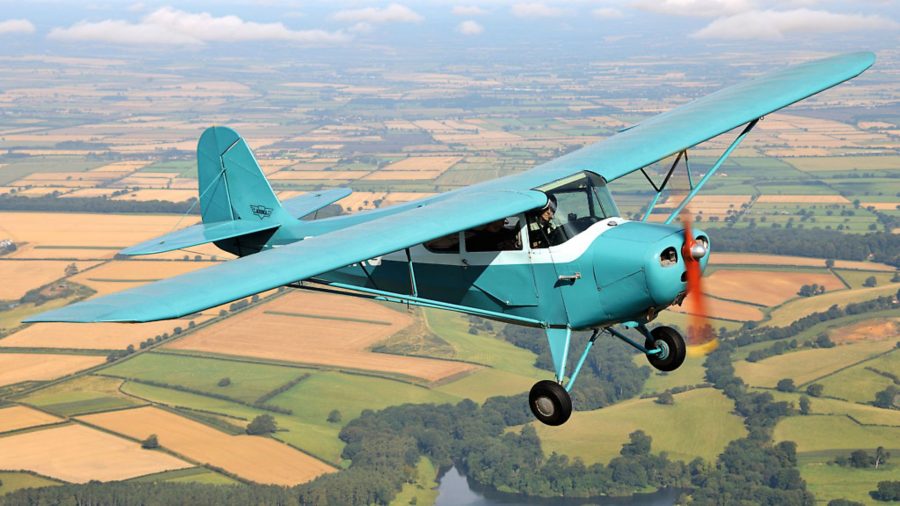
Aeronca 11AC Chief (stock photo)
(c) pilotweb.aero

Filed Under: 26-50, Airplane SE Piston

North American B-25 Mitchell

January 24, 2025 by Bob Stoney Leave a Comment

Aircraft Information
> Aircraft Make: North American Aviation Model: B-25. Nickname: Mitchell
> Aircraft Mil Civ Description: Airplane ME Piston
> FAA Category and Class: Airplane Multi-engine Land
> Engine Description: Twin piston

Aircraft Experience
> As of: 6/25/2024
> Number of Hours Flown: 1
> Number of Times Flown: 1
> Other Aircraft Models Associated: none

First Flown Information
> Sequence First Flown: 39
> Date First Flown: 12/7/1987
> Location First Flown: Near Ft Worth, TX (did not record airport ID)
> Who and/or What Organization First Flown With: Howard Pardue

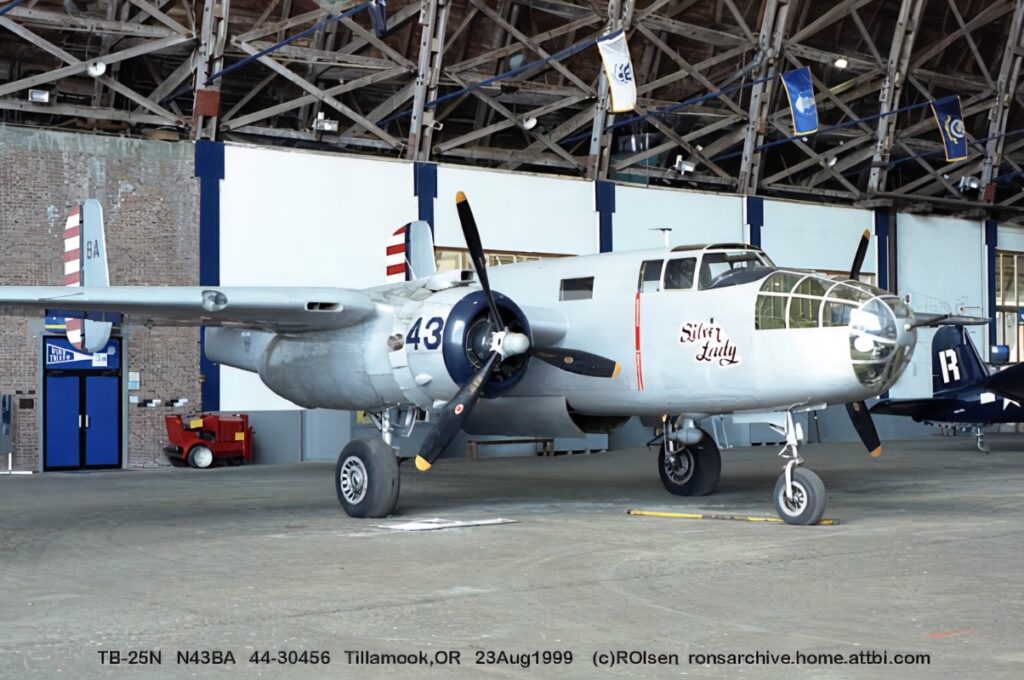
Recollections: I flew Serial number 44-30456 with Howard Pardue  on a Qualitative Evaluation from, I believe, Breckenride, TX airport (Mr. Pardue’s home airport).  What a beast!  Hard as heck to taxi (no nosewheel steering and the brakes were extremely sensitive and “grabbed” in a non-linear fashion) but, once free of the ground, she handled well.  Flying the Mitchell was a wonderful experience but I also enjoyed getting out of the seat, to let a fellow Test Pilot have his turn, and move to the bubble turret.  Flying over the Texas countryside with the most incredible view from that turret is a sold memory in my brain.


Believed to be the same airplane I flew, but 12 years later, Ser No 44-20456 at the Tillamook, OR museum
(c) ROlsen ronsarchive.hom.attbi.com

Years later, I took ground school in the B-25, with the hopes of getting qualified in her at the Historic Flight Foundation near Spokane, WA but the foundation folded before I could make it a reality.  I also tried at the CAF’s “Arizona Wing” in Mesa, AZ (attended ground school) but learned that breaking into that world was best accomplished with unlimited time and A&P mechanics skills.

Filed Under: 26-50, Airplane ME Piston

Boeing B-52 Stratofortress

January 23, 2025 by Bob Stoney Leave a Comment

Aircraft Information
> Aircraft Make: Boeing. Model: B-52. Nickname: Stratofortress
> Aircraft Mil Civ Description: Large Jet
> FAA Category and Class: Airplane Multi-engine Land
> Engine Description: 8 engines (!)

Aircraft Experience
> As of: 9/2/2021
> Number of Hours Flown: 4
> Number of Times Flown: 1
> Other Aircraft Models Associated: none

First Flown Information
> Sequence First Flown: 41
> Date First Flown: 5/6/1988
> Location First Flown: Westover ARB, MA
> Who and/or What Organization First Flown With: USAF Squadron (TBV)

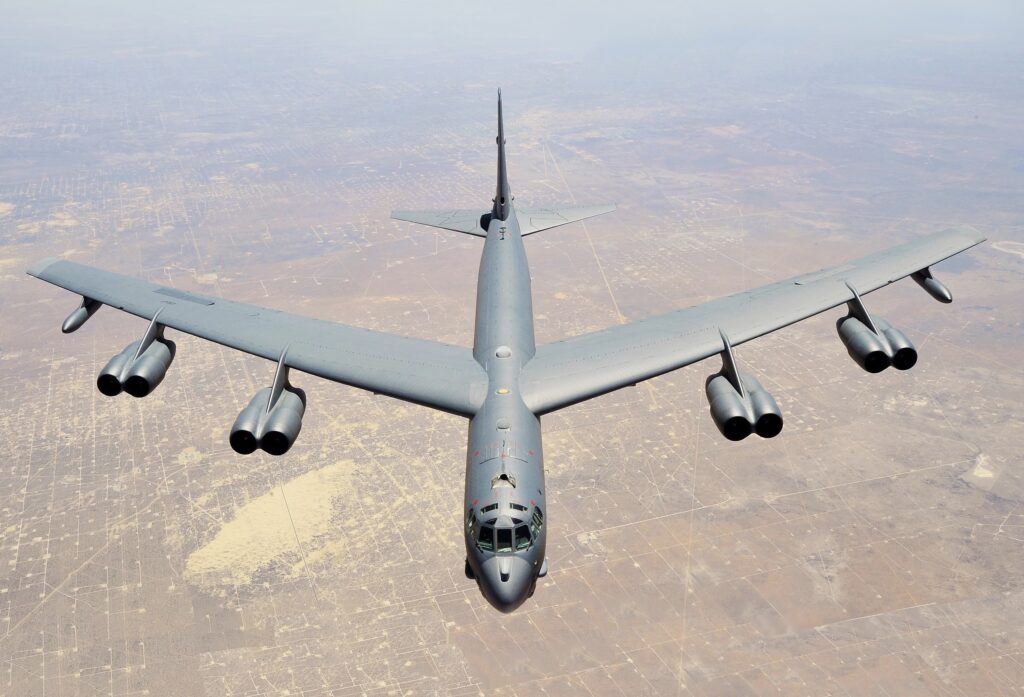
Recollections: Another DT-II exercise as an Instructor at USNTPS (you can see why being an instructor there is one of the best jobs in aviation!).  I remember three things about my flight in the “Buff” (Big Ugly Fat F-er):

1) We got to inflight refuel off of a USAF KC-135 tanker.  I pulled in and fought hard to stay in position, moving the yoke in roll fairly frequently and aggressively, along with frequent inputs on the throttles (eight of them!).  I was working pretty hard.  The IP in the right seat says to me “Bob, you’re staying in contact but you’re working too hard…mind if I show you how to do it?”  I relinquished the controls and watched him show me how.  He pulled in, moving the controls what appeared to me–as a trained test pilot–to be exactly the compensation I’d been using…relatively large/frequent lateral inputs, throttle inputs.  And he says “See?  It’s not that hard.”  I chuckled to myself and took it as a lesson concerning compensation and Cooper Harper ratings.

B-52 (File photo)
(c) Wikipedia

2) I shot an instrument approach during my “qual eval” and, while on the approach, I got about 3 knots below the target speed.  Over the intercom, I heard “you’re 3 slow”.  I looked at the IP sitting next to me and his lips weren’t moving.  I also didn’t recognize the voice.  So, I said “who’s talking?” and the response came “RADAR NAV”.  The Radar Navigator on the B-52 is located “downstairs”, on a lower deck below the cockpit, in a window-less area of the airplane.  I learned during the debrief that USAF Tech Order so-and-so requires that the Radar Nav verbally report any speed deviation on approach slower than 2 knots.  Good job Radar Nav!  (though what I was really thinking was “I KNOW I’m slow….I’m working it…YOU come up here and try to fly this thing!”)

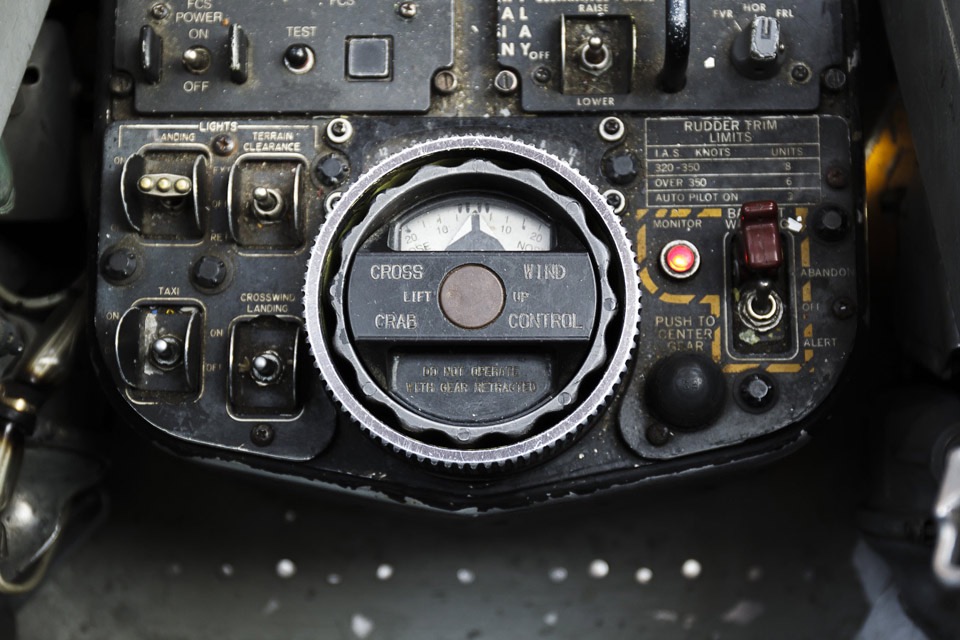
3) On my flight, I lucked out and had about a 15-20 knot crosswind on landing.  The B-52 is unique in that crosswinds are handled by landing wings level in a “crab”…but the landing gear itself is aligned with the runway by a hydraulically powered system which rotates the landing gear…there’s a control on the aft portion of the center aisle stand where you set the angle/speed of the wind and the rest is automatic (see figure).  It worked like a champ!  Easiest crosswind landing ever.

B-52 Crosswind landing gear control (stock photo)
(c) aopa.org

Filed Under: 26-50, INCOMPLETE, Large Jet

Hawker Siddeley Nimrod MK-2P (MR2)

January 6, 2025 by Bob Stoney Leave a Comment

Aircraft Information
> Aircraft Make: Hawker Siddeley. Model: MK-2P Nickname: Nimrod
> Aircraft Mil Civ Description: Large Jet
> FAA Category and Class: Airplane Multi-engine Land
> Engine Description: Four engine jet

Aircraft Experience
> As of: 9/2/2021
> Number of Hours Flown: 6
> Number of Times Flown: 2
> Other Aircraft Models Associated: None

First Flown Information
> Sequence First Flown: 44
> Date First Flown: 5/11/1988
> Location First Flown: RAF Lossiemouth, Scotland
> Who and/or What Organization First Flown With: 120 Squadron

Recollections: I had the pleasure of flying the Nimrod as a staff monitor for a DT-II Graduation exercise at USNTPS.  In a classic “small world” situation, this particular assignment was with my squadron mate and first Navigator from P-3 days, Al Scott, so it was doubly fun. Al was the best Navigator and TACCO (and friend) a P-3 bubba could have. He saved my bacon on more than one occasion when we served in my first P-3 squadron together, including a time when we lost all navigation and depended solely on Al’s skill with celestial navigation (yes, the P-3 had a sextant–not like the ones on a sailing ship, our sextant fit thru a small port in the top of the fuselage and used mirrors to take readings of the stars’ position).

(Then Ensign, later CAPT) Al Scott, DT-II student
(c) Bob Stoney

As a P-3 guy (which does the same mission for the US Navy as the Nimrod does for the RAF) I was fascinated to compare and contrast these two airplanes.  The Nimrod has a higher dash speed and the RAF guys always talked about how they could get “to datum” way faster than the relatively slow P-3…whereas the P-3 guys always criticized the Nimrod’s relatively limited endurance.  Flying the Nimrod, with the famous RAF 120 squadron was a treat, getting to see their professionalism and dedication to the mission–in that regard we were the same. 

Crest of RAF 120 Squadron
(c) Wikipedia

I liked the way the Nimrod handled and I was interested in the sonobuoys they carried…they were half-sized versions of what the P-3 carried and I’d never seen them before.  The other thing I learned during this time (besides how good Scotch tastes when sampled on the “Whiskey Trail”) was that, in an RAF squadron, a “back ender” could be in command of the airplane…be “the Captain”.  Very different from the US but, in the end, probably no effect as I assume the opinion of all would be carefully weighed and balanced in any emergent situation.

Nimrod MR2
(c) Wikipedia

Filed Under: 26-50, Large Jet

  • « Previous Page
  • 1
  • 2

Recent Comments

  • Brian Paul on OV-1
  • Bob Stoney on Raytheon 390 Premier I

Contact Me.

Click Here.

Visitor Count

7796

Copyright © 2026 · Outreach Pro on Genesis Framework · WordPress · Log in