teakettle31

A Site To Catalog My Aircraft Adventures

  • About
    • About This Website
    • About Me
    • About My Favorite Aircraft
  • Aircraft I’ve Flown Organized By…
    • Mil/Civ Type
      • Airplane Single-engine Piston
      • Airplane Multi-engine Piston
      • Airplane Single-engine Turboprop
      • Airplane Multi-engine Turboprop
      • Tactical Jets
      • Large Jets
      • Business Jets
      • Helicopters
      • Gliders
      • Lighter than air
      • Other
    • Order Flown
      • Order Flown: 1-25
      • Order Flown: 26-50
      • Order Flown: 51-75
      • Order Flown: 76-100
      • Order Flown 101-125
      • Order Flown: 126-150
      • Order Flown: 151-175
      • Order Flown: 176+
  • Other Content
    • Favorite Links
    • Documents
    • My Store
  • Flight Test Services

Dassault DA-50 Falcon

January 23, 2025 by Bob Stoney Leave a Comment

Aircraft Information
> Aircraft Make: Dassault. Model: 50. Nickname: Falcon
> Aircraft Mil Civ Description: Business Jet
> FAA Category and Class: Airplane multi-engine land
> Engine Description: Tri jet

Aircraft Experience
> As of: 9/2/2021
> Number of Hours Flown: 3
> Number of Times Flown: 3
> Other Aircraft Models Associated: several Dassault models

First Flown Information
> Sequence First Flown: 151
> Date First Flown: 10/20/2004
> Location First Flown: Lincoln, Nebraska Airport (KLNK)
> Who and/or What Organization First Flown With: Duncan Aviation

Recollections: My first flight in the Falcon (this is a big, three-engined airplane) was a project to evaluate a Universal cockpit display installed in and airplane owned by none other than Michael Bloomberg, at the time the mayor of New York City.

The French cockpit, and displays were very foreign and unusual but, with the help of Bloomberg’s pilot, we got the test done.

I’ve flown the 50 a couple of times since then, as Honeywell uses one as a flying tech demonstrator.  
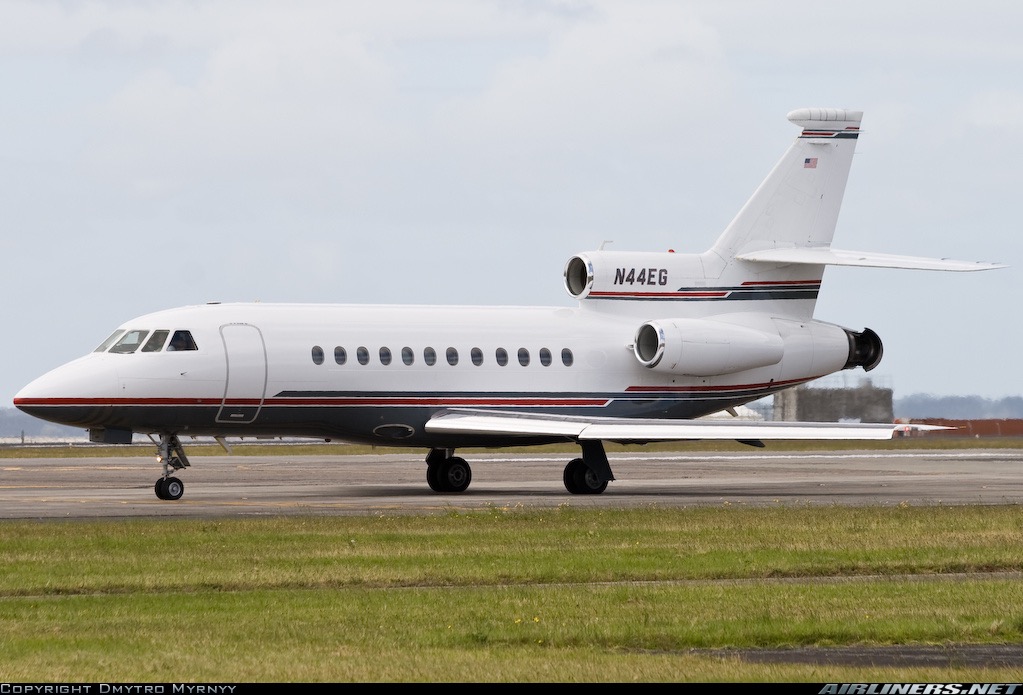
Dassault Falcon 50 (stock photo)
(c) airliners.net

Filed Under: 151-175, Business Jet, Complete

Airbus A320

January 23, 2025 by Bob Stoney Leave a Comment

Aircraft Information
> Aircraft Make: Airbus. Model: 320. Nickname: None
> Aircraft Mil Civ Description: Large Jet
> FAA Category and Class: Airplane multi-engine land
> Engine Description: twin jet

Aircraft Experience
> As of: 9/2/2021
> Number of Hours Flown: 2
> Number of Times Flown: 1
> Other Aircraft Models Associated: None

First Flown Information
> Sequence First Flown: 162
> Date First Flown: 12/3/2008
> Location First Flown: Toulouse, France
> Who and/or What Organization First Flown With: Airbus Flight Test

Recollections: My first flight ever in an Airbus (flown in an A320-232).  I was still a bit jet-lagged from traveling to France and I didn’t know much about the Airbus design, so it’s all a bit of a blur.  I do remember that it was a chance to fly with a famous Airbus Test Pilot, Ed Strongman and that alone made the flight memorable.  The airplane we flew was F-WWDB, performing some kind of fuels research if I recall.

The cockpit was a bit confusing…somewhat like a Boeing, but not really (ECAM for EICAS?) and, at the time, I don’t think I appreciated the simplicity of the design.  That said, I didn’t understand or enjoy the fact that the throttles didn’t move when autothrottle was engaged…something that–now more than a decade later and two Airbus type ratings under my belt–I’m still not used to.

Two days later, a bit more rested, I got to fly the A380 and this was where my understanding of and appreciation for the Airbus design began it’s journey.  Read about my comparison between the A320 and 380 in the 380 entry.

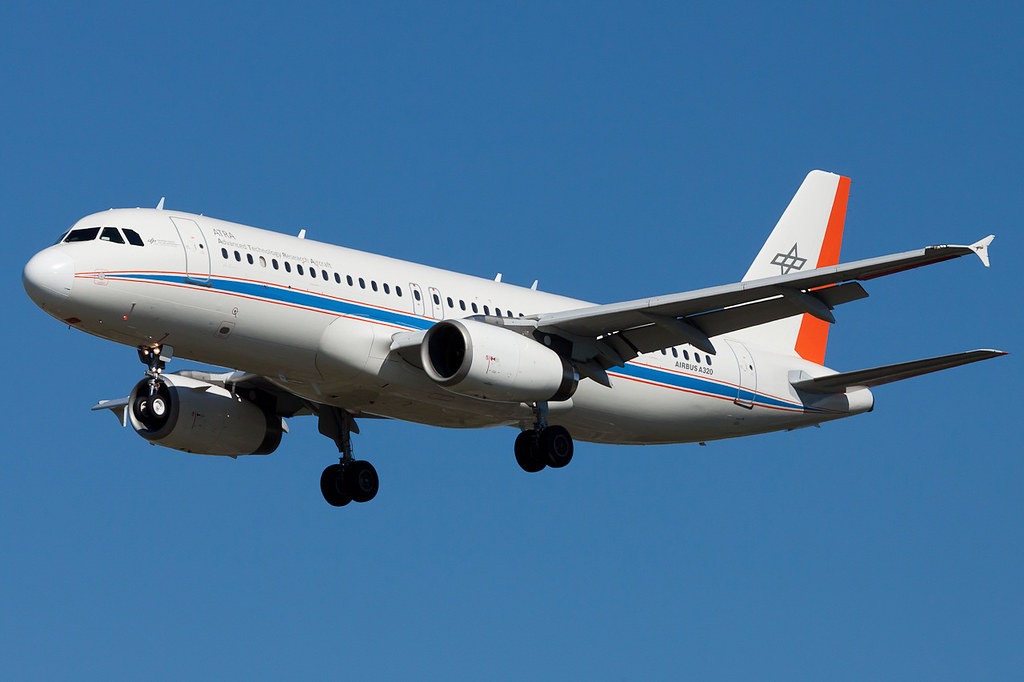
Airbus A320 registration F-WWDB, serial 659 (stock photo)
(c) flickr.com

Filed Under: 151-175, Complete, Large Jet

Airbus A380

January 23, 2025 by Bob Stoney Leave a Comment

Aircraft Information
> Aircraft Make: Airbus. Model: 380. Nickname: None
> Aircraft Mil Civ Description: Large Jet (boy, is it!)
> FAA Category and Class: Airplane Multi-engine Land
> Engine Description: Quad jet

Aircraft Experience
> As of: 9/2/2021
> Number of Hours Flown: 2
> Number of Times Flown: 1
> Other Aircraft Models Associated: Airbus Flight Test

First Flown Information
> Sequence First Flown: 163
> Date First Flown: 12/5/2008
> Location First Flown: Toulouse, France
> Who and/or What Organization First Flown With: Airbus Flight Test

Recollections: This was my second flight ever in an Airbus airplane and it was conducted on a blustery afternoon in Toulouse.  My first flight had been just two days earlier, on an Airbus A320 (read my recollections of that flight here).  

First–to compare and contrast the A320 with the A380–the two airplanes handled very similarly.  The avionics are very different but the handling qualities were amazingly similar.  One difference that I noted between the two airplanes was the reaction to the gusty crosswind that was present on both flights.  The A320 tended to react to the gusts, and I in turn reacted to the airplane’s motion…the result was, during the approach to my first landing, a tendency towards Pilot Induced Oscillations (PIOs), mostly in the lateral (roll) axis.  Years later (while taking type rating training in the A330) I learned a tip to “not to stir the stew” (don’t try to too tightly control roll) but, on my first flight in the A320 I didn’t know that.  The A380, on the other hand, plowed through the gusts and I did not experience this same PIO tendency (either that or I had already naturally learned “not to stir the stew”).

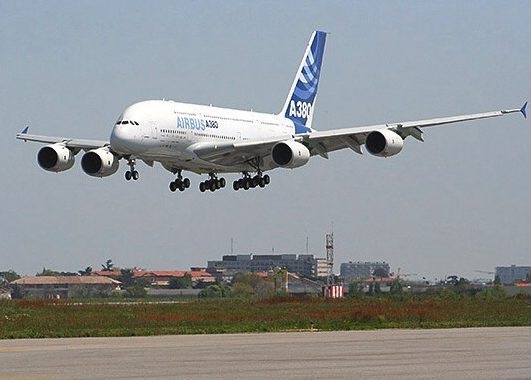
Airbus A380 (stock photo)
(c) Airbus

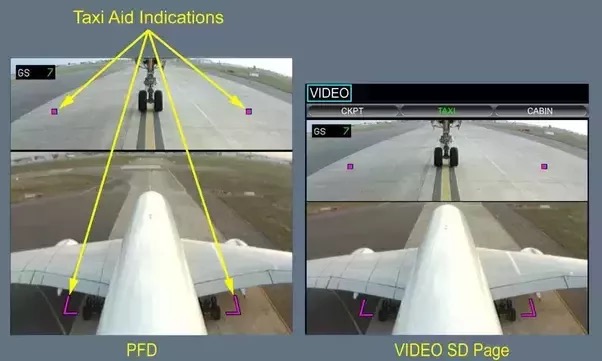
The thing I remember most about my A380 flight concerned nothing on the flight…but rather on the ground.  The airplane is GINORMOUS.  Of course.  And, I had enough experience with big airplanes (I’d first flown the Boeing 747 a year prior, along with the very long Boeing 777-300 beginning two years before) to anticipate that taxiing the A380 from the Airbus flight test ramp to the runway would likely be my most challenging task for the day.  Only, it wasn’t.  Taxiing was one of the easiest tasks.  Why?  Because of several A380 design aspects.  First of all, the cockpit is positioned at a mid-level…it’s not at the same height as the airplane’s upper deck (like the 747), it’s only half way up.  The result is that it doesn’t “look that big” from the cockpit perspective.  Secondly, the nosewheel is located relatively close behind the pilot seats….not WAY BACK like on the 777-300 which requires a precise and well-timed “oversteer” technique wherein you taxi your body well past the point of turning before you turn.  Lastly, the Primary Flight Display (PFD) on the A380, when you’re doing ground operations, doesn’t have the normal airspeed/altitude/attitude display…it has video from a camera looking out the front.  This video has a small reference mark on it, left and right, which you simply place on the centerline during turns.  The combined effect of all these features was that driving this giant airplane around the field was a piece of cake.  Well done, Airbus!

A380 Taxi aid indications
(c) quora.com

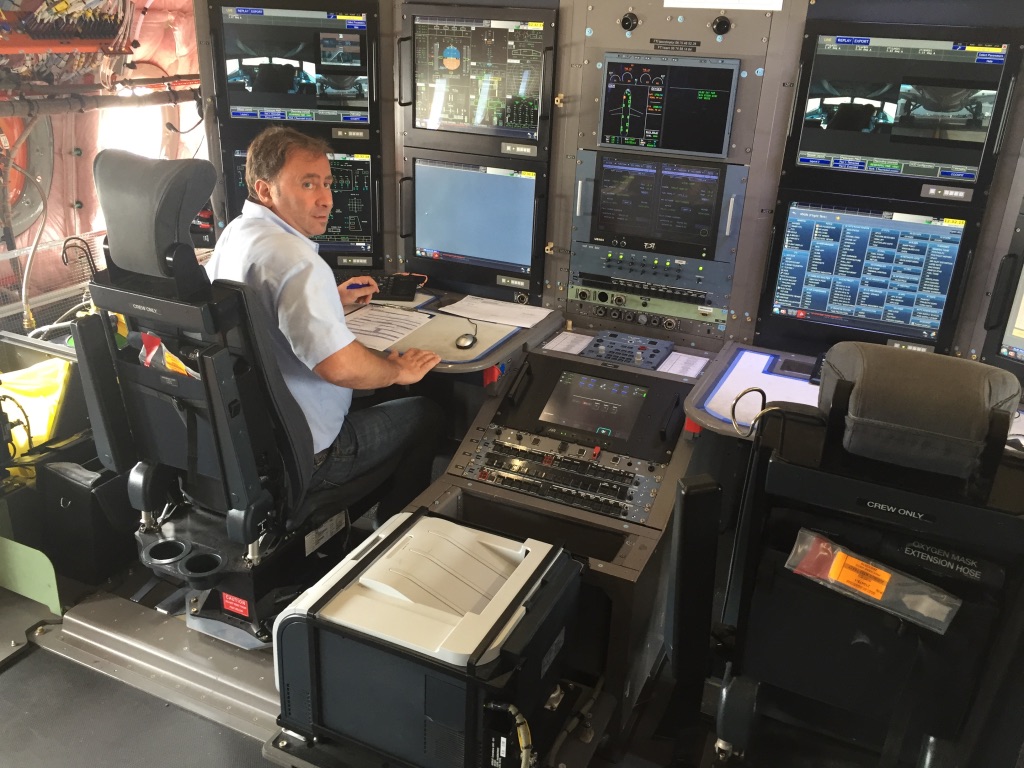
The other interesting aspect I learned on this flight had little to do with the A380 itself but more about Airbus’s approach to testing.  All major-manufacturer test airplanes are highly instrumented, to gather and record thousands of parameters in order to analyze data and show compliance to engineering requirements.  How this data is handled and processed varies from manufacturer to manufacturer.  Some, like Cessna for example, usually store the data onboard for later download and processing.  Some, like Boeing, bring the engineers onboard with them to monitor and analyze the data stream (this often means up to a dozen engineers onboard…think of it as a “flying control room”).  Airbus does it very differently than Boeing, which I learned on my A380 flight.  There were only 3 Airbus personnel on the flight: the Test Pilot, a Test Flight Engineer (TFE) who sat in the cockpit jumpseat and basically operated all the systems, and a Flight Test Engineer (FTE) who was about half way back in the airplane (see figure), running the instrumentation, keeping weight and balance controlled and ensuring a strong telemetry link to a ground-based control room.  You see, Airbus has a system of telemetry receivers that cover the whole of France, and pipe that info back to Airbus controls rooms at the flight test facility in Toulouse.  Many ways to get the job done and very interesting to be exposed to the “Airbus way”.

Stefan Vaux, FTE extraordinaire
(c) Bob Stoney

Filed Under: 151-175, Complete, Large Jet

Mitsubishi MRJ “Spacejet”

January 23, 2025 by Bob Stoney Leave a Comment

Aircraft Information
> Aircraft Make: Mitsubishi. Model: MRJ. Nickname: Spacejet (adopted later in the program)
> Aircraft Mil Civ Description: Large Jet
> FAA Category and Class: Airplane Multi-engine Land
> Engine Description: Twin Jet

Aircraft Experience
> As of: 9/2/2021
> Number of Hours Flown: 2
> Number of Times Flown: 1
> Other Aircraft Models Associated: none

First Flown Information
> Sequence First Flown: 180
> Date First Flown: 3/20/2019
> Location First Flown: Grant County Airport, Moses Lake, WA (KMWH)
> Who and/or What Organization First Flown With: MITAC Flight Test, Don Parker

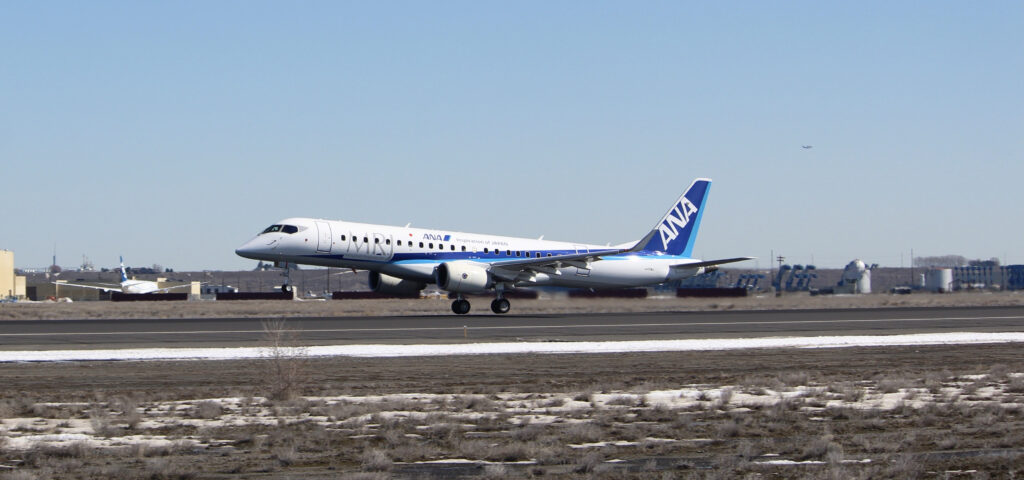
Recollections: I was lucky enough to be assigned to work a “Shadow program” to work with our Japanese counterparts on the certification of a new aircraft design being designed and produced in Japan.  The Mitsubishi Regional Jet (MRJ), later changed to being called the “SpaceJet” (much to the chagrin of many) was a major project started in about 2007, with delays that resulted in first flight being delayed until 2015.  By this time, the FAA was fully partnered with our counterparts (the JCAB–Japan Civil Aviation Bureau), including training and evaluation activities.  The Japanese (both the company–Mitsubishi–and the JCAB) were a pleasure to work with.  That’s not to say there weren’t challenges…there certainly were.  But people in Japan were working very hard, a matter of national pride. 

My first takeoff in an MRJ
(c) Mitsubishi Corporation

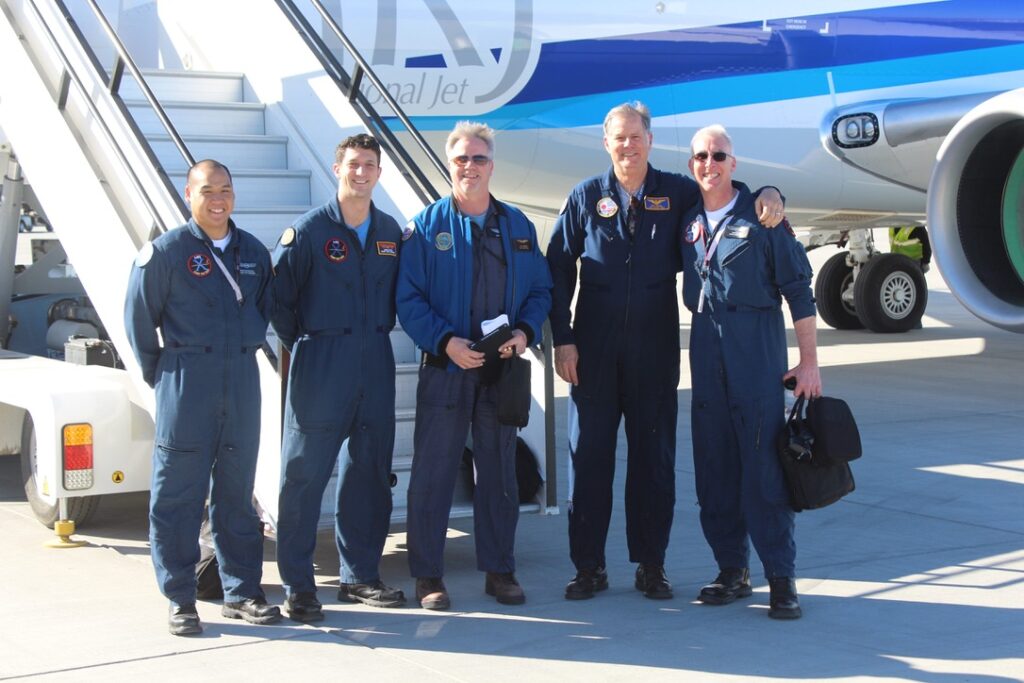
In 2019 it was decided that the FAA should participate in “familiarization flights” (we had been waiting for the certification program to begin with the issuance of an authorization to fly) and, so, in 2019 I finally got to fly the machine.  Turns out I was crewed with a test pilot who had been a student of mine years before, Don Parker (USNTPS Class 113).  Don was one of several western pilots on contract to assist Mitsubishi in the conduct of the test program.  

The crew on my first (and last) flight in the MRJ
(c) Bob Stoney

The airplane was good to fly.  It’s fly by wire, but with relatively little augmentation or control/envelope limiting.  It handled honestly and we were excited for the program to start certification.  Unfortunately, COVID hit and the program–as of this writing–is “on hold” pending business decisions that must be extremely challenging for many of our colleagues in Japan.  I wish them well and hope to fly the MRJ again. [Update 2 years after writing the prior: the MRJ was cancelled; such a shame but proof that certifying an aircraft–particularly one for use in Airline operations–is a tremendously daunting task. For me, the cancellation of this program was one of the saddest experiences of my professional career…I was very much looking forward to actually DOING flight test with my Japanese colleagues and fellow FAA testers.]

Filed Under: 176+, Business Jet, Complete

Learjet 60

January 23, 2025 by Bob Stoney Leave a Comment

Aircraft Information
> Aircraft Make: Learjet Model: 60. Nickname: Lear 60
> Aircraft Mil Civ Description: Business Jet
> FAA Category and Class: Airplane Multi-engine land
> Engine Description: Twin jet

Aircraft Experience
> As of: 9/2/2021
> Number of Hours Flown: 3
> Number of Times Flown: 1
> Other Aircraft Models Associated: none

First Flown Information
> Sequence First Flown: 141
> Date First Flown: 9/19/2003
> Location First Flown: Mid-continent Airport, Wichita, KS (KICT)
> Who and/or What Organization First Flown With: Learjet flight test, Ed Grabman

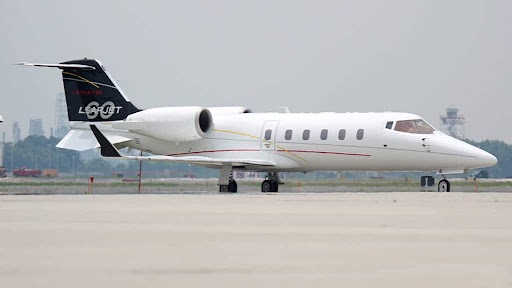
Recollections: As mentioned in my other Learjet recollections (25, 40/45), I don’t have a lot of LJ time.  This flight, conducted on the prototype LJ60 (N601LJ, Serial #1) with Learjet test pilot Ed Grabman, was a hydraulics test, involving operation of gear and flaps with one of the two engines shutdown.  

Such “one off” flights are not atypical of flight testing and are part of what makes it such a great job…variety!

Learjet 60 (Stock photo)
(c) skyjetselite

Filed Under: 126-150, Business Jet, Complete

  • « Previous Page
  • 1
  • …
  • 4
  • 5
  • 6
  • 7
  • Next Page »

Recent Comments

  • Brian Paul on OV-1
  • Bob Stoney on Raytheon 390 Premier I

Contact Me.

Click Here.

Visitor Count

7796

Copyright © 2026 · Outreach Pro on Genesis Framework · WordPress · Log in