teakettle31

A Site To Catalog My Aircraft Adventures

  • About
    • About This Website
    • About Me
    • About My Favorite Aircraft
  • Aircraft I’ve Flown Organized By…
    • Mil/Civ Type
      • Airplane Single-engine Piston
      • Airplane Multi-engine Piston
      • Airplane Single-engine Turboprop
      • Airplane Multi-engine Turboprop
      • Tactical Jets
      • Large Jets
      • Business Jets
      • Helicopters
      • Gliders
      • Lighter than air
      • Other
    • Order Flown
      • Order Flown: 1-25
      • Order Flown: 26-50
      • Order Flown: 51-75
      • Order Flown: 76-100
      • Order Flown 101-125
      • Order Flown: 126-150
      • Order Flown: 151-175
      • Order Flown: 176+
  • Other Content
    • Favorite Links
    • Documents
    • My Store
  • Flight Test Services

Cessna 172 Skyhawk

January 24, 2025 by Bob Stoney Leave a Comment

Aircraft Information
> Aircraft Make: Cessna. Model: 172. Nickname: Skyhawk
> Aircraft Mil Civ Description: Airplane SE Piston
> FAA Category and Class: Airplane Single Engine Land (and Sea)
> Engine Description: Single piston

Aircraft Experience
> As of: 11/4/2024
> Number of Hours Flown: 205
> Number of Times Flown: 133
> Other Aircraft Models Associated: Many submodels of the C-172

First Flown Information
> Sequence First Flown: 7
> Date First Flown: 8/25/1981
> Location First Flown: Corpus Christi, TX
> Who and/or What Organization First Flown With: Not recorded.
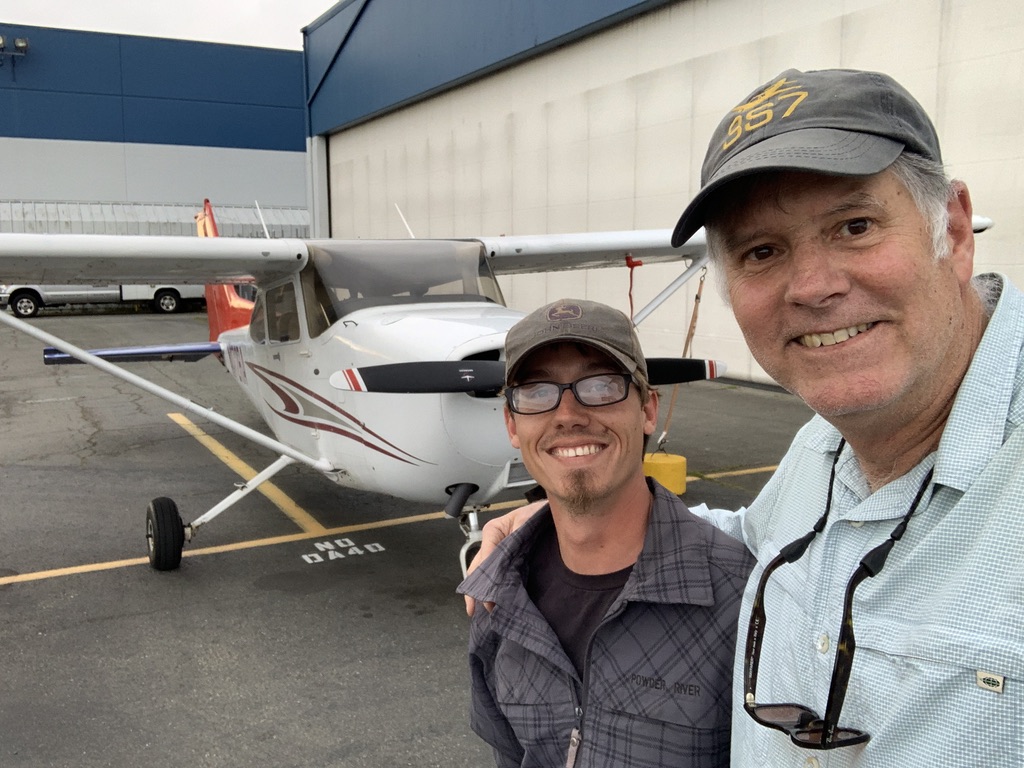
C-172 intro flight at Boeing Field’s Galvin Training with Kevin (he delivered our horse, Jewels, from Boise)
(c) Bob Stoney

Recollections: More C-172’s have been built than any other aircraft.  Over 44,000 of them…and Cessna (Textron) is still building them.

The airplane is simple to operate, fun to fly, forgiving and has a reasonable payload (with care, you can take 2 passengers, maybe 3 if they’re not too heavy and go a reasonable distance).

I also flew the larger-engined T-41 (built for the US Air Force as a screener trainer and still in use by more than 12 militaries world-wide) a bit, in various Navy flying clubs. The extra 50 horsepower really helps.
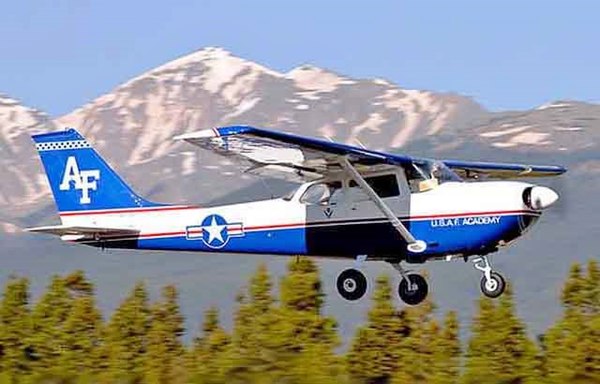
USAFA T-41 Mescalero (stock photo)
(c) wikipedia.org

Filed Under: 1-25, Airplane SE Piston

Northrop T-38 Talon

January 23, 2025 by Bob Stoney Leave a Comment

Aircraft Information
> Aircraft Make: Northrop. Model: T-38. Nickname: Talon
> Aircraft Mil Civ Description: Tactical Jet
> FAA Category and Class: Airplane Multi-engine Land
> Engine Description: Twin jet

Aircraft Experience
> As of: 10/30/2024
> Number of Hours Flown: 600
> Number of Times Flown: 491
> Other Aircraft Models Associated: F-5

First Flown Information
> Sequence First Flown: 20
> Date First Flown: 2/24/1986
> Location First Flown: NAS Patuxent River, MD (KNHK)
> Who and/or What Organization First Flown With: US Naval Test Pilot School, Ken Carlton

Recollections: The T-38 Talon.  WHAT AN AIRPLANE!  Fuel flow while taxiing almost same as going Mach 0.9 at altitude (what?!).  Doesn’t carry much fuel, though (the first time I took it on a cross country, when I got to cruise altitude and noticed I had used over a quarter of my fuel, I considered declaring min fuel…until I did the math and realized that the airplane’s cruise fuel flow was ridiculously low for how fast it was going).  This airplane is my favorite jet.  12,500 lb, supersonic, the designers were geniuses.  I credit this airplane with teaching me efficiency in flight test…you had to be prepared, think through your test points, combining fuel efficiency (using “energy paper, a pre-set piece of paper which combines potential and kinectic energy into one plot, to help you transition from one point to the next in the most efficient manner) with safety.  After detailed planning, I “chair flew” every flight in the airplane, so I wouldn’t waste a second…you just didn’t have fuel to waste.  I flew it every chance I got (53 times alone during my 11 month course as a TPS student) and then flew it another 400+ times as an instructor.  The airplane was perfect for TPS and is one of the reasons it’s been there for 50+ years.  Why is it perfect? Well, the efficiency thing, for one.  But is also has–at least for Navy pilots–very different flying qualities than a Navy jet.  It’s a “front side” airplane, meaning you’re on the front side of the drag polar (most of the time) and this requires different pilot technique. 

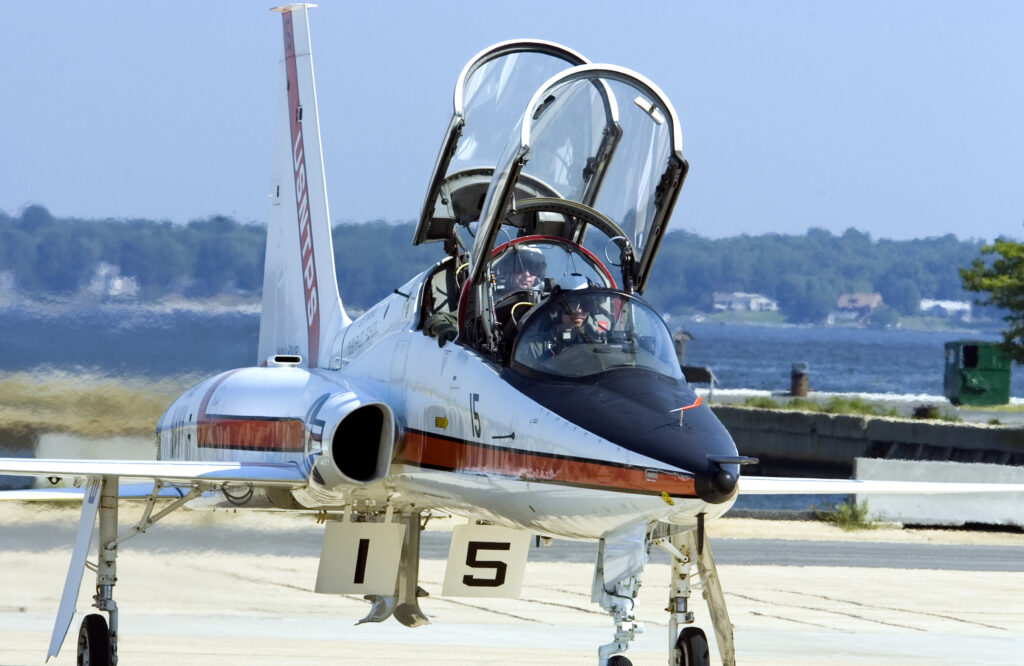
T-38 “Teakettle 15” at USNTPS
U.S. Navy photo by Photographer’s Mate 2nd Class Daniel J. McLain (RELEASED)

It’s also an airplane that brought tragedy to USNTPS when, in July of 2000, we lost Gareth Rietz and Ray O’Hare.  A day doesn’t go by that I don’t think about these two and those they left behind.

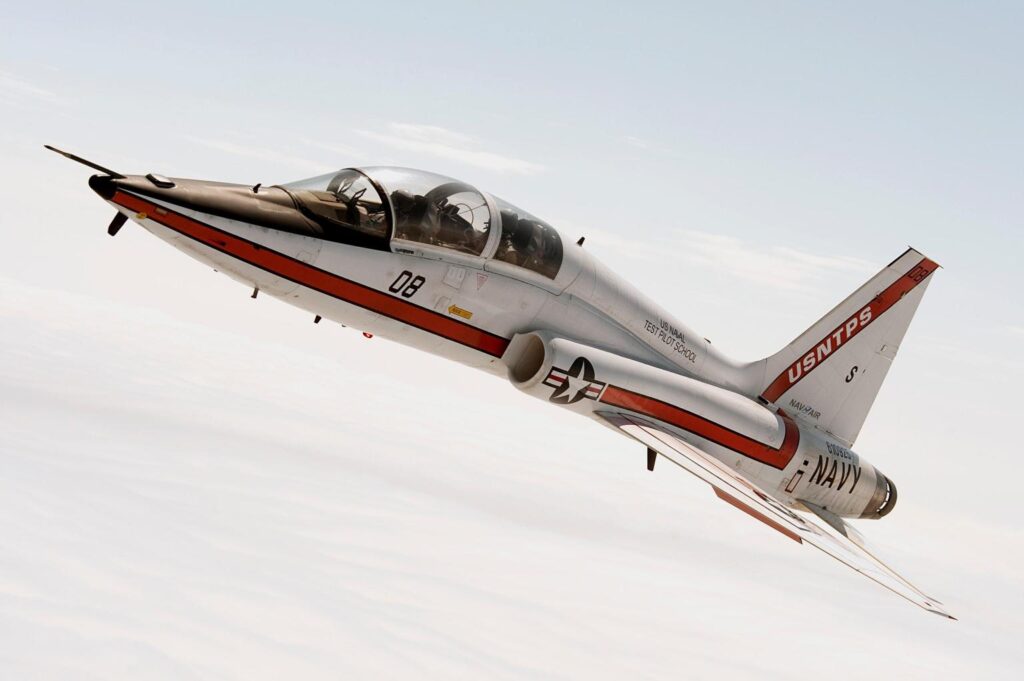
T-38 “Tester 08” Airborne
(c) US Navy

Filed Under: 1-25, Complete, Tactical Jet

DeHavilland DHC-2/U-6 Beaver

January 10, 2025 by Bob Stoney Leave a Comment

Aircraft Information
> Aircraft Make: DeHavilland of Canada. Model: DHC-2 (Military: U-6). Nickname: Beaver
> Aircraft Mil Civ Description: Airplane SE Piston
> FAA Category and Class: airplane Single Engine Land
> Engine Description: Single Engine

Aircraft Experience
> As of: 11/4/2024
> Number of Hours Flown: 631
> Number of Times Flown: 368
> Other Aircraft Models Associated: U-6

First Flown Information
> Sequence First Flown: 22
> Date First Flown: 3/20/1986
> Location First Flown: NAS Patuxent River, MD (KNHK)
> Who and/or What Organization First Flown With: US Naval Test Pilot School, Baldwin

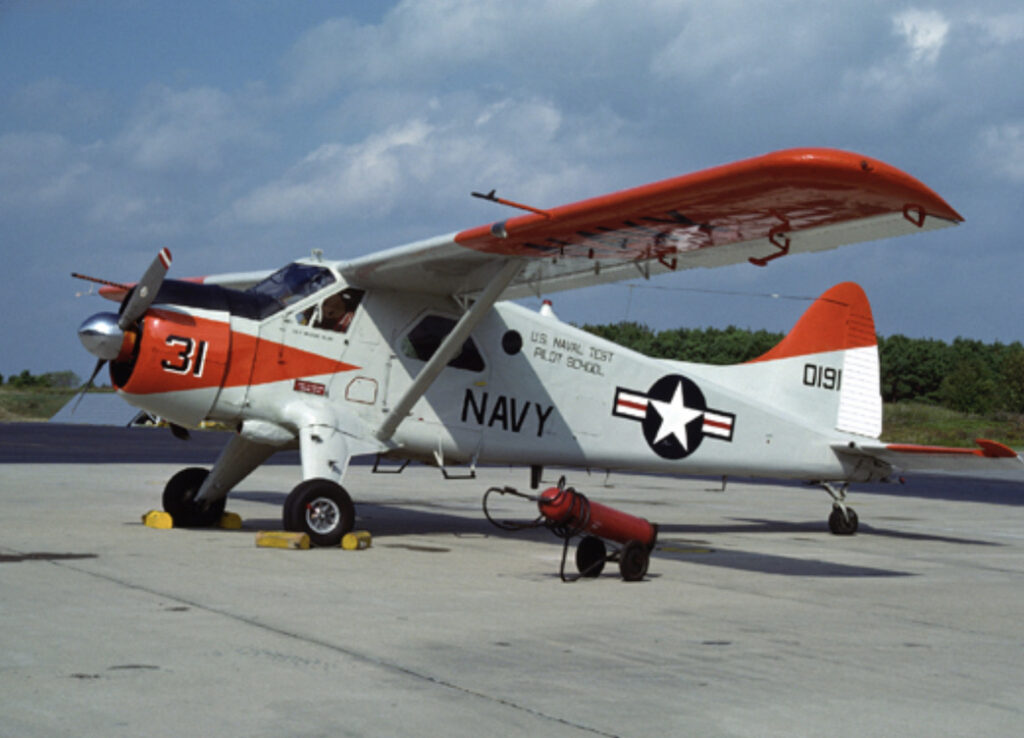
The original “Teakettle 31”, USNTPS U-6
(c) US Navy

Recollections: People often ask me “What’s your favorite aircraft?”  I usually answer with some variation of “Can’t pick just one”.  But, the short list ALWAYS includes the Beaver.  Why?  Because it’s a joy to fly but, beyond that, it is one of the best airplanes that the US Naval Test Pilot School (USNTPS) has in its curricula.  Period.  This statement often elicits skepticism.  I usually address this skepticism with the statement “The U-6 Beaver, as it’s used at TPS, is the perfect F-35 simulator.”  This generally confuses and/or adds to the skepticism.  I always go on to explain it this way:

     One of the missions of USNTPS is to begin to instill in its students “adaptability”.  The ability to adapt to new and foreign situations in the conduct of flight test.  Ultimately that’s what a tester does….adapts to a new aircraft, a new aerodynamic modification or engine, a new system installed in the aircraft.  They must PLAN for their test, CONDUCT the test, and REPORT on the test, all on something that may be very foreign to them.  They must adapt, and overcome–to one degree or another–that destabilizing feeling when you’re presented with something new or, to you, unusual.  The USNTPS curricula bakes this into their students by repetitive exposure to a huge variety of aircraft.  The students test plan, fly, and report on perhaps 20-25 different aircraft during the one year course.  And, perhaps the BEST at this role of teaching “adaptability” (at least for the Fixed Wing students) is the U-6 Beaver.  Think about it.  Most pilots and engineers/NFO’s come to USNTPS (even 30 years ago, and certainly today) without ever having flown a reciprocating-engined airplane.  Without operating an engine with 3 levers, just for one engine.  Certainly without ever having flown a tailwheel aircraft.  In that way, the “newness” of this admittedly 77 year old design is as foreign to a USNTPS student as the prototype F-35 was to the first cadre of its testers.  

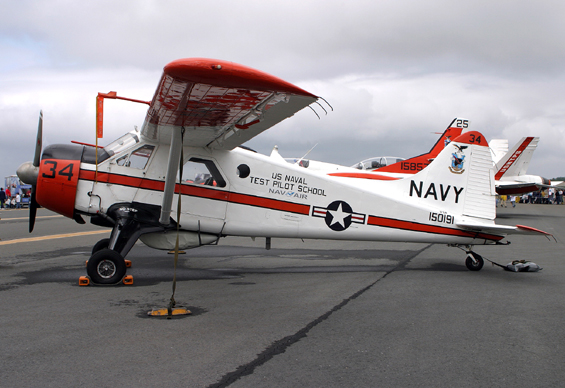
“Tester 34”, USNTPS U-6 (stock photo)
(c) US Navy

I always loved flying the Beaver, watching the students slowly learn how to fly it.  Thinking back on it, it’s amazing that the Navy let me do this because I wasn’t a “taildragger guy”.  It’s a testament to how forgiving the Beaver is and to the strength of the USNTPS Instructor checkout program.  

Flying the Beaver was also a lesson in variety.  My first flight in the Beaver (while a student) was with a Royal Navy helicopter pilot.  I flew it twice more as a student with an ex-Brit fighter pilot.  When I came back as an instructor, I was trained by Chris Wheal, Tom Russell, Jay Elliott, Mike Carriker and others.  I went on to fly it hundreds of times more, on Qual Eval 1 (the first chance for a student to evaluation how an airplane flies…it’s “handling qualities” and to communicate their perspective), Lateral-Directional intro and checkride flights (the U-6 has some interesting Lat-Dir characteristics) and on glider tow flights (the Beaver is a wonderful, if uneconomical, tow plane). 

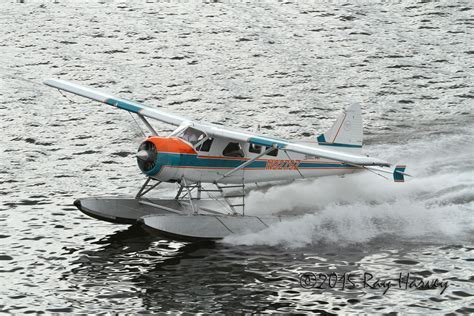
When my family asks me what I want for Christmas present, my answer is always “A DHC-2 Beaver on floats”.   I watch them fly by my house in the Seattle area almost daily and the sound is wonderful.  I’ve flown a Beaver on floats twice, both at the behest of the Navy.  USNTPS often hires a Beaver on floats for a Qual Eval (more of that “adaptability training”) and, in 1988, I flew one at Lake Tahoe to evaluate the idea of TPS buying their own set of floats and doing an exercise using our own floatplane (we already did our own float helicopter using an OH-58 equipped with floats).  I discovered that–as good as the Beaver is on wheels–it’s AMAZING on floats.  Almost bullet proof.  But, the CO decided against getting our own floatplane, concerned about currency and safety.  Rumor has it that TPS is modifying their U-1 to turbine power and purchasing floats.  Perhaps I’ll get recalled to be an instructor!

DHC-2 N9279Z (stock photo)
(c) Flickr.com

Filed Under: 1-25, Airplane SE Piston, Complete

Learjet Model 25

January 1, 2025 by Bob Stoney Leave a Comment

Aircraft Information
> Aircraft Make: Learjet Model: 25 Nickname: Learjet
> Aircraft Mil Civ Description: Business Jet
> FAA Category and Class: Airplane Multi-engine Land
> Engine Description: Twin jet

Aircraft Experience
> As of: 9/2/2021
> Number of Hours Flown: 17
> Number of Times Flown: 10
> Other Aircraft Models Associated: various Learjet models

First Flown Information
> Sequence First Flown: 25
> Date First Flown: 5/2/1986
> Location First Flown: NAS Patuxent River, MD (KNHK)
> Who and/or What Organization First Flown With: Calspan Corporation

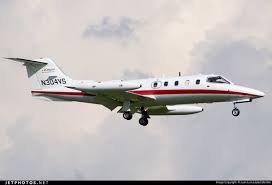
Recollections: My involvement with this aircraft, though I haven’t flown it many times, is quite varied.  My first flight and about half of my flights in the “Learjet 25” were flown in a very unique Learjet…the CALSPAN variable stability (VSS) Learjet…an airplane where the left set of controls are standard but the right seat (where I flew) had a fly-by-wire system that could be linked to a stick, a yoke or a sidestick and be made to simulate any aircraft (or, for that matter, change any stability parameter to make it fly like any POTENTIAL airplane).  This unique, world-asset is used for the training of test pilots and the development of flight control laws in modern aircraft such as the SAAB Grippen and other advanced aircraft.    I flew it in it’s training role, at the U.S. Naval Test Pilot School.  

CALSPAN VSS Learjet
Stock photo (c) jetphotos

The other half of my relatively small number of flights were flown on projects while I was assigned to the FAA’s Wichita Aircraft Certification Office (ACO).  But, my last flight (as of the writing of this entry) was again in the CALSPAN VSS, this time as part of a Pilot Induced Oscillation (PIO) training course with the FAA.  This important and unique asset has spanned my career as a test pilot and continues its service to this day.

Filed Under: 1-25, Business Jet

  • « Previous Page
  • 1
  • 2
  • 3

Recent Comments

  • Brian Paul on OV-1
  • Bob Stoney on Raytheon 390 Premier I

Contact Me.

Click Here.

Visitor Count

7796

Copyright © 2026 · Outreach Pro on Genesis Framework · WordPress · Log in