teakettle31

A Site To Catalog My Aircraft Adventures

  • About
    • About This Website
    • About Me
    • About My Favorite Aircraft
  • Aircraft I’ve Flown Organized By…
    • Mil/Civ Type
      • Airplane Single-engine Piston
      • Airplane Multi-engine Piston
      • Airplane Single-engine Turboprop
      • Airplane Multi-engine Turboprop
      • Tactical Jets
      • Large Jets
      • Business Jets
      • Helicopters
      • Gliders
      • Lighter than air
      • Other
    • Order Flown
      • Order Flown: 1-25
      • Order Flown: 26-50
      • Order Flown: 51-75
      • Order Flown: 76-100
      • Order Flown 101-125
      • Order Flown: 126-150
      • Order Flown: 151-175
      • Order Flown: 176+
  • Other Content
    • Favorite Links
    • Documents
    • My Store
  • Flight Test Services

Airbus A330

January 1, 2025 by Bob Stoney Leave a Comment

Aircraft Information
> Aircraft Make: Airbus Model: A330 Nickname: None that I know of!
> Aircraft Mil Civ Description: Large Jet
> FAA Category and Class: Airplane Multi-engine Land
> Engine Description: Twin jet

Aircraft Experience
> As of: 9/2/2021
> Number of Hours Flown: 16
> Number of Times Flown: 6
> Other Aircraft Models Associated: A330, A330NEO, A330-941

First Flown Information
> Sequence First Flown: 173
> Date First Flown: 10/7/2015
> Location First Flown: Toulouse, France
> Who and/or What Organization First Flown With: First flight of a production A330, with Thierry Bourges

Recollections: My experience in the Airbus A330 has been unusual in several respects.  First of all, I had my A330 type rating more than a year before I ever flew the actual airplane…receiving training from US Airways right before they were merged with American Airlines (US Airways had the contract with the FAA for training in the A330).  The hours from that training (like all simulator hours) are NOT included in my flight time (I don’t count sims as “real flying”!).  

Secondly, my first flight in a real A330 was that AIRPLANE’s first flight.  While that may seem standard, I don’t know of any other OEM that would allow such a flight.  But they should.  They should because that’s what Test Pilots are trained to do (“new things”) and it shows a trust in the Company Test Pilot who flew with me…which leads to the third unique aspect to my A330 flying…who I flew with.

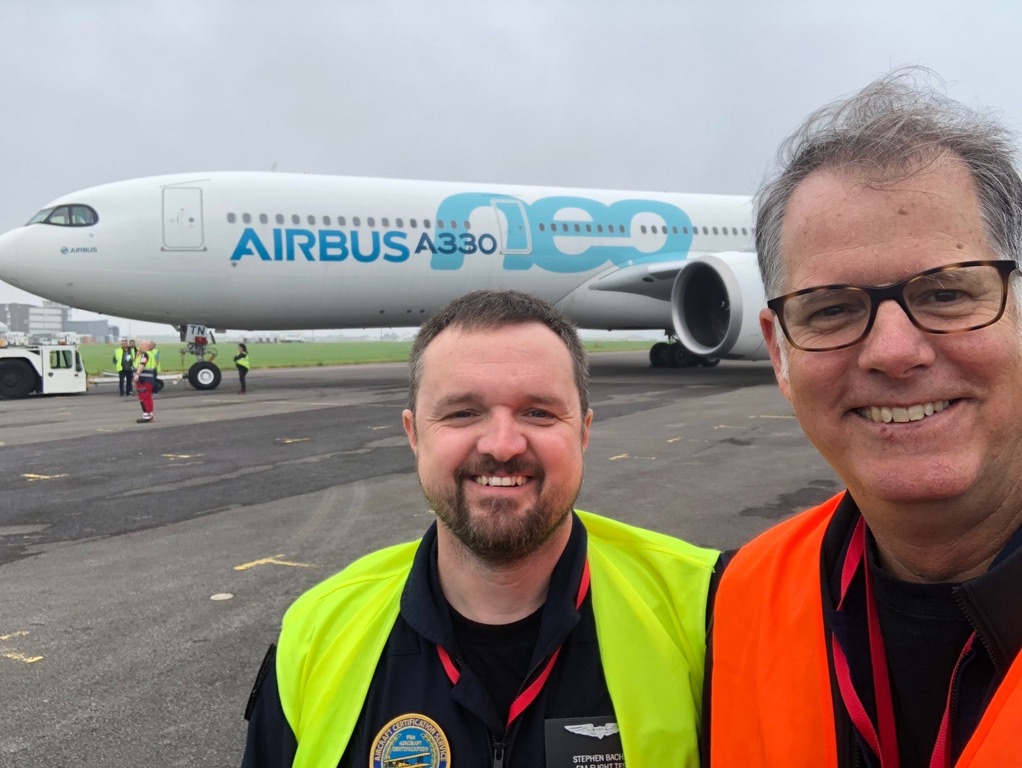
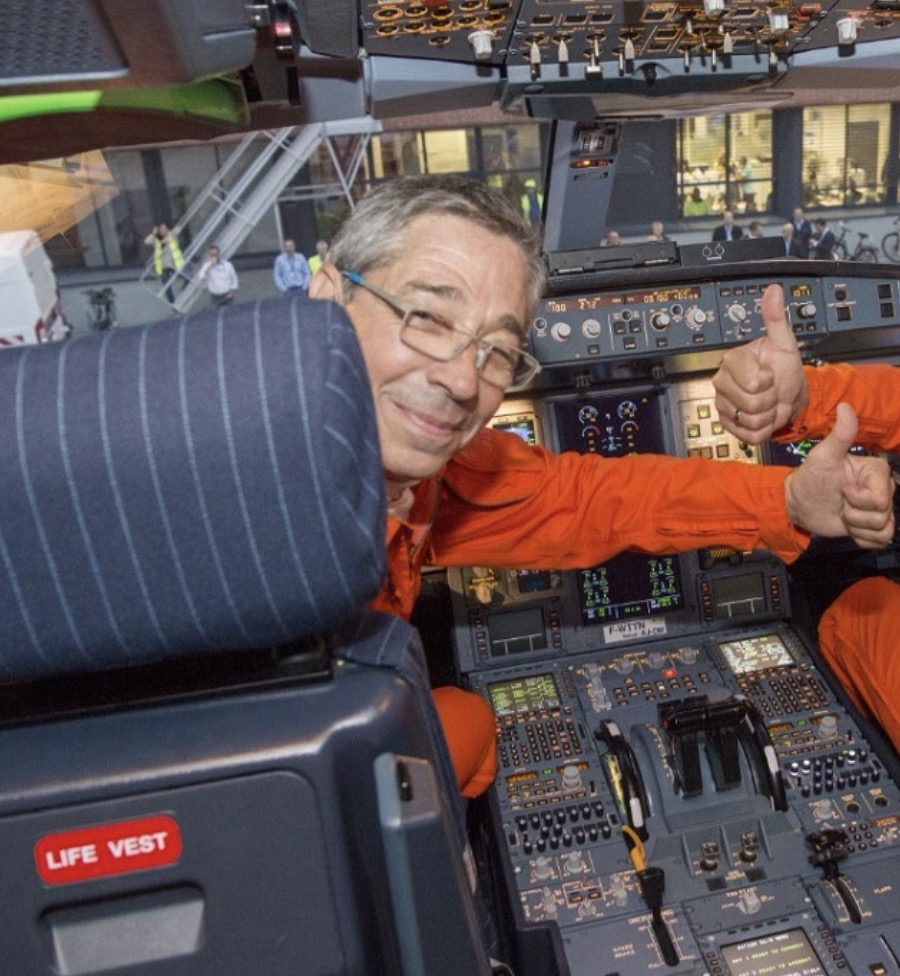
Every one of my A330 flights has been flown (over the course of 3 years) with Airbus Test Pilot–and my great friend–Thierry Bourges.  Thierry must have drawn the short straw one day, being assigned to “babysit the FAA guy”.  I flew with him on the first production flight (on the “older version” of the A330), and later on an actual set of Test Flights for the not-yet-certified A330 “NEO”, for propulsion testing in cooperation with the European aviation authority, EASA.  Thierry, an ex French Navy pilot and test pilot, is a calm, steady and extremely capable pilot who I am thankful for having known and flown with. For the life of me, I can’t find a picture of him, so had to use a stock photo from the internet.
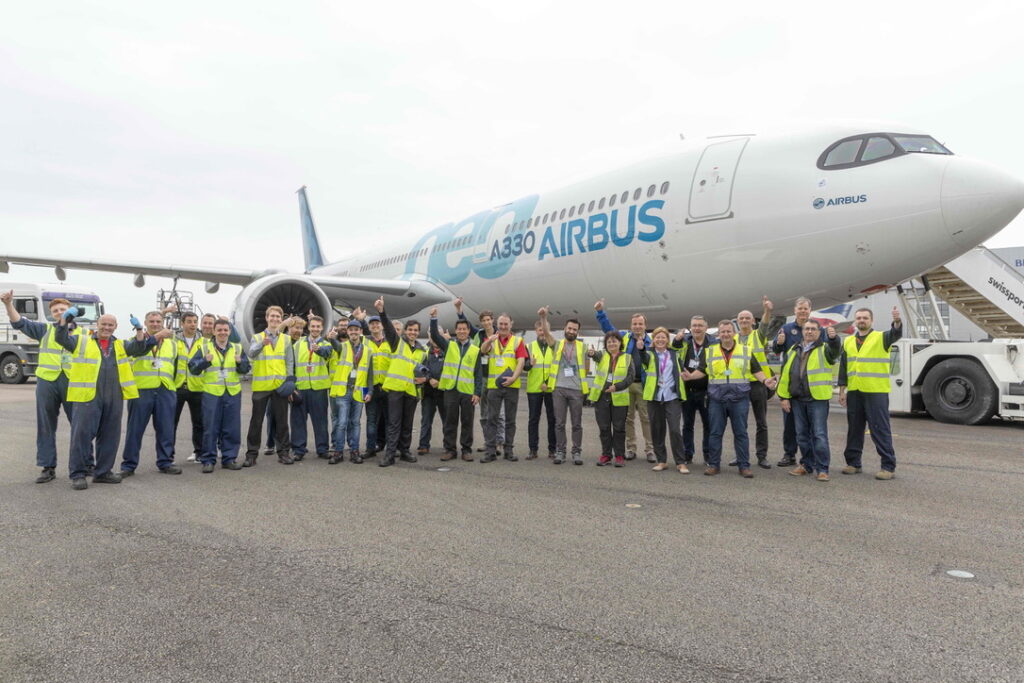
A330 NEO Airbus, EASA and FAA Flight Test Crew, Cardiff, Wales
(c) Bob Stoney
A330 NEO FAA Crew (Steve Bacher, Bob Stoney)
(c) Bob Stoney
Airbus Test Pilot Thierry Bourges (Stock photo)
(c) Flightglobal

Filed Under: 151-175, Large Jet

Boeing 777

August 19, 2020 by Erin Leave a Comment

Aircraft Information
Aircraft Make: Boeing
Aircraft Model: 777
Aircraft Nickname: “Triple 7”
Aircraft Mil Civ Description: Large Jet
Category: Airplane
Class: Multi Engine Land
Engine Description: Twin Engine

First Flown Information
Sequence First Flown:
Date First Flown: 07/17/2006
Location First Flown: Paine Field, Everett, WA
Who and/or What Organization First Flown With: Boeing flight test. Tom I.

Aircraft Experience
As of: 07/29/2020
Number of Hours Flown: 145
Number of Times Flown: 45
Other Aircraft Models Associated: 777F, 777-9

Recollections: My summary of the 777 is that it is an AMAZING AIRPLANE, performance wise. But (sorry Boeing bubbas), I don’t particularly enjoy it’s handling qualities. They’re not bad…it’s just not as tight as the other Boeings.

First the performance. I might have the numbers slightly wrong but I was part of a crew that flew from Seattle to Cairns, Australia (for the purpose of testing a specific engine thrust configuration (called “Thrust Bump”) that could only be duplicated at Alice Springs, AUS. We took off, flew over 14 hours and landed in Australia. It only took about a “quarter of a tank of gas”. Now, we didn’t have any passengers but, still. Amazing performance!

So, why didn’t I like the way it handled? It just wasn’t “tight”. Starting with the flight control check on the ground….if you move the yoke too rapidly, the airplane starts waggling. It carries on from there. I believe it achieves its impressive performance being being optimized aerodynamically and structurally. That makes for a somewhat “flexible” airplane, which is fine, as long as it’s handled gently. Best flown on autopilot. It’s a very successful airplane, and promises to live on with the advent of the 777-9.

It also has some cool systems, including a “Crew Response Monitor”. This system monitors a number of controls in the cockpit–things like the Flight Management System, radios, and the like. If there are NO INPUTS by the pilot on these monitored systems for a certain amount of time (something like 90 minutes) a Caution level message comes on. Go longer and the message turns Red (warning level). Well, what else are you gonna do on a 14 hour transit but test the “Crew Response Monitor”? So, there we sat…making sure not to touch anything. And the monitor didn’t go off. “Did you touch something, Van?” “Nope, did you Bob?!” And, try as we might, we couldn’t get it to work. Upon landing, we squawked the clearly-inoperative monitor. The response from Engineering (I can just see the engineer rolling their eyes) is “it’s an option, that airplane doesn’t have the option”. Oops. Still need to find an airplane with the option and do that test again.

Oh, yes, and it has a nice Ram Air Turbine (RAT).

Filed Under: Large Jet

Boeing KC-46 Tanker

August 19, 2020 by Erin Leave a Comment

Aircraft Information
Aircraft Make: Boeing
Aircraft Model: 767
Aircraft Nickname: Pegasus
Aircraft Mil Civ Description: Large Jet
Category: Airplane
Class: Multi Engine Land
Engine Description: Turbine

First Flown Information
Sequence First Flown:
Date First Flown: 10/05/2016
Location First Flown: Boeing Field, Seattle, WA
Who and/or What Organization First Flown With: Boeing Flight Test, Norm Howell

Aircraft Experience
As of: 07/29/2020
Number of Hours Flown: 174
Number of Times Flown: 67
Other Aircraft Models Associated: 767-2C, KC-46, 767-300

Recollections: The USAF needed a tanker to replace the aging KC-135. After years of contractual wrangling (including Airbus first winning, then losing the competition, and an aborted lease arrangement derailed by Senator John McCain) Boeing finally started working on the replacement. The program was as administratively complicated as is humanly possible…the basic airplane was an Amended Type Cert program called the 767-2C, this would be combined with a Supplemental Type program (STC) called the KC-46A and it would all be managed by 3 different FAA offices, at least 3 USAF offices, and two different wings of the Boeing company. Whew! The meetings were exhasuting!

The airplane was good to fly, although the program was fairly limited in scope from a pilot perspective…owing to similarity of design with it’s predecessors. So…the “good Aero stuff” (like braking, takeoff and landing performance and much of the basic stability and control) was either nonexistent or limited in scope. The “refueling stuff” promised to be interesting but FAA management decided to delegate that mostly to Boeing. What was left was a series of systems testing and basic fuel system testing, along with the ever-interesting testing concerning Smoke and Fire protection aspects.

The airplane was, to me, proof of the adage “a Boeing is a Boeing”. There was talk of getting me a type rating in the 767 but, in the end, the KC-46 was–on the flight deck at least–closer to a 787 than the original 767. And, the procedures we so similar to the other models that transitioning to it was simple.

The best part of the program was the goal….of fielding a successor to the KC-135 that would serve the USAF Warfighter.

Filed Under: Large Jet

Boeing 787

August 19, 2020 by Erin Leave a Comment

Boeing 787 (file photo)
The Boeing Company

Aircraft Information
Aircraft Make: Boeing
Aircraft Model: 787
Aircraft Nickname: Dreamliner
Aircraft Mil Civ Description: Large Jet
Category: Airplane
Class: Multi Engine Land
Engine Description: Twin Engine

First Flown Information
Sequence First Flown:
Date First Flown: 04/30/2010
Location First Flown: KVCV, Victorville, CA
Who and/or What Organization First Flown With: Boeing Flight Test (Heather)

Aircraft Experience
As of: 06/06/2020
Number of Hours Flown: 415
Number of Times Flown: 126
Other Aircraft Models Associated: B787-9, B787-9, B787-10

Recollections: In virtually every way, the Boeing 787 was revolutionary. From it’s advanced aerodynamics, to composite structure (enabling, in part, that aerodynamics), to full 3-axis fly-by-wire flight controls, to advanced engines (from not just one, but two manufacturers), to advanced electrical, pneumatic and avionics systems this airplane was truly “all new”. The target was to improve fuel efficiency by 20% and I think they got close to that.

Filed Under: Large Jet

Boeing 747

August 19, 2020 by Erin Leave a Comment

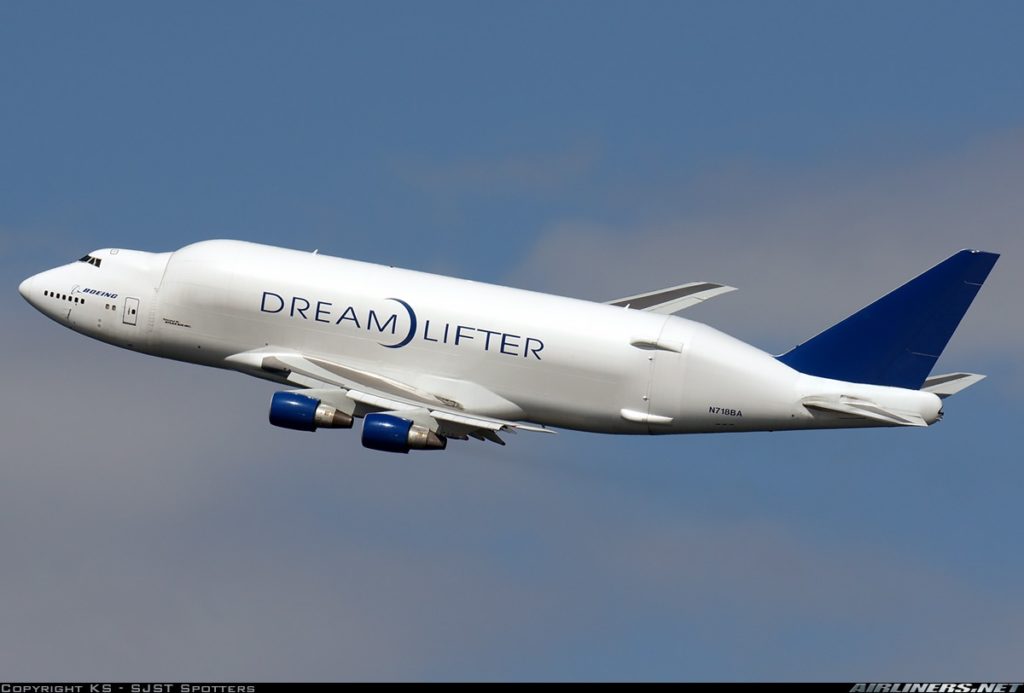
747 Large Cargo Freighter (LCF) (file photo)
airliners.net
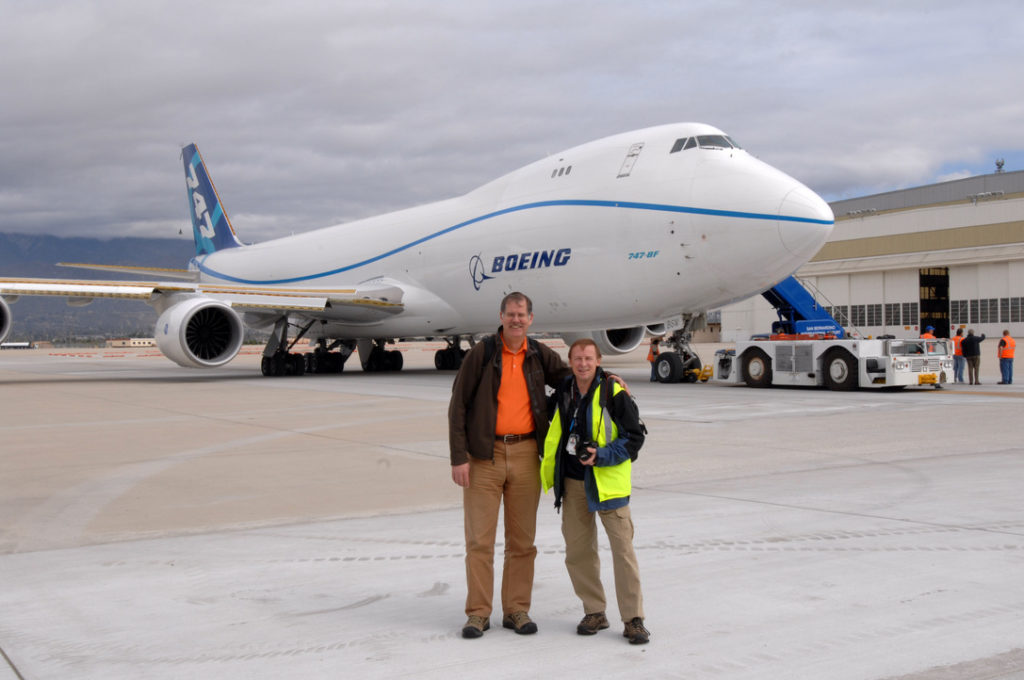
747-8F Lead FAA test crew in front of RC501
Bob Stoney

Aircraft Information
Aircraft Make: Boeing
Aircraft Model: 747
Aircraft Nickname: Queen of the Skies, The Whale
Aircraft Mil Civ Description: Large Jet
Category: Airplane
Class: Multi Engine Land
Engine Description: 3 or more Engine

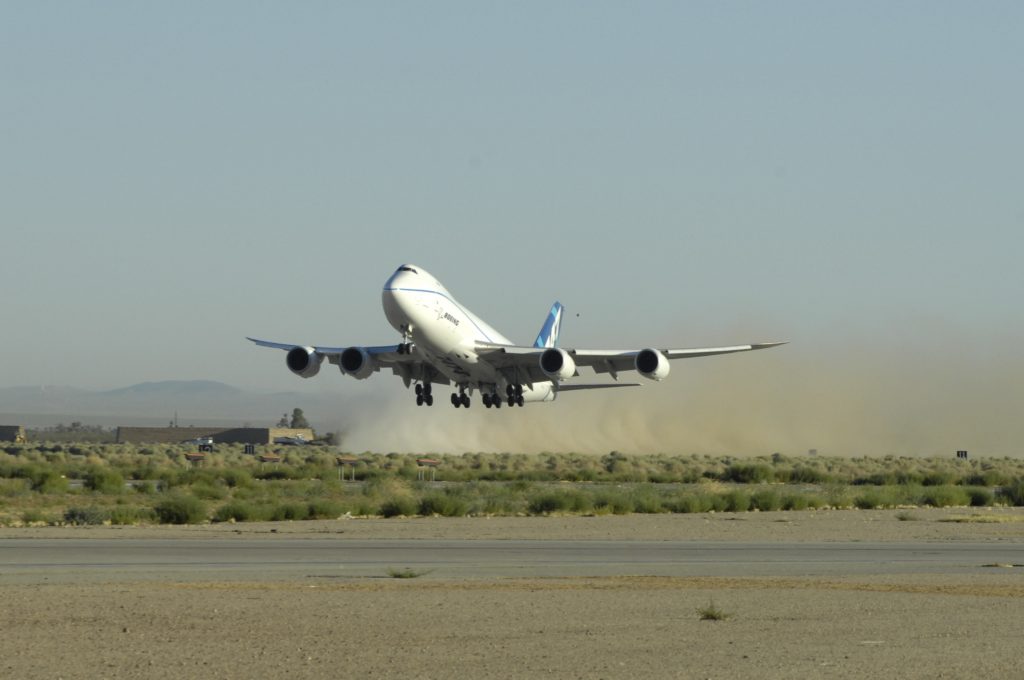
1M + lb takeoff, KVCV
The Boeing Company

First Flown Information
Sequence First Flown:
Date First Flown: 04/13/2007
Location First Flown: KBFI Boeing Field, WA
Who and/or What Organization First Flown With: Boeing flight test, including Paul and Henry. And my Skillet buddy Rip.

Aircraft Experience
As of: 07/22/2020
Number of Hours Flown: 665
Number of Times Flown: 234
Other Aircraft Models Associated: 747LCF, 747-400, 747-8F, 747-8Pax

Recollections:

In my write-up for the 737 I mention that it used to be my favorite…and that was true, until I flew “The Whale”. Simply put, this GIANT airplane flies like a dream. It does what you want it to do when you want it to do it. How’s that for technical test pilot talk?

My first flight in the Boeing 747 was actually in the “Large Cargo Freighter”. I wasn’t rated in the 747 so my pre-flight preparation consisted of studying the books and I think I went for a sim session at Boeing’s LongAcres simulator site (R.I.P.) down the street from the FAA office (having that facility so close was such a great thing…but it didn’t last, as Boeing decided to consolidate their training facility as far away as possible…Miami, FL). So, there I was, ready to fly the biggest Boeing…and this one even bigger than standard. The Large Cargo Freighter (LCF) was designed to carry big pieces of the 787 (wings, fuselage sections, empennage) from their far flung manufacturing facilities in Japan, South Carolina and Italy to the assembly plant in Everett, WA. An interesting manufacturing concept that, I hope, has some advantages. Anyway, before the 787 could be built and certified, Boeing had to build and certify the LCF. Talk about a house of cards…but they did it! So, there I was, several years before the 787 would have it’s first flight, helping to certify the LCF. My first flight involved a test of the Ground Proximity Warning System (GPWS), including the Radio Altimeter (RADALT). The flying included, among other conditions, pointing the airplane at the deck, in this case over Banks Lake in Eastern Washington, and waiting for the “PULL UP, PULL UP” GPWS warning. I’d been flying the airplane for maybe an hour when we did this condition diving at the ground and the thoughts occurred to me “Have I prepared enough?” and “Have I done sufficient build-up?” But, it also occured to me that the answer was a resounding “yes!” and that was due mostly to the wonderful Handling Qualities that even the giant LCF (with it’s “battleship-like” rivets and funny shape) had.

Later it was my please to be the FAA’s lead pilot on certification of the new “Queen”, the 747-8. And, if the LCF flew great, the “dash 8” was the greatest. It was a gorgeous airplane to look at and a wonderful one to fly. Because the 787 program was happening at roughly the same time period, I–and my fantastic lead FTE John Neff–ended up doing most of the flying on the 747-8 program, flying with Mark, Buzz, Leon, Rick, Paul, Keith, Frank, Gerry, Doug, Tom, Barry, Kirk, Stu, John, and Pat. And so many wonderful engineers and FTE’s. I got to basically do every test technique there is, including a Max Brake energy, Minimum Unstick, takeoff and landing performance and enough S&C, Ice Shapes and systems testing to form a career. I got to do the Heaviest takeoff ever for a Boeing airplane (over 1M lb). I flew a flight that only lasted 6 minutes (a single takeoff condition with an Autopilot Hardover test and immediate return to land), and a function and reliability test that lasted 18 hours. She always flew like a dream and that’s why she’s my “favorite Boeing”.

Filed Under: Large Jet

  • « Previous Page
  • 1
  • 2
  • 3
  • 4
  • Next Page »

Recent Comments

  • Brian Paul on OV-1
  • Bob Stoney on Raytheon 390 Premier I

Contact Me.

Click Here.

Visitor Count

7796

Copyright © 2026 · Outreach Pro on Genesis Framework · WordPress · Log in