teakettle31

A Site To Catalog My Aircraft Adventures

  • About
    • About This Website
    • About Me
    • About My Favorite Aircraft
  • Aircraft I’ve Flown Organized By…
    • Mil/Civ Type
      • Airplane Single-engine Piston
      • Airplane Multi-engine Piston
      • Airplane Single-engine Turboprop
      • Airplane Multi-engine Turboprop
      • Tactical Jets
      • Large Jets
      • Business Jets
      • Helicopters
      • Gliders
      • Lighter than air
      • Other
    • Order Flown
      • Order Flown: 1-25
      • Order Flown: 26-50
      • Order Flown: 51-75
      • Order Flown: 76-100
      • Order Flown 101-125
      • Order Flown: 126-150
      • Order Flown: 151-175
      • Order Flown: 176+
  • Other Content
    • Favorite Links
    • Documents
    • My Store
  • Flight Test Services

British Aircraft Corporation 1-11

January 23, 2025 by Bob Stoney Leave a Comment

Aircraft Information
> Aircraft Make: British Aircraft Corporation (BAC) Model: 1-11. Nickname: One Eleven
> Aircraft Mil Civ Description: Large Jet
> FAA Category and Class: Airplane Multi-engine land
> Engine Description: Twin jet

Aircraft Experience
> As of: 9/2/2021
> Number of Hours Flown: 4
> Number of Times Flown: 3
> Other Aircraft Models Associated: BAC 1-11, BAC-111

First Flown Information
> Sequence First Flown: 62
> Date First Flown: 10/13/1989
> Location First Flown: Baltimore Washington International Airport (KBWI)
> Who and/or What Organization First Flown With: Westinghouse (Northrop Grumman) Flight Test

Recollections: The BAC 1-11 was the British airplane designed to compete with the Douglas DC-9 and the Boeing 737.  My three flights (once per year, 1989, 1990, 1991) in this design were all flown on an Experimental version which was an avionics test bed operated by Westinghouse (later Northrup Grumman) at their facility at the Baltimore-Washington International Airport.  Over the years, the Navy Test Pilot School has contracted with a variety of companies who operate “systems test bed” or “systems training” aircraft, to enable teaching the discipline of testing radars, FLIRS, and the like.  NG was used for many years, until replaced by an organic asset (a P-3 “flying systems classroom”).

The airplane, pretty much like all British Airplanes (and, for that matter, cars) handled very nicely. 
Northop Grumman BAC 1-11, N164W (Stock Photo)
(c) Jetphotos.com

Filed Under: 51-75, Complete, Large Jet

Boeing B-52 Stratofortress

January 23, 2025 by Bob Stoney Leave a Comment

Aircraft Information
> Aircraft Make: Boeing. Model: B-52. Nickname: Stratofortress
> Aircraft Mil Civ Description: Large Jet
> FAA Category and Class: Airplane Multi-engine Land
> Engine Description: 8 engines (!)

Aircraft Experience
> As of: 9/2/2021
> Number of Hours Flown: 4
> Number of Times Flown: 1
> Other Aircraft Models Associated: none

First Flown Information
> Sequence First Flown: 41
> Date First Flown: 5/6/1988
> Location First Flown: Westover ARB, MA
> Who and/or What Organization First Flown With: USAF Squadron (TBV)

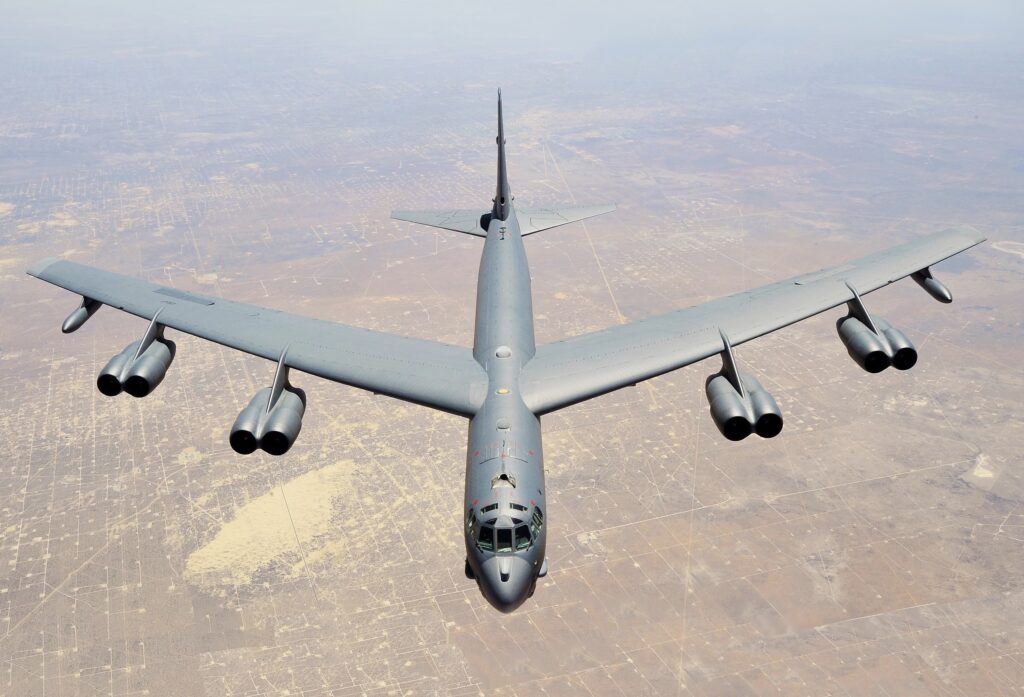
Recollections: Another DT-II exercise as an Instructor at USNTPS (you can see why being an instructor there is one of the best jobs in aviation!).  I remember three things about my flight in the “Buff” (Big Ugly Fat F-er):

1) We got to inflight refuel off of a USAF KC-135 tanker.  I pulled in and fought hard to stay in position, moving the yoke in roll fairly frequently and aggressively, along with frequent inputs on the throttles (eight of them!).  I was working pretty hard.  The IP in the right seat says to me “Bob, you’re staying in contact but you’re working too hard…mind if I show you how to do it?”  I relinquished the controls and watched him show me how.  He pulled in, moving the controls what appeared to me–as a trained test pilot–to be exactly the compensation I’d been using…relatively large/frequent lateral inputs, throttle inputs.  And he says “See?  It’s not that hard.”  I chuckled to myself and took it as a lesson concerning compensation and Cooper Harper ratings.

B-52 (File photo)
(c) Wikipedia

2) I shot an instrument approach during my “qual eval” and, while on the approach, I got about 3 knots below the target speed.  Over the intercom, I heard “you’re 3 slow”.  I looked at the IP sitting next to me and his lips weren’t moving.  I also didn’t recognize the voice.  So, I said “who’s talking?” and the response came “RADAR NAV”.  The Radar Navigator on the B-52 is located “downstairs”, on a lower deck below the cockpit, in a window-less area of the airplane.  I learned during the debrief that USAF Tech Order so-and-so requires that the Radar Nav verbally report any speed deviation on approach slower than 2 knots.  Good job Radar Nav!  (though what I was really thinking was “I KNOW I’m slow….I’m working it…YOU come up here and try to fly this thing!”)

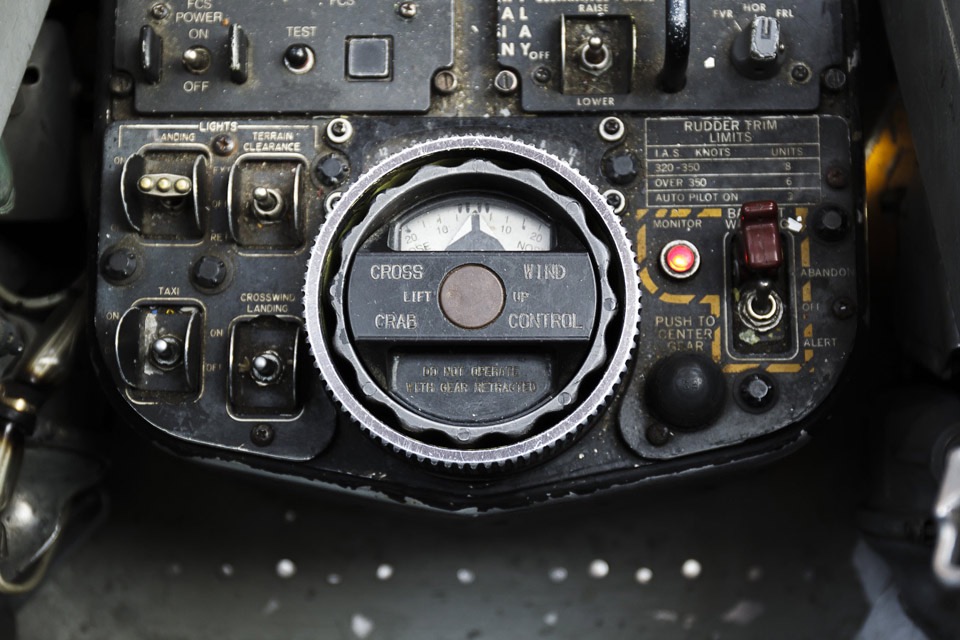
3) On my flight, I lucked out and had about a 15-20 knot crosswind on landing.  The B-52 is unique in that crosswinds are handled by landing wings level in a “crab”…but the landing gear itself is aligned with the runway by a hydraulically powered system which rotates the landing gear…there’s a control on the aft portion of the center aisle stand where you set the angle/speed of the wind and the rest is automatic (see figure).  It worked like a champ!  Easiest crosswind landing ever.

B-52 Crosswind landing gear control (stock photo)
(c) aopa.org

Filed Under: 26-50, INCOMPLETE, Large Jet

Hawker Siddeley Nimrod MK-2P (MR2)

January 6, 2025 by Bob Stoney Leave a Comment

Aircraft Information
> Aircraft Make: Hawker Siddeley. Model: MK-2P Nickname: Nimrod
> Aircraft Mil Civ Description: Large Jet
> FAA Category and Class: Airplane Multi-engine Land
> Engine Description: Four engine jet

Aircraft Experience
> As of: 9/2/2021
> Number of Hours Flown: 6
> Number of Times Flown: 2
> Other Aircraft Models Associated: None

First Flown Information
> Sequence First Flown: 44
> Date First Flown: 5/11/1988
> Location First Flown: RAF Lossiemouth, Scotland
> Who and/or What Organization First Flown With: 120 Squadron

Recollections: I had the pleasure of flying the Nimrod as a staff monitor for a DT-II Graduation exercise at USNTPS.  In a classic “small world” situation, this particular assignment was with my squadron mate and first Navigator from P-3 days, Al Scott, so it was doubly fun. Al was the best Navigator and TACCO (and friend) a P-3 bubba could have. He saved my bacon on more than one occasion when we served in my first P-3 squadron together, including a time when we lost all navigation and depended solely on Al’s skill with celestial navigation (yes, the P-3 had a sextant–not like the ones on a sailing ship, our sextant fit thru a small port in the top of the fuselage and used mirrors to take readings of the stars’ position).

(Then Ensign, later CAPT) Al Scott, DT-II student
(c) Bob Stoney

As a P-3 guy (which does the same mission for the US Navy as the Nimrod does for the RAF) I was fascinated to compare and contrast these two airplanes.  The Nimrod has a higher dash speed and the RAF guys always talked about how they could get “to datum” way faster than the relatively slow P-3…whereas the P-3 guys always criticized the Nimrod’s relatively limited endurance.  Flying the Nimrod, with the famous RAF 120 squadron was a treat, getting to see their professionalism and dedication to the mission–in that regard we were the same. 

Crest of RAF 120 Squadron
(c) Wikipedia

I liked the way the Nimrod handled and I was interested in the sonobuoys they carried…they were half-sized versions of what the P-3 carried and I’d never seen them before.  The other thing I learned during this time (besides how good Scotch tastes when sampled on the “Whiskey Trail”) was that, in an RAF squadron, a “back ender” could be in command of the airplane…be “the Captain”.  Very different from the US but, in the end, probably no effect as I assume the opinion of all would be carefully weighed and balanced in any emergent situation.

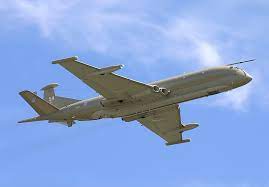
Nimrod MR2
(c) Wikipedia

Filed Under: 26-50, Large Jet

Rockwell B-1B Lancer

January 6, 2025 by Bob Stoney Leave a Comment

Aircraft Information
> Aircraft Make: Rockwell International Model: B-1B. Nickname: Lancer
> Aircraft Mil Civ Description: Large Jet
> FAA Category and Class: Airplane Multi-engine Land
> Engine Description: Twin jet

Aircraft Experience
> As of: 10/4/2021
> Number of Hours Flown: 6
> Number of Times Flown: 1
> Other Aircraft Models Associated: None

First Flown Information
> Sequence First Flown: 97
> Date First Flown: 11/13/1997
> Location First Flown: Dyess AFB, TX
> Who and/or What Organization First Flown With: 127th Bomb Squadron

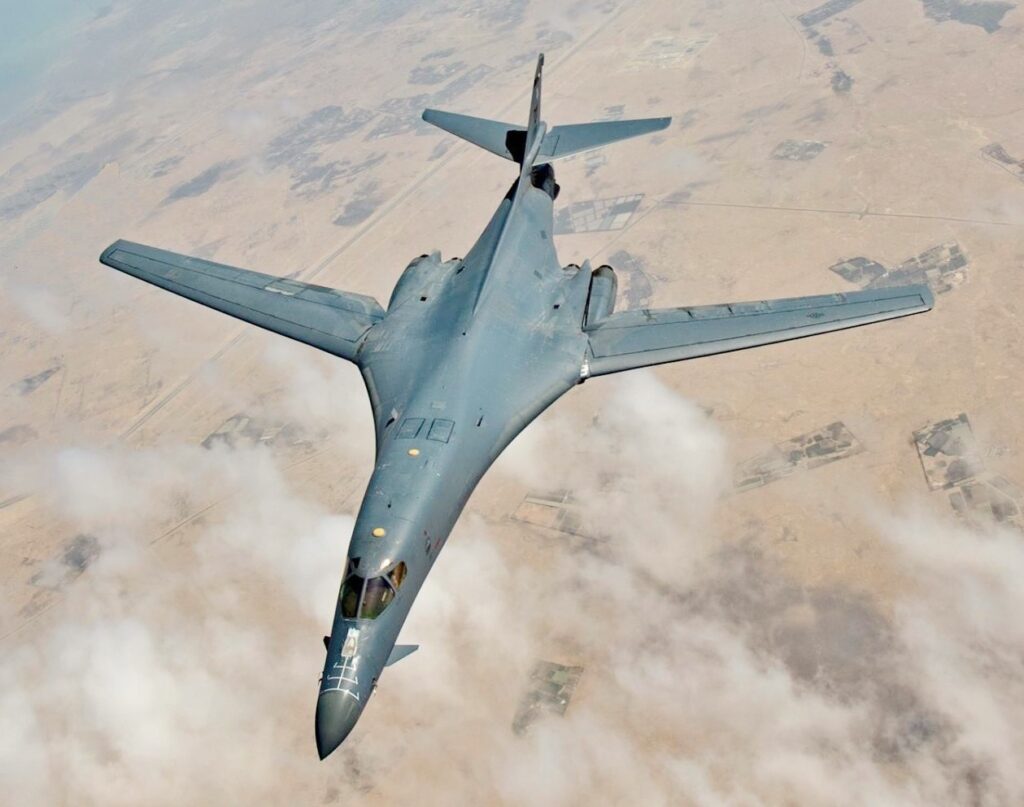
B-1B Lancer (Stock Photo)
(c) Wikipedia

Recollections:
Like many airplanes, I only flew the B-1 once–in this case I was the USNTPS staff monitor for a “DT-II” (the graduation exercise where Test Pilot School students are assigned to fly an airplane they’ve never flown before, they’re required to write a complete test plan, conduct several test flights and then write a huge report of their findings).  But, oh boy, what a flight it was.  I went low and fast, I got to refuel off an Air Force tanker, I got to do (simulated) bomb drops and I got to see how well the radar worked (I got out mid-flight to go back and see the radar image…probably not allowed to say too much but IT WAS REALLY IMPRESSIVE resolution).  Things I remember about this experience include the fact that it can’t go very high (mid, maybe upper 20’s…surprisingly low), that it can’t really “hack” icing very well, and that its system (ground following radar coupled to the autopilot, used at the same time as ground mapping radar) was incredible.  The people were incredible, too.  And the students passed their DT-II.

127th Bomb Squadron Patch
(c) Bob Stoney

Filed Under: 76-100, Large Jet

Airbus A350

January 1, 2025 by Bob Stoney Leave a Comment

Aircraft Information
> Aircraft Make: Airbus Model: A350 Nickname: None that I know of.
> Aircraft Mil Civ Description: Large Jet
> FAA Category and Class: Airplane Multi-engine Land
> Engine Description: Twin jet

Aircraft Experience
> As of: 9/2/2021
> Number of Hours Flown: 10
> Number of Times Flown: 3
> Other Aircraft Models Associated: none

First Flown Information
> Sequence First Flown: 172
> Date First Flown: 9/16/2015
> Location First Flown: Toulouse, France
> Who and/or What Organization First Flown With: Airbus Flight Test

Recollections: The A350 is Airbus’s newest and most advanced aircraft.  Designed to compete with Boeing’s 777, I was involved in what is called a “validation” of the A350 for use by American operators.  As a result, my involvement in testing consisted of few flights than in a domestic “Certification” program.  However, I did travel to Toulouse many times to learn more about the airplane and evaluate its handling qualities, performance, systems and human factors.

I am often asked “which do you prefer….Boeing or Airbus?” and I always give the same (hopefully non-offending) answer: “My perfect airplane would be a blend of the two…I really like the avionics system and Human Factors of the Airbus and like the way the Boeing flies and handles.”  I often add that I’ve never gotten used to a few aspects of the Airbus design (like the throttles, which do not move when autothrottles are engaged) and that both Boeing and Airbus make airplanes whose performance are simply incredible.

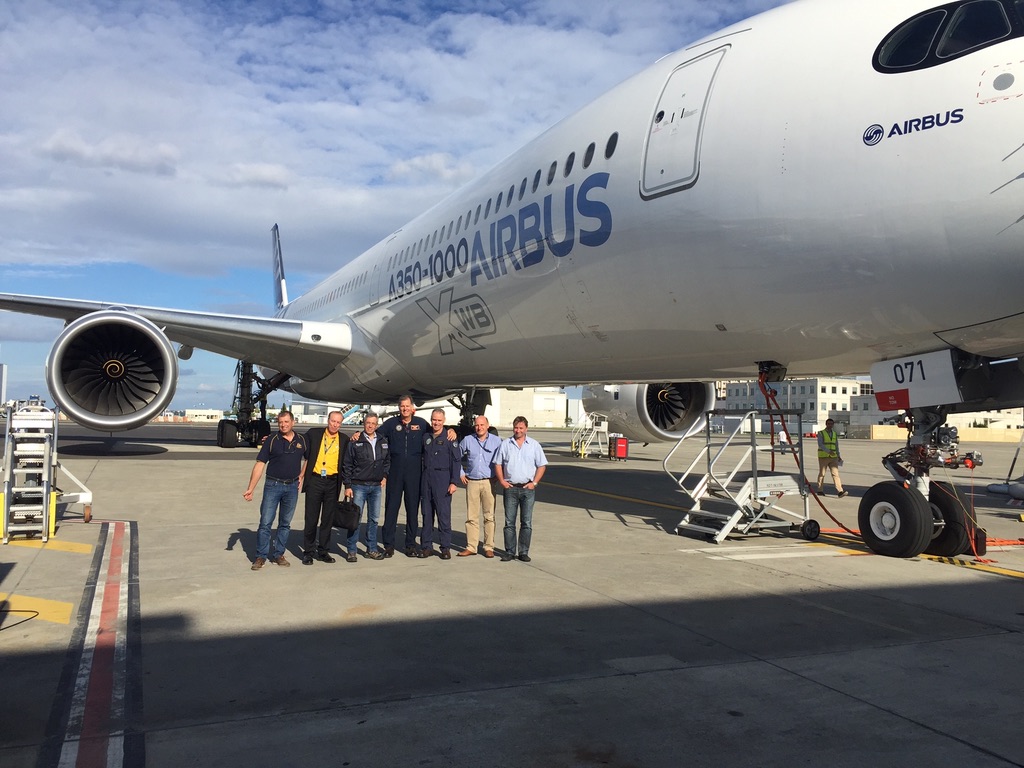
Just like my A330 experience, all my A350 flying was done with Airbus Test Pilot Thierry Bourges.  I also had the pleasure of flying often with Stefan Vaux (Flight Test Engineer…or maybe it was Test Flight Engineer–that story I will save for my A380 entry).  I also had the unique opportunity to fly with two Airbus experts who are literally world-famous for their knowledge of specific engineering disciplines: Laurent Capra (an expert in Handling Qualities, Stability and Control) and Robert Lignee (an expert in Performance).


Airbus A350-1000 Test Crew, July 2017
(c) Bob Stoney

Filed Under: 151-175, Large Jet

  • « Previous Page
  • 1
  • 2
  • 3
  • 4
  • Next Page »

Recent Comments

  • Brian Paul on OV-1
  • Bob Stoney on Raytheon 390 Premier I

Contact Me.

Click Here.

Visitor Count

7796

Copyright © 2026 · Outreach Pro on Genesis Framework · WordPress · Log in