teakettle31

A Site To Catalog My Aircraft Adventures

  • About
    • About This Website
    • About Me
    • About My Favorite Aircraft
  • Aircraft I’ve Flown Organized By…
    • Mil/Civ Type
      • Airplane Single-engine Piston
      • Airplane Multi-engine Piston
      • Airplane Single-engine Turboprop
      • Airplane Multi-engine Turboprop
      • Tactical Jets
      • Large Jets
      • Business Jets
      • Helicopters
      • Gliders
      • Lighter than air
      • Other
    • Order Flown
      • Order Flown: 1-25
      • Order Flown: 26-50
      • Order Flown: 51-75
      • Order Flown: 76-100
      • Order Flown 101-125
      • Order Flown: 126-150
      • Order Flown: 151-175
      • Order Flown: 176+
  • Other Content
    • Favorite Links
    • Documents
    • My Store
  • Flight Test Services

Cessna Citation X

January 23, 2025 by Bob Stoney Leave a Comment

Aircraft Information
> Aircraft Make: Cessna Model: 750. Nickname: Citation X
> Aircraft Mil Civ Description: Business Jet
> FAA Category and Class: Airplane Multi-engine land
> Engine Description: Twin jet

Aircraft Experience
> As of: 9/2/2021
> Number of Hours Flown: 8
> Number of Times Flown: 5
> Other Aircraft Models Associated: none

First Flown Information
> Sequence First Flown: 132
> Date First Flown: 10/29/2002
> Location First Flown: Mid-continent airport, Wichita, KS (KICT)
> Who and/or What Organization First Flown With: Cessna Flight Test

Recollections: When describing another Citation (the V), I made the statement “a Citation is a Citation”.  When one looks at the Citation X and its extremely complex and highly swept wing, it puts this statement to the test.  However, somehow, Cessna managed to design an airplane that–at the time–was the fastest production airplane (with a Max Mach of 0.92) that really flew and operated like all the straight-wind Cessnas that preceded it.  
The Citation 750 (“X”) stock photo
(c) Wikipedia

With two GIANT engines in pods near the tail, this airplane set the standard for speed and looks when it came out, and spurred a competition with Gulfstream to make “the fastest bizjet”.  

Even though I’m type-rated in the X, my experience level in the actual aircraft is low…consisting of a few avionics projects and production audits.
Filed Under: 126-150, Business Jet, Complete, Status

Learjet 40/45

January 6, 2025 by Bob Stoney Leave a Comment

Aircraft Information
> Aircraft Make: Learjet. Model: 40/45. Nickname: None
> Aircraft Mil Civ Description: Business Jet
> FAA Category and Class: Airplane Multi-engine Land
> Engine Description: Twin Jet

Aircraft Experience
> As of: 9/2/2021
> Number of Hours Flown: 6
> Number of Times Flown: 1
> Other Aircraft Models Associated: none

First Flown Information
> Sequence First Flown: 145
> Date First Flown: 5/4/2004
> Location First Flown: Wichita Mid-continent Airport (KICT)
> Who and/or What Organization First Flown With: Learjet Flight Test

Recollections: Only flew this one time as well.  In this case, though, the flight was a project flight, conducting Steep Approaches (5.5 deg ILS beam at the Blythe, CA airport…a test facility that I don’t believe exists anymore) to certify this airplane for use at the London City, UK airport.  

I have very little Learjet time, even though I was assigned to the FAA office in Wichita.  This is for a couple of reasons, including having a boss who loved flying the Learjet (so that cut down on my opportunities), co-workers who were senior to me (further reducing the chances), and the fact that Learjet had turned down its production and development efforts, shifting much to Bombardier in Canada.

But, I do know that Steep approaches can be challenging and so, the fact that I was able to fly this aircraft for the first time doing steep approaches means it must handle well!

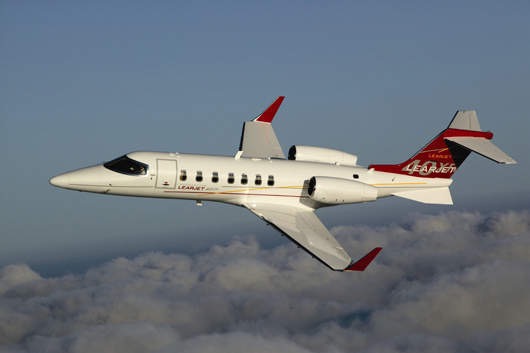
Learjet 40 (Stock photo)
(c) elitetraveler.com

Filed Under: 126-150, Business Jet

Rockwell/North American 265 Sabreliner

January 1, 2025 by Bob Stoney Leave a Comment

Aircraft Information
> Aircraft Make: Rockwell/North American Model: 265 Nickname: Sabreliner
> Aircraft Mil Civ Description: Business Jet
> FAA Category and Class: Airplane Multi-engine Land
> Engine Description: Twin jet

Aircraft Experience
> As of: 11/3/2024
> Number of Hours Flown: 15
> Number of Times Flown: 8
> Other Aircraft Models Associated: T-39

First Flown Information
> Sequence First Flown: 74
> Date First Flown: 2/20/1991
> Location First Flown: NAS Patuxent River, MD (KNHK)
> Who and/or What Organization First Flown With: Northrop Grumman flight test, training at US Naval Test Pilot School

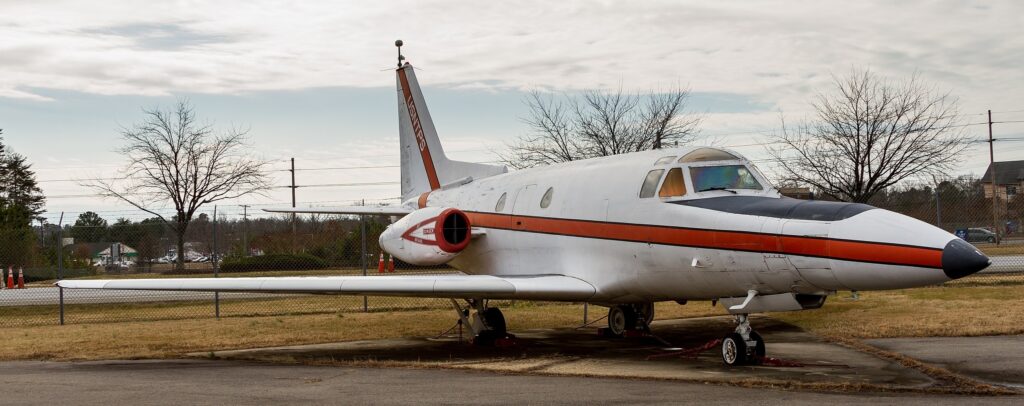
Recollections: This aircraft spans my lifetime.  It first flew in 1958, the year I was born and, on a periodic basis, has been part of my life since.  When I was a kid, I got to fly in the North American Aviation (NAA) company business jet with my father, William.  My dad was an executive with the Autonetics Division of NAA and, with that job, came the opportunity to travel in the company jet.  In those days, I guess, the children of executives could tag along and I was lucky enough to have this opportunity several times.  My first memory of flying is sitting in a Sabreliner, thinking I was flying (for more detail, read my “About Me” section of this website).

My next exposure to the Sabreliner was when I was assigned as the Safety Officer at the US Naval Test Pilot School.  The school had brought a specially-modified T-39 out of mothballs.  This airplane had been the testbed for the F-18 radar back in the day and we decided we’d use it as a “flying systems classroom” for radar and other systems training.  It was refurbished, check flown and brought from China Lake to NAS Patuxent River, MD (the home of TPS).  At Pax it flew several successful flights but, one day, upon returning to land, the gear would NOT go down.  The handle was lowered and the crew felt only a temporary “bump-bump”.  Well, over the course of the next approximately 70 minutes, the crew ran thru the emergency procedure for unsafe gear, we had other aircraft join up (they reported that ONE of the two main gear would come part way out and then immediately retract…the other gear did nothign), we consulted T-39 and NA-265 maintenance experts across the country and, despite all those efforts, the gear would not come down.  As fuel got low the crew decided to do a gear up landing.  The landing was flawless, right on centerline and they exited safely.  Now–as is often the case in these types of situations–it was Friday afternoon.  With thoughts of hitting the officer’s club and getting a start on the weekend danced thru everyone’s heads, there I was…the young, brand-new Safety Officer who supposedly owned the scene of the accident.  Accompanying me was some “leadership” from the Base, not too happy that “my” airplane was plugging their longest runway, and a grizzled old Maintenance Officer who thought he could get it fixed in a jiffy.  So, I relinquished my hard-line “this is my accident scene” response and let the others take charge.  Well, the base had a “Tilly” (a large crane used on the Carrier to lift airplanes in situations like this), some supposedly-universal slings, and a ticking clock for the O’Club bar.  They lifted the airplane up to put it on a flatbed but couldn’t get the slings right and it almost tumbled out of the slings.  They decided they needed to reposition the sling but, when they put the plane back on the ground, there was no space to move the sling to where it needed to be.  So, they decided they’d put a chock (a piece of wood) underneath the plane, to act as a spacer to allow the sling to be moved.  Up went the plane, the chock was placed underneath it and the plane lowered on to the chock.  CRUNCH! CRUNCH!  went the plane, because the chock had been placed in a non-structural area underneath.  Eventually the plane was lifted up, a crew was sent aboard to free-fall the gear and–just like in the air–the gear wouldn’t come down (surprise!).  So, the MO decided it was “jaws of life” time…and out came the Fire Department’s Jaws-of-Life.  CRUNCH! CRUNCH! CRUNCH!!!  The gear came down with a loud bang and more components in the landing gear system were broken.  Long story short, because we’d broken dozens of gear components in the “salvage” effort, we never did figure out why the gear wouldn’t come down…we ended up with a few reasonable theories but no “smoking gun”.  The airplane never flew again and now rests at the Museum in Pax River (see picture).  That was the day I learned the lesson that Safety DOES own the airplane at the scene of the accident and I should’ve stood my ground.

Navy BuNo 150987 at the Pax River Museum (note the F-18 nose)
(c) Wikipedia

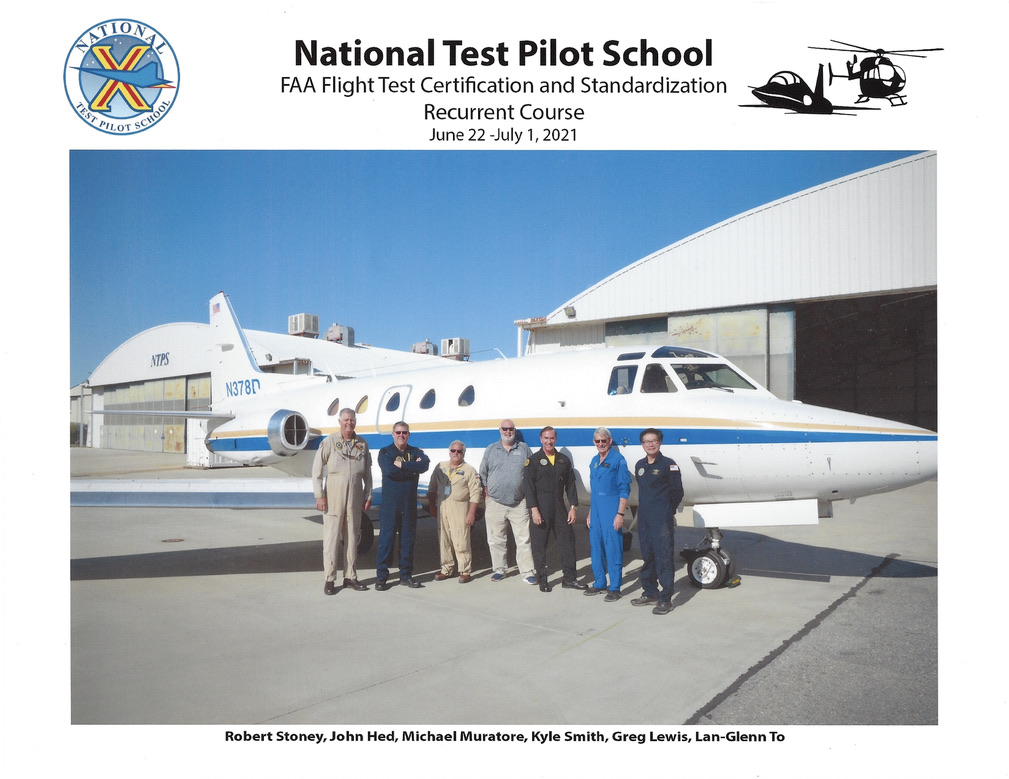
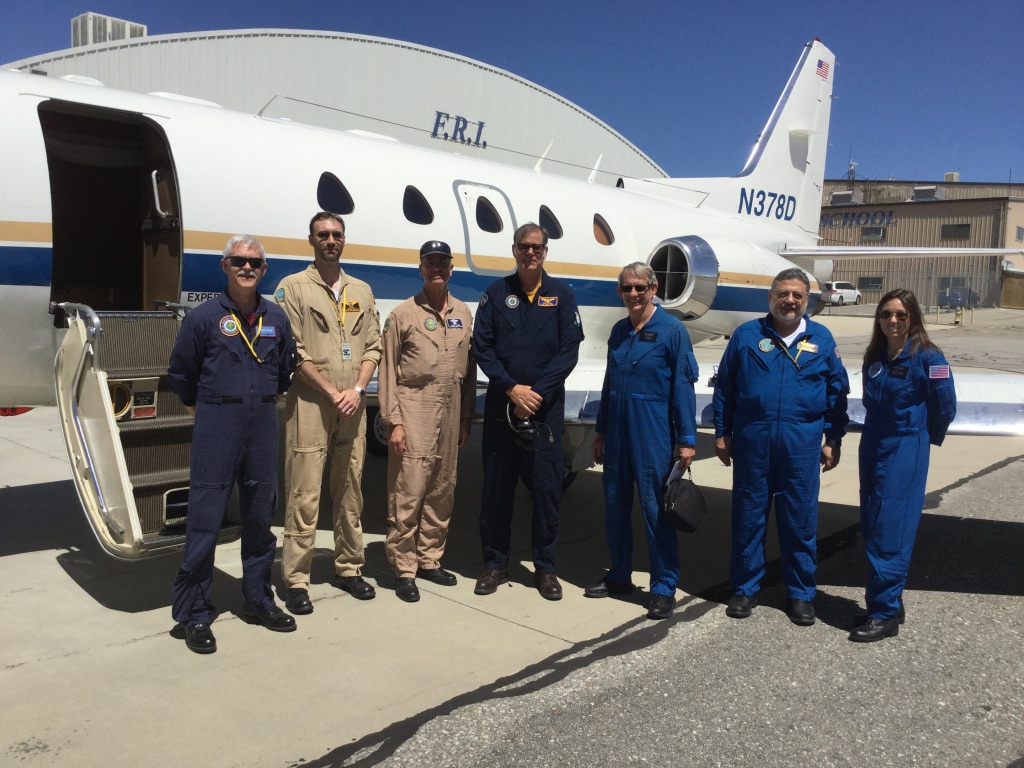
I continued to fly the Sabreliner during my time with the FAA, during “flight test initial” and every time I went to “flight test recurrent” training at the National Test Pilot School (NTPS, in Mojave, CA–not to be confused with USNTPS at Patuxent River, MD) I was able to fly this ancient bird, usually with the incredible Greg Lewis.  And everytime I sit in that cockpit–full of gages, switches, dials and controls (most of which I still don’t know what they do!)–I feel like that 8 year old kid again, in awe of airplanes.

Sabre 65 at NTPS recurrent 2021
(c) NTPS.edu
Sabre 65 at NTPS recurrent 2017
(c) NTPS.edu

Filed Under: 51-75, Business Jet

Cessna Citation V

January 1, 2025 by Bob Stoney Leave a Comment

Aircraft Information
> Aircraft Make: Cessna Model: 560 Nickname: Citation V
> Aircraft Mil Civ Description: Business Jet
> FAA Category and Class: Airplane Multi-engine Land
> Engine Description: Twin Jet

Aircraft Experience
> As of: 9/2/2021
> Number of Hours Flown: 9
> Number of Times Flown: 4
> Other Aircraft Models Associated: Cessna 500 series

First Flown Information
> Sequence First Flown: 114
> Date First Flown: 1/29/2002
> Location First Flown: Wichita Mid-continent airport (KICT)
> Who and/or What Organization First Flown With: Cessna Flight Test

Recollections: Well, I think I “double-dipped” on this airplane. You’ll see another post for the 500 series Cessnas that, honestly, should probably be combined. But, it’s too late now! (I’ve spent hours assembling the records, compiling the models and flight times, etc…and it appears I should’ve combined these. Oh, well, take one off the list!)

This airplane may hold the record for the most derivative models…the ones I flew (the CE-560, in “Ultra” and “Encore” versions) trace their lineage to the original CE-500 (Citation I) business jet.  The saying “a Citation is a Citation” is true…they all fly similarly, honestly, and the cockpit layout is very consistent.  That said, the engines and avionics have been changed significantly throughout the development of derivatives, and–of course–the fuselage has been stretched, the wing changed and the gross weight increased.  The real smart Cessna aficionados can tell you the model number by the number of windows. 

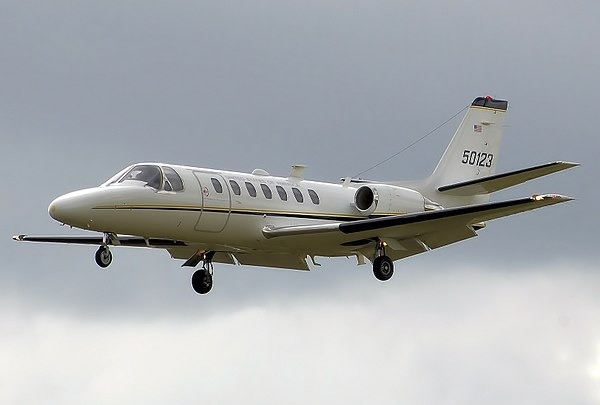
UC-35A, aka Citation V Ultra of the US Army
(c) Wikipedia

Proof of its commonality and consistency comes in the type rating.  I have a “CE-500” type rating, which covers the whole line, from 500 Citation I, thru latest 560 Citation V.

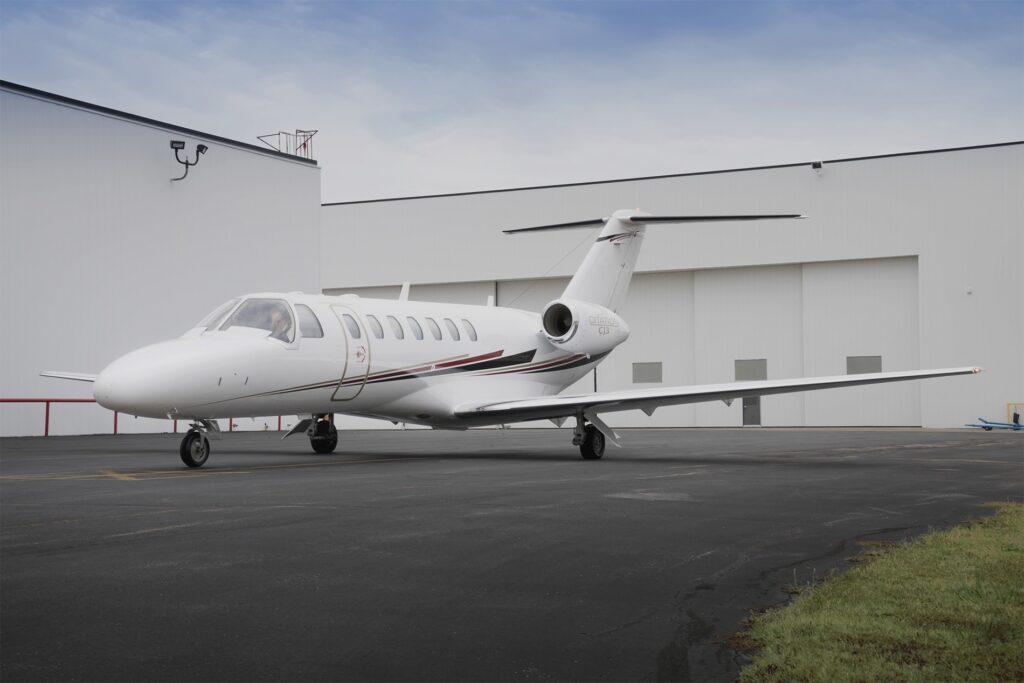
Citation V (Stock photo)
(c) txtav.com

Filed Under: 101-125, Business Jet

Beechjet 400

January 1, 2025 by Bob Stoney Leave a Comment

Aircraft Information
> Aircraft Make: Beechcraft (or Hawker, or British Aerospace) Model: 400 Nickname: Beechjet
> Aircraft Mil Civ Description: Business Jet
> FAA Category and Class: Airplane Multi-engine Land
> Engine Description: Twin jet

Aircraft Experience
> As of: 9/2/2021
> Number of Hours Flown: 10
> Number of Times Flown: 5
> Other Aircraft Models Associated: Mitsubishi MU-300 Diamond, USAF T-1 Jayhawk, Nextant 400XT

First Flown Information
> Sequence First Flown: 121
> Date First Flown: 4/11/2002
> Location First Flown: Beech Field, Wichita, KS (KBEC)
> Who and/or What Organization First Flown With: Beechcraft Flight Test

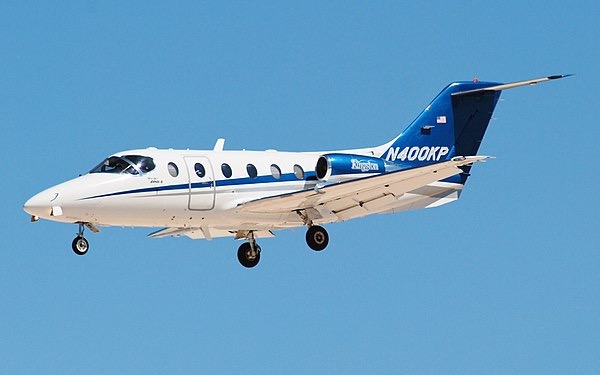
Recollections: All my flying in the Beechjet were done on projects while working for the FAA as a test pilot in Wichita, KS.  The tests involved VHF radios, Traffic Collision Avoidance System (TCAS), and a new type of paint for the radome on the front of the airplane.   This airplane, which was originally designed by a Japanese company–Mitsubishi–in 1978, was produced until 2009 by a variety of manufacturers, the last being Hawker Beechcraft.  

Hawker 400XP (stock photo)
(c) Wikipedia

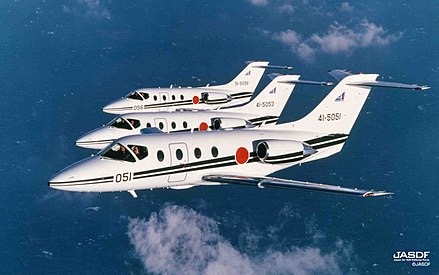
The plane flew honestly and I could see why the USAF had selected it as their “big airplane pilot” training jet.


Where it all began–three JASDF T-400’s flying formation
(c) Wikipedia

Filed Under: 101-125, Business Jet

  • « Previous Page
  • 1
  • 2
  • 3
  • 4
  • Next Page »

Recent Comments

  • Brian Paul on OV-1
  • Bob Stoney on Raytheon 390 Premier I

Contact Me.

Click Here.

Visitor Count

7796

Copyright © 2026 · Outreach Pro on Genesis Framework · WordPress · Log in