teakettle31

A Site To Catalog My Aircraft Adventures

  • About
    • About This Website
    • About Me
    • About My Favorite Aircraft
  • Aircraft I’ve Flown Organized By…
    • Mil/Civ Type
      • Airplane Single-engine Piston
      • Airplane Multi-engine Piston
      • Airplane Single-engine Turboprop
      • Airplane Multi-engine Turboprop
      • Tactical Jets
      • Large Jets
      • Business Jets
      • Helicopters
      • Gliders
      • Lighter than air
      • Other
    • Order Flown
      • Order Flown: 1-25
      • Order Flown: 26-50
      • Order Flown: 51-75
      • Order Flown: 76-100
      • Order Flown 101-125
      • Order Flown: 126-150
      • Order Flown: 151-175
      • Order Flown: 176+
  • Other Content
    • Favorite Links
    • Documents
    • My Store
  • Flight Test Services

Morane-Saulnier MS.760 Parisjet

January 23, 2025 by Bob Stoney Leave a Comment

Aircraft Information
> Aircraft Make: Moran-Saulnier. Model: MS.760. Nickname: Paris or Parisjet
> Aircraft Mil Civ Description: Business Jet
> FAA Category and Class: Airplane Multi-engine Land
> Engine Description: twin jet

Aircraft Experience
> As of: 9/2/2021
> Number of Hours Flown: 1
> Number of Times Flown: 1
> Other Aircraft Models Associated: n/a

First Flown Information
> Sequence First Flown: 120
> Date First Flown: 4/3/2002
> Location First Flown: Mojave Airport, CA (KMHV)
> Who and/or What Organization First Flown With: National Test Pilot School (NTPS), Greg Lewis

Recollections: The original “VLJ”, this unusual French airplane was designed in the 1950’s.  I came to fly it during the syllabus for “Flight Test initial training” upon beginning my job with the FAA flight test group.  The National Test Pilot School (NTPS) used the airplane for several exercises, noting that it was FAA certified.  With a gross weight of 7650 lb, it was ahead of its time….decades before the “Very Light Jet” craze produced the Cessna 510 Mustang, the Eclipse 500, or the Cirrus Vision SF50.

My logbook says the exercise I conducted at NTPS (flying with the always-awesome Greg Lewis) was a “FAR Part 25 flight”.  My memory is that the airplane was somehow certified under Part 25, even with its diminutive weight, probably to account for things like transport category single engine performance.  
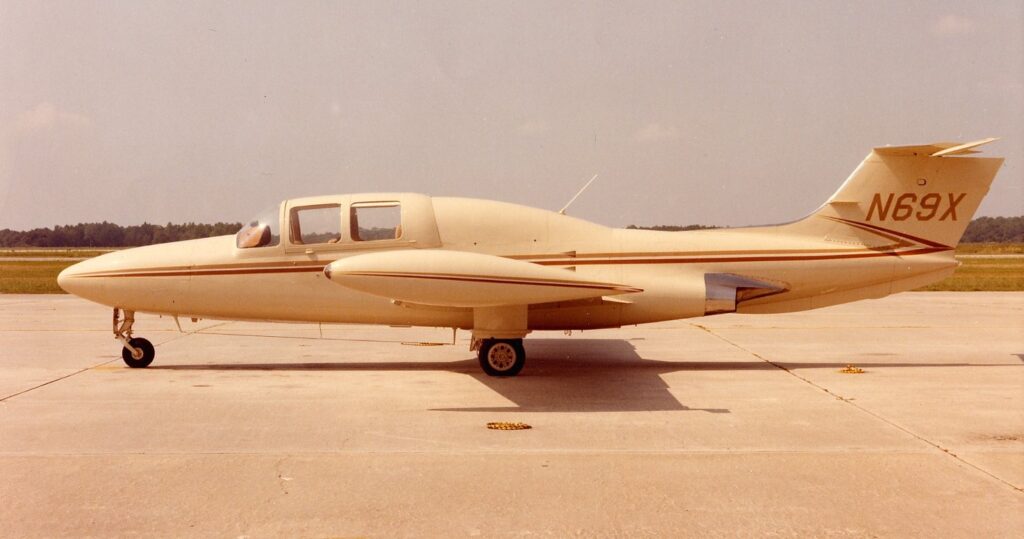
MS.760 Paris (Stock Photo)
(c) www.machdiamonds.com

Filed Under: 101-125, Business Jet, Complete

Dassault DA-50 Falcon

January 23, 2025 by Bob Stoney Leave a Comment

Aircraft Information
> Aircraft Make: Dassault. Model: 50. Nickname: Falcon
> Aircraft Mil Civ Description: Business Jet
> FAA Category and Class: Airplane multi-engine land
> Engine Description: Tri jet

Aircraft Experience
> As of: 9/2/2021
> Number of Hours Flown: 3
> Number of Times Flown: 3
> Other Aircraft Models Associated: several Dassault models

First Flown Information
> Sequence First Flown: 151
> Date First Flown: 10/20/2004
> Location First Flown: Lincoln, Nebraska Airport (KLNK)
> Who and/or What Organization First Flown With: Duncan Aviation

Recollections: My first flight in the Falcon (this is a big, three-engined airplane) was a project to evaluate a Universal cockpit display installed in and airplane owned by none other than Michael Bloomberg, at the time the mayor of New York City.

The French cockpit, and displays were very foreign and unusual but, with the help of Bloomberg’s pilot, we got the test done.

I’ve flown the 50 a couple of times since then, as Honeywell uses one as a flying tech demonstrator.  

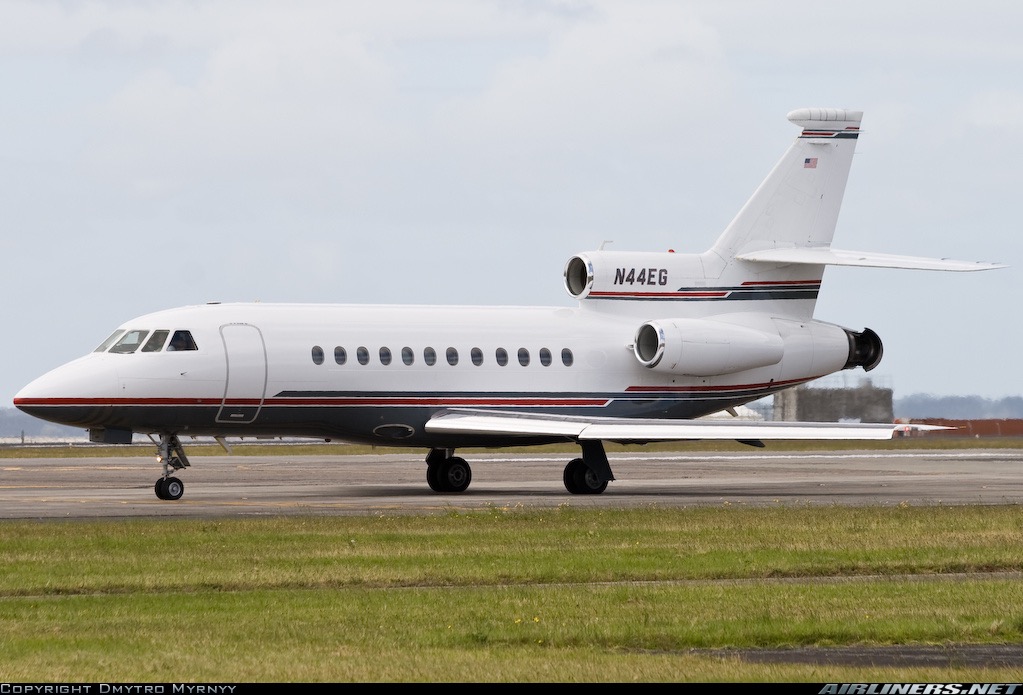
Dassault Falcon 50 (stock photo)
(c) airliners.net

Filed Under: 151-175, Business Jet, Complete

Mitsubishi MRJ “Spacejet”

January 23, 2025 by Bob Stoney Leave a Comment

Aircraft Information
> Aircraft Make: Mitsubishi. Model: MRJ. Nickname: Spacejet (adopted later in the program)
> Aircraft Mil Civ Description: Large Jet
> FAA Category and Class: Airplane Multi-engine Land
> Engine Description: Twin Jet

Aircraft Experience
> As of: 9/2/2021
> Number of Hours Flown: 2
> Number of Times Flown: 1
> Other Aircraft Models Associated: none

First Flown Information
> Sequence First Flown: 180
> Date First Flown: 3/20/2019
> Location First Flown: Grant County Airport, Moses Lake, WA (KMWH)
> Who and/or What Organization First Flown With: MITAC Flight Test, Don Parker

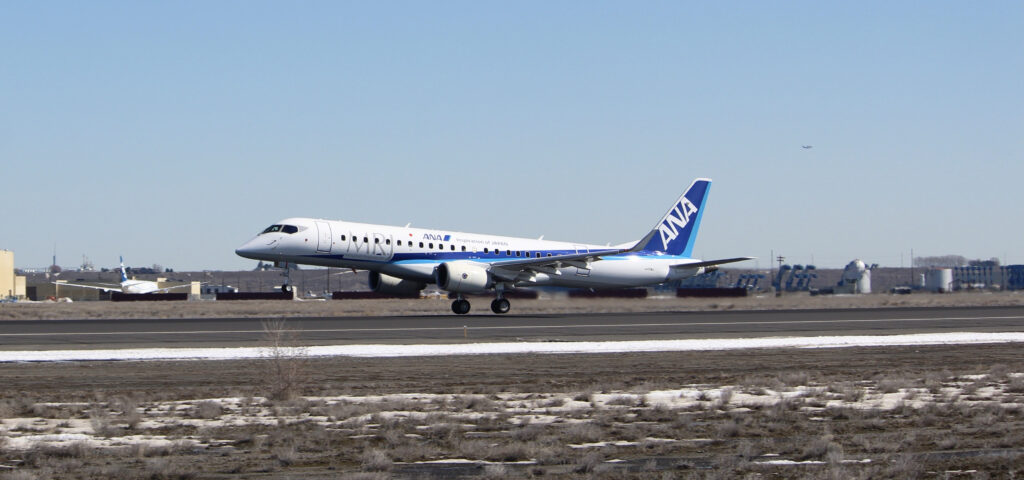
Recollections: I was lucky enough to be assigned to work a “Shadow program” to work with our Japanese counterparts on the certification of a new aircraft design being designed and produced in Japan.  The Mitsubishi Regional Jet (MRJ), later changed to being called the “SpaceJet” (much to the chagrin of many) was a major project started in about 2007, with delays that resulted in first flight being delayed until 2015.  By this time, the FAA was fully partnered with our counterparts (the JCAB–Japan Civil Aviation Bureau), including training and evaluation activities.  The Japanese (both the company–Mitsubishi–and the JCAB) were a pleasure to work with.  That’s not to say there weren’t challenges…there certainly were.  But people in Japan were working very hard, a matter of national pride. 

My first takeoff in an MRJ
(c) Mitsubishi Corporation

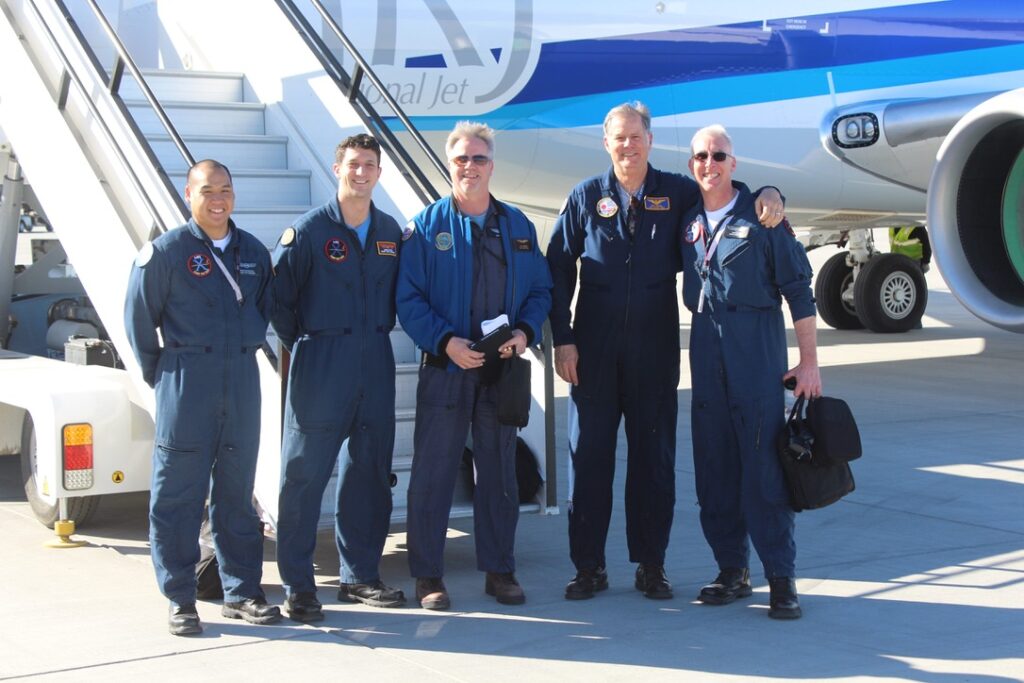
In 2019 it was decided that the FAA should participate in “familiarization flights” (we had been waiting for the certification program to begin with the issuance of an authorization to fly) and, so, in 2019 I finally got to fly the machine.  Turns out I was crewed with a test pilot who had been a student of mine years before, Don Parker (USNTPS Class 113).  Don was one of several western pilots on contract to assist Mitsubishi in the conduct of the test program.  

The crew on my first (and last) flight in the MRJ
(c) Bob Stoney

The airplane was good to fly.  It’s fly by wire, but with relatively little augmentation or control/envelope limiting.  It handled honestly and we were excited for the program to start certification.  Unfortunately, COVID hit and the program–as of this writing–is “on hold” pending business decisions that must be extremely challenging for many of our colleagues in Japan.  I wish them well and hope to fly the MRJ again. [Update 2 years after writing the prior: the MRJ was cancelled; such a shame but proof that certifying an aircraft–particularly one for use in Airline operations–is a tremendously daunting task. For me, the cancellation of this program was one of the saddest experiences of my professional career…I was very much looking forward to actually DOING flight test with my Japanese colleagues and fellow FAA testers.]

Filed Under: 176+, Business Jet, Complete

Learjet 60

January 23, 2025 by Bob Stoney Leave a Comment

Aircraft Information
> Aircraft Make: Learjet Model: 60. Nickname: Lear 60
> Aircraft Mil Civ Description: Business Jet
> FAA Category and Class: Airplane Multi-engine land
> Engine Description: Twin jet

Aircraft Experience
> As of: 9/2/2021
> Number of Hours Flown: 3
> Number of Times Flown: 1
> Other Aircraft Models Associated: none

First Flown Information
> Sequence First Flown: 141
> Date First Flown: 9/19/2003
> Location First Flown: Mid-continent Airport, Wichita, KS (KICT)
> Who and/or What Organization First Flown With: Learjet flight test, Ed Grabman

Recollections: As mentioned in my other Learjet recollections (25, 40/45), I don’t have a lot of LJ time.  This flight, conducted on the prototype LJ60 (N601LJ, Serial #1) with Learjet test pilot Ed Grabman, was a hydraulics test, involving operation of gear and flaps with one of the two engines shutdown.  

Such “one off” flights are not atypical of flight testing and are part of what makes it such a great job…variety!

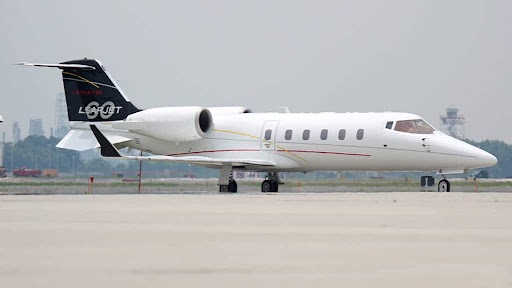
Learjet 60 (Stock photo)
(c) skyjetselite

Filed Under: 126-150, Business Jet, Complete

Bombardier CL-600 Challenger

January 23, 2025 by Bob Stoney Leave a Comment

Aircraft Information
> Aircraft Make: Bombardier. Model: CL-600. Nickname: Challenger
> Aircraft Mil Civ Description: Business Jet
> FAA Category and Class: Airplane Multi-engine Land
> Engine Description: Twin Jet

Aircraft Experience
> As of: 9/2/2021
> Number of Hours Flown: 3
> Number of Times Flown: 1
> Other Aircraft Models Associated: none

First Flown Information
> Sequence First Flown: 124
> Date First Flown: 5/23/2002
> Location First Flown: St Louis Downtown Airport, MO (KCPS)
> Who and/or What Organization First Flown With: Don’t remember, don’t WANT to remember. 🙂

Recollections: I have (so far) only flown the CL-600 once.  But, I’ve never done a takeoff or landing in one…let me explain.

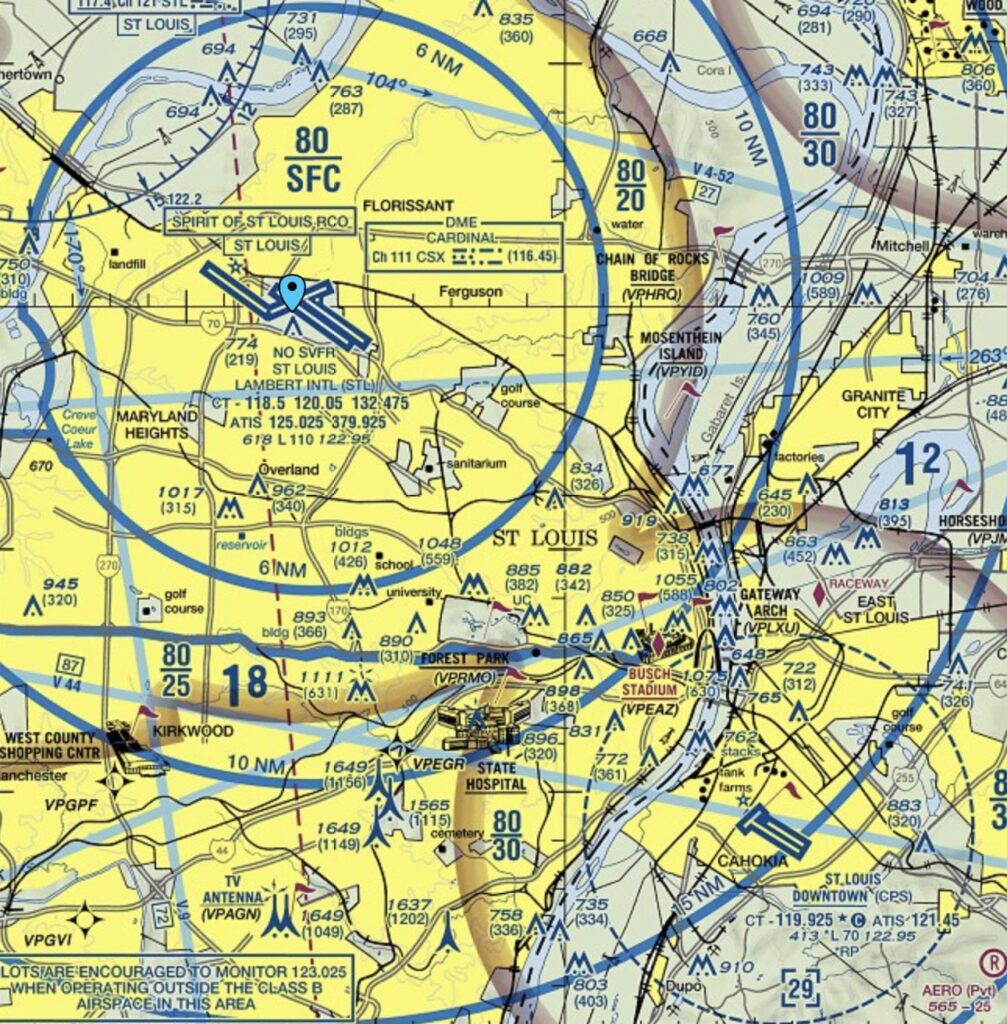
The purpose of the flight was to certify a Terrain Awareness and Warning System (TAWS).  The “applicant” was a company located in the St Louis area, but the test aircraft was a privately-owned airplane that had come from somewhere else (owners who allow their airplanes to be put into “experimental show compliance” airworthiness category presumably get a cut on the cost of the installed system).  TAWS testing involves a few tests conducted near an airport and then multiple runs on a surveyed ridge/mountain to trip off the terrain warnings in a predictable manner.  We were operating out of the “St Louis Downtown” airport, KCPS, located southeast of the main airport in St Louis, Lambert Field, KSTL (see chart in the figures).  Our “target mountain” was located about 30 minutes south of St Louis, in Arkansas.  Owing to the maneuvers that were planned and the fact that the weather was very good, the flight was planned to be conducted under Visual Flight Rules (VFR).  Well, the operator of the airplane “required” that–to do the takeoff or landing–that I be type-rated in the airplane.  Never flown one and, of course, I wasn’t rated.  This “requirement”, by the way, was the owner’s own policy and/or their insurance company policy…NOT any real regulatory requirement.  I was very new to the FAA and had not encountered this situation before so, I begrudgingly agreed to wait until we were on our way to the test area and then I’d get in to do the “runs on the mountain”.

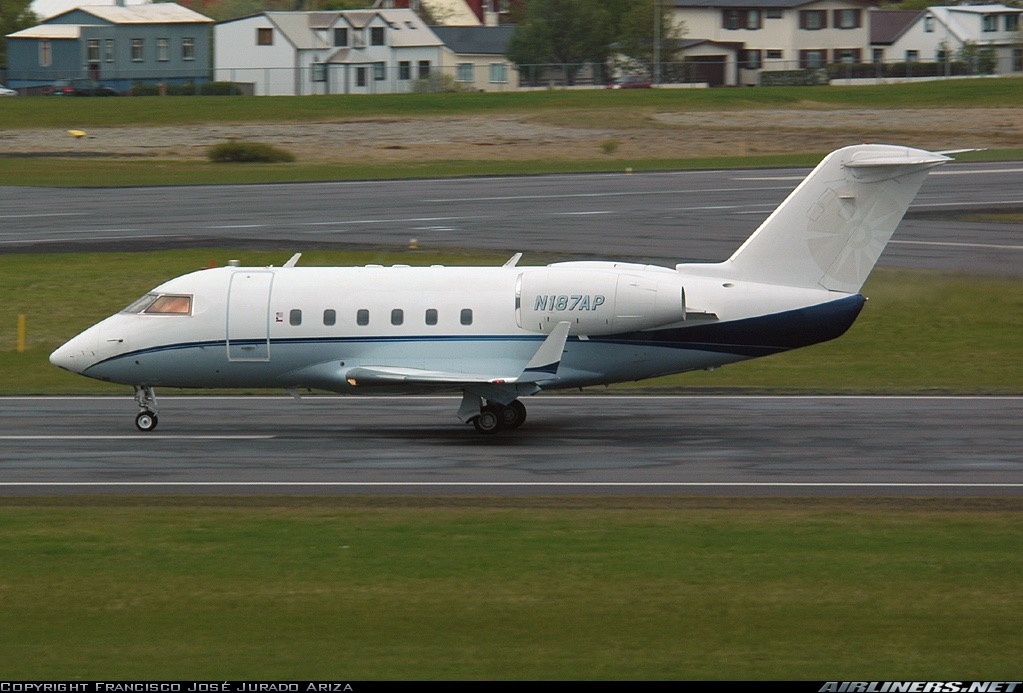
Bombardier CL-600 N187AP (Stock photo of the one I flew)
(c) airliners.net

So, after takeoff and departure from the STL area, I got in the left seat, did the tests over the next 2+ hours.  Heading back to St Louis I got out of the seat and sat in the (very nice) VIP-interior cabin.

After landing, we headed back into a conference room to debrief.  Walking in, the airplane’s Pilot in Command handed me his cell phone, mumbling something about the FAA.  Well, on the other end of the line was a very angry FAA Air Traffic Control (ATC) controller from St Louis TRACON.  Turns out the airplane had been flown VFR without authorization right into the STL Class B airspace, right thru the final approach corridor to nearby Lambert Field.  I guess the PIC thought, because I was FAA, that he had a “get out of jail free” card with ATC.  I paused momentarily to consider letting this crew just get hammered by ATC.  Frankly, they deserved to get hammered…after not letting me fly and then expecting me–without exlanation–to fix their screw-up.  However, I decided to handle this with the controller…explaining the purpose of the flight (clearly noting that I was NOT IN THE SEAT during the infraction!!), that the pilots weren’t familiar with the area, that they were operating VFR (not very usual for most Bizjet operators), and that I would sternly debrief them.  This placated the controller and we hung up the phone.  I could tell by the pilots sheepish behavior that they knew they’d really messed up (starting with not letting me in the seat), we agreed that an IFR departure and recovery would’ve been smarter and we proceeded to debrief the flight.

St Louis, MO area shown on VFR Sectional
(c) Foreflight.com

So, while this flight isn’t remembered for the flying qualities of the Challenger, it was a good lesson in FAA Flight Test processes and authority.  By the way, after that, my response to “you have to be type rated (to do something in a test airplane)” was (essentially and politely) “No I don’t.  Let me know when you figure out how to get me in the seat and I’ll be back.”

Filed Under: 101-125, Business Jet, Complete

  • 1
  • 2
  • 3
  • 4
  • Next Page »

Recent Comments

  • Brian Paul on OV-1
  • Bob Stoney on Raytheon 390 Premier I

Contact Me.

Click Here.

Visitor Count

7795

Copyright © 2026 · Outreach Pro on Genesis Framework · WordPress · Log in