teakettle31

A Site To Catalog My Aircraft Adventures

  • About
    • About This Website
    • About Me
    • About My Favorite Aircraft
  • Aircraft I’ve Flown Organized By…
    • Mil/Civ Type
      • Airplane Single-engine Piston
      • Airplane Multi-engine Piston
      • Airplane Single-engine Turboprop
      • Airplane Multi-engine Turboprop
      • Tactical Jets
      • Large Jets
      • Business Jets
      • Helicopters
      • Gliders
      • Lighter than air
      • Other
    • Order Flown
      • Order Flown: 1-25
      • Order Flown: 26-50
      • Order Flown: 51-75
      • Order Flown: 76-100
      • Order Flown 101-125
      • Order Flown: 126-150
      • Order Flown: 151-175
      • Order Flown: 176+
  • Other Content
    • Favorite Links
    • Documents
    • My Store
  • Flight Test Services

E-2

May 7, 2020 by Erin Leave a Comment

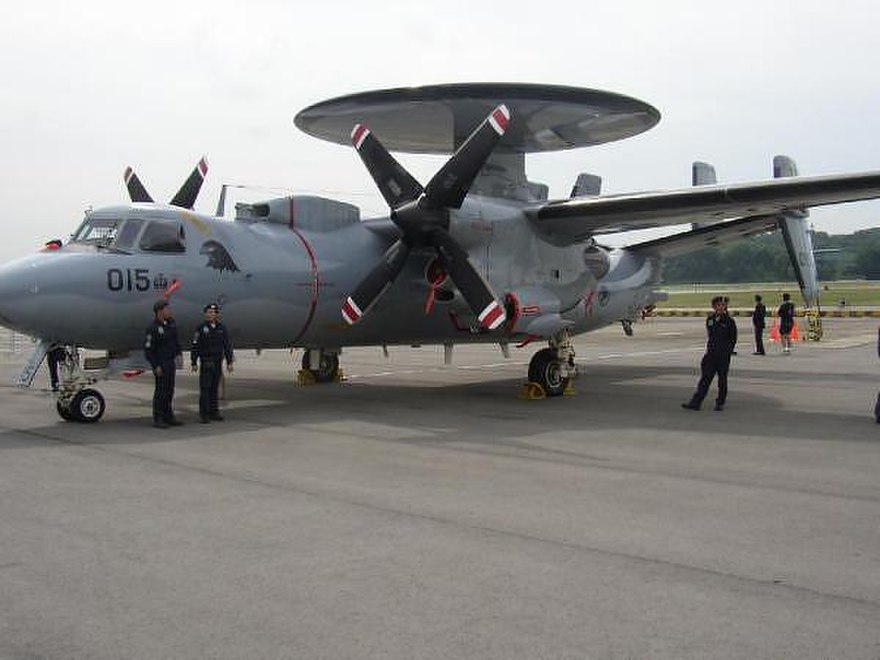
E-2 (photo from US Navy)

Aircraft Information
Aircraft Make: Grumman
Aircraft Model: E-2C
Aircraft Nickname: Hawkeye
Aircraft Mil Civ Description: Airplane ME Turboprop
Category: Airplane
Class: Multi Engine Land
Engine Description: Twin Engine

First Flown Information
Sequence First Flown: 0
Date First Flown: 06/02/1988
Location First Flown: NAS Patuxent River, MD
Who and/or What Organization First Flown With: Force Warfare, Trudell

Aircraft Experience
As of: 05/09/2020
Number of Hours Flown: 4
Number of Times Flown: 2
Other Aircraft Models Associated:

Recollections:

–Hmmmm….what I remember most about my first flight was how poor–compared to what I had in my trusty P-3–the “Situational Awareness” (SA) was for the pilots up front. My memory was that they were almost wholly dependent on the operators in the back for instructions and information, all passed verbally. But, it was a prop, so it was fun to fly.
–I flew it one more time…this time 3 days into Desert Storm when I conned myself a ride. This experience reaffirmed my impression that the airplane needed a “TAC display” big-time but I also was simply amazed at the skill of the pilots (and the NFO’s) keeping track of a myriad of comm nets. I couldn’t keep track of 2 and I think they were talking to 3 or 4 at the same time.
Filed Under: Status

US-1A

May 7, 2020 by Erin Leave a Comment

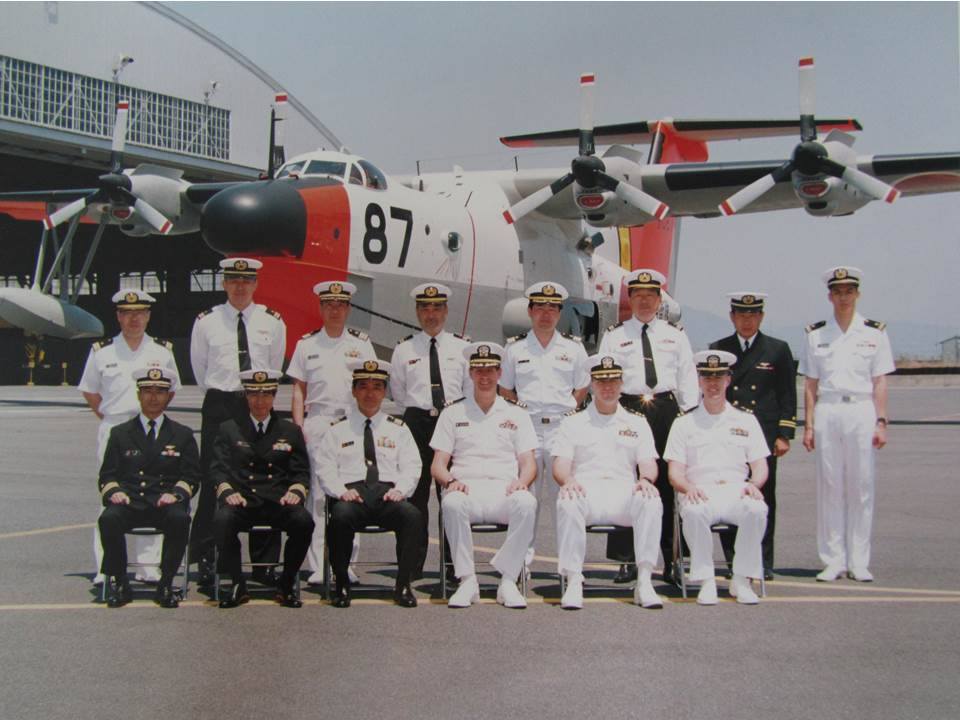
Official Photograph of USNTPS XO visit to FS-71 for DT-2 exercise (JMSDF)
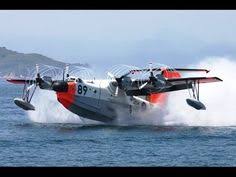
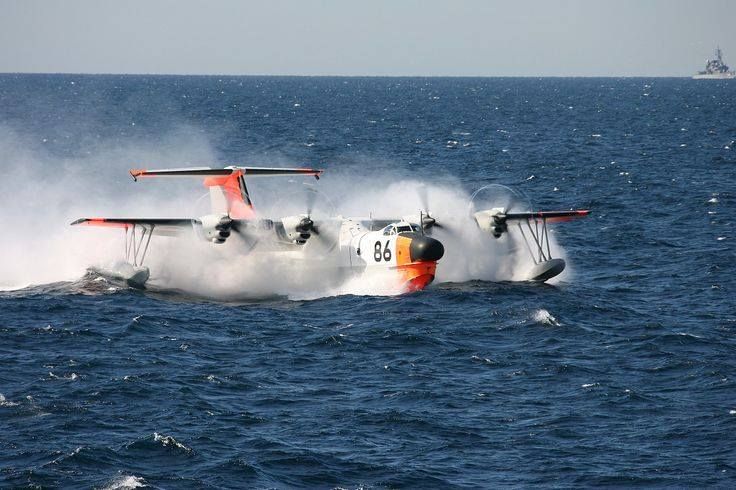
US-1A Open water operations (file photo) – JMSDF Official Photo
US-1A water operations (file photo)

Aircraft Information
Aircraft Make: Shin Meiwa
Aircraft Model: US-1A
Aircraft Nickname: Kai
Aircraft Mil Civ Description: Airplane ME Turboprop
Category: Airplane
Class: Multi Engine Sea
Engine Description: 3 or more Engine

First Flown Information
Sequence First Flown: 0
Date First Flown: 05/10/1999
Location First Flown: Japan
Who and/or What Organization First Flown With: Japanese Maritime Self Defense Force (JMSDF)

Aircraft Experience
As of: 05/09/2020
Number of Hours Flown: 4
Number of Times Flown: 1
Other Aircraft Models Associated:

Recollections:

–One of the neatest parts of being an Instructor at USNTPS was being able to “monitor” a student or students doing their Thesis project near the end of the year-long TPS course. This thesis, referred to as the “DT-2” (for “Developmental Testing, Phase 2”) involves assigning the student(s) an aircraft they’ve never flown before. They write an extensive test plan, conduct approximately 4 flights and then document their findings in a large report of test results (RTR). All in the span of weeks. This “graduation exercise” requires an instructor to mentor and eventually grade the test plan and report and that’s where I came in. Evaluating the student’s work requires the instructor to be familiar with the aircraft as well. So, every class–which means every 6 months since classes start twice at year–the instructors have the opportunity to do a “qualitative evaluation” on an airplane they, too, have likely never flown. These airplanes are obtained world-wide in cooperative relationships with test centers, aircraft manufacturers, and operators. Beginning in 1998 I started working on building a relationship with the “Japanese Navy” (the Japanese Maritime Self Defense Force or JMSDF). In the end, it was my good fortune to travel to Japan, observe the JMSDF Test Pilot School (Japan has TWO military test pilot schools, just like the USA and the JMSDF school–the only one I have had direct contact with–is every bit as professional and thorough as USNTPS), and fly the US-1A..a truly unique airplane who’s mission is Search and Rescue…to rescue downed airmen and others in need at sea.
–This “Qual Eval” was “top 3” out of all the Qual Evals I’ve ever flown. I could write a book on this experience as well but space is short…so, here are my most distinct memories. It was, frankly, so much fun not because this is a cool airplane (which it most definitely is) but because of the PEOPLE. The hosting was simply incredible…I doubt the Ambassador to Japan is treated better than I was. That’s me in the official photo, with all the professionals of the JMSDF who hosted myself and Joel Walker (the lucky student assigned to this first-ever DT-2 on the US-1…first, but not the last) in such an incredible fashion. I made life-long friends with several people I met on that trip.
–The US-1A “Kai” is an 8 engine airplane: 4 turboprops on the wing, an Auxiliary Power Unit (APU) that provides electricity a second APU that provides pressurized air to blow over the airplanes surfaces to increase lift at slow speed, and two engines on the Zodiac that gets deployed from a door behind the wing by the professionals of JMSDF. Watching the guys in the back take a zodiac that was completely packed-up and collapsed, with no motors….take it, inflate it, install the motors and launch it…all in less than a minute…wow!
–I was allowed to fly the machine for several hours and did several landings….but all the landings were inside the protection of a harbor. To show me the true capability of the airplane, the Plane Commander, Commander Toshitaka Kudoh–the Skipper of FS-71, flew out across the open ocean to show me a REAL water landing…in the open ocean. Prior to the landing, the crew flew a pattern to pick a spot for the landing, all the while mapping the ocean wave forms using a precise doppler radar altimeter. The current, waves, and wind were all calculated and considered. Finally, having picked the spot, and the desired direction for the landing, a flare was launched while airborne to mark the spot. Quite a bit of science had led up to this selection. But that’s where the science ended and the pure skill of a man who had flown thousands of hours in THAT US-1A came into sharp focus. He flew a downwind, turned base, set up for the landing. The flare appeared and then disappeared as it rode up and down on the large ocean waves. I lost sight of it for most of the “final”. Then the Skipper brought the airplane down to the surface, for a perfect water landing. It wasn’t smooth, there was no way it could be in those towering waves, but it was precise. As the airplane bounced slightly from one wave-cap to the next, it slowed down, stopped, heaved up and over a wave crest into the trough beyond, with giant waves all around, RIGHT THERE IN FRONT OF US, maybe 50 feet away, was that flare. It lives in my memory as probably the greatest feat of airmanship (and seamanship!) I have ever witnessed.
–I was in awe…..but then I remembered that I was supposed to go watch the raft deployment so I scrambled down onto the main deck and watched the guys get the Zodiac ready like an Indy pit-crew, shoot some kind of rocket-propelled line out to the flare and launch out for their “simulated rescue”. My over-all feeling was “the US ought to have this capability!” and, for awhile, I actually tried to convince some folks to field a capability like this, with a vision of ME being–someday–a quarter as good as Skipper Kudoh.

Filed Under: Status

Merlin III

May 7, 2020 by Erin Leave a Comment

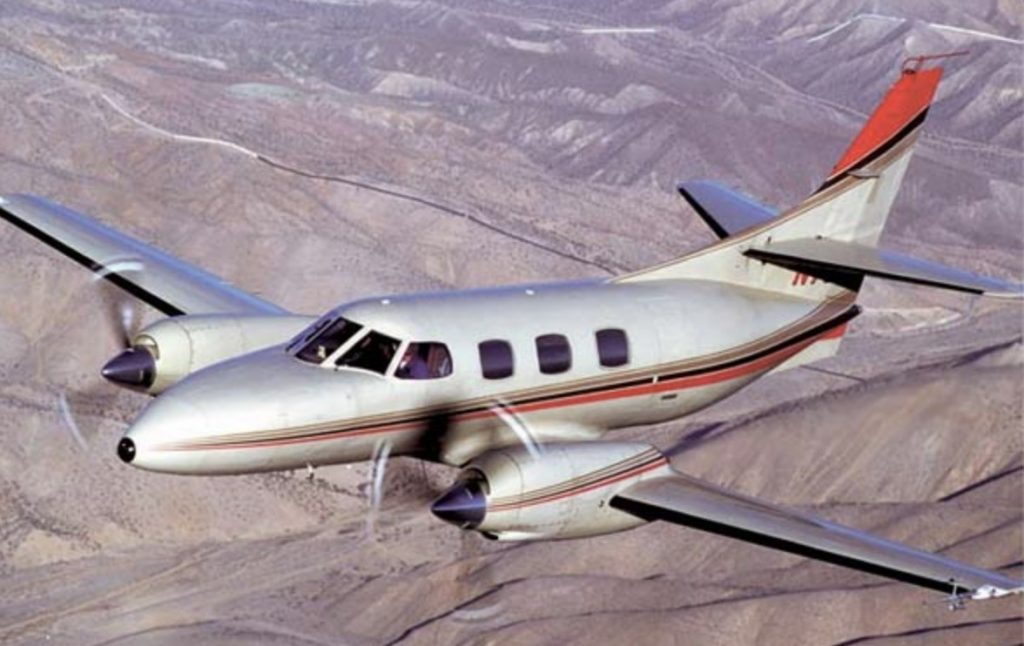
Swearingen Merlin III (File Photo)

Aircraft Information
Aircraft Make: Swearingen
Aircraft Model: SA226-T
Aircraft Nickname: Merlin III
Aircraft Mil Civ Description: Airplane ME Turboprop
Category: Airplane
Class: Multi Engine Land
Engine Description: Twin Engine

First Flown Information
Sequence First Flown: 0
Date First Flown: 03/19/2002
Location First Flown: KMHV, Mohave, CA
Who and/or What Organization First Flown With: National TPS, Rich Duprey

Aircraft Experience
As of: 05/09/2020
Number of Hours Flown: 4
Number of Times Flown: 4
Other Aircraft Models Associated:

Recollections: –This airplane was a staple at the National Test Pilot School (NTPS) for many years. It was successful there for at least two reasons: (1) it had some rudimentary instrumentation with stations for flight test engineers in the back to watch the data and, with apologies to my boss Gerry Baker–who worked as a project pilot at Swearingen–(2) it flies really lousy….a good attribute for a school trying to teach pilots how to evaluate handling qualities.

Filed Under: Status

Lockheed C-130

May 7, 2020 by Erin Leave a Comment

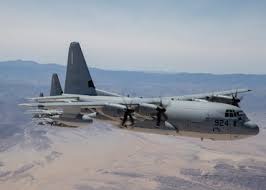
KC-130s in formation (file photo)
https://www.3rdmaw.marines.mil/units/mag-11/vmgr-352/

Aircraft Information
Aircraft Make: Lockheed
Aircraft Model: C130
Aircraft Nickname: Hercules
Aircraft Mil Civ Description: Airplane ME Turboprop
Category: Airplane
Class: Multi Engine Land
Engine Description: Twin Engine

First Flown Information
Sequence First Flown:
Date First Flown: 01/09/1991
Location First Flown: NAS Patuxent River, MD
Who and/or What Organization First Flown With: VMR-352, Andy L

Aircraft Experience
As of: 07/29/2020
Number of Hours Flown: 12
Number of Times Flown: 8
Other Aircraft Models Associated: KC-130, L-382, L-100

Recollections:

–The P-3 and the C-130 share the same engines (though one of them is “upside down” compared to the other…a source of debate between Orion and Hercules pilots) but that’s where the similarity stops. The C-130 is the “pickup truck” of large airplanes, tough and capable.
–I ended up flying a KC-130 with a Marine Corps refueling squadron, VMGR-352. This was right before Desert Storm and the Marines had been working on a project to include defensive counter-measures onto the KC-130. It was being tested at NAS Patuxent River and my skipper at TPS (“Big Bob” Price) suggested that a few of us accompany him on the airplane to finish the project and get it over into the theatre “in case it was needed”. I had familiarity with the defensive systems installed on the “one of a kind” KC-130 at Pax River, because they were very similar to a project I’d assisted with on the P-3 (both airplanes can use whatever defensive help they can get!).
–I flew the airplane 8 times (I believe first transiting to Bahrain, then doing some local training sorties out of Bahrain and, finally, on the first wave of Operation Desert Storm, when I the opportunity to watch the professionals of the VMGR-352 “Raiders” fly what I remember as a 4-ship, night-time refueling mission that was just flat-out amazing. The threat from the Iraqi’s was briefed as being extensive but, in the end, the might of the US Military dwarfed any response.

Filed Under: Airplane ME Turboprop

Beechcraft 300

May 7, 2020 by Erin Leave a Comment

Aircraft Information
Aircraft Make: Beechcraft
Aircraft Model: 300
Aircraft Nickname: King Air
Aircraft Mil Civ Description: Airplane ME Turboprop
Category: Airplane
Class: Multi Engine Land
Engine Description: Turbine

First Flown Information
Sequence First Flown:
Date First Flown: 09/10/2002
Location First Flown: Beech Field, Wichita, KS
Who and/or What Organization First Flown With: Beech flight test, Randy Reynolds

Aircraft Experience
As of: 07/29/2020
Number of Hours Flown: 26
Number of Times Flown: 19
Other Aircraft Models Associated: Beech 350 (Marketing name), other King Airs

Recollections: This is the biggest of the “normal” King Airs (90, 100, 200, 300) and I was privileged to get to do some test on an unusually heavy version, a Special Mission aircraft with significantly increased gross weight. Field performance, rejected takeoffs and the like, it was very interesting.

The King Air has had a long and enviable production run, first flying in the early 1960’s it continues in production 60 years later. One experience I had illustrated to me the reason why it’s had such a successful run. I was flying a Hawker 4000 business jet, doing crosswind landing tests at the Topeka, KS airport. We had a King Air 350 with us, providing support (wind station to precisely measure the winds; a mechanic, etc). As the wind died down, we all shutdown at Topeka to discuss the plan. It was decided we’d all head back to Beech Field in Wichita, about 110 nm as the crow flies. We started up our airplanes and taxied to the runway. Being in our “fast bizjet”, we decided we’d takeoff first, so we didn’t “run down” the “slow King Air”. Off we blasted, climbing to something like 30,000 ft. We flew close to Mmo in the cruise and descent and soon landed at Beech’s home airport. As we were shutting down and unstrapping, in taxied that King Air. “How’d he do that?” we all thought. The answer was the airplane is the perfect short-haul machine and gives up little in terms of time. If you don’t need to go a long way, and you want to haul a bunch of stuff, it’s hard to beat the King Air family.

Filed Under: Airplane ME Turboprop

  • « Previous Page
  • 1
  • 2
  • 3
  • 4
  • 5
  • 6
  • Next Page »

Recent Comments

  • Brian Paul on OV-1
  • Bob Stoney on Raytheon 390 Premier I

Contact Me.

Click Here.

Visitor Count

7796

Copyright © 2026 · Outreach Pro on Genesis Framework · WordPress · Log in