teakettle31

A Site To Catalog My Aircraft Adventures

  • About
    • About This Website
    • About Me
    • About My Favorite Aircraft
  • Aircraft I’ve Flown Organized By…
    • Mil/Civ Type
      • Airplane Single-engine Piston
      • Airplane Multi-engine Piston
      • Airplane Single-engine Turboprop
      • Airplane Multi-engine Turboprop
      • Tactical Jets
      • Large Jets
      • Business Jets
      • Helicopters
      • Gliders
      • Lighter than air
      • Other
    • Order Flown
      • Order Flown: 1-25
      • Order Flown: 26-50
      • Order Flown: 51-75
      • Order Flown: 76-100
      • Order Flown 101-125
      • Order Flown: 126-150
      • Order Flown: 151-175
      • Order Flown: 176+
  • Other Content
    • Favorite Links
    • Documents
    • My Store
  • Flight Test Services

Cirrus SR20, SR22

January 27, 2025 by Bob Stoney Leave a Comment

Aircraft Information
> Aircraft Make: Cirrus Aircraft Model: SR 20 & 22 Nickname: The plane with a parachute
> Aircraft Mil Civ Description: Airplane SE Piston
> FAA Category and Class: Airplane Single Engine Land
> Engine Description: single piston

Aircraft Experience
> As of: 11/5/2024
> Number of Hours Flown: 31
> Number of Times Flown: 21
> Other Aircraft Models Associated: SR20 and 22 with various sub-models (eg: “G2”, “G3”)

First Flown Information
> Sequence First Flown: 135
> Date First Flown: 4/14/2003
> Location First Flown: New Century Air Center, Olathe, KS (KIXD)
> Who and/or What Organization First Flown With: Garmin flight test, Phil Straub

Recollections: My first flight in a Cirrus SR2X was on an FAA test flight to evaluate the new G1000 avionics system.  Later I flew it as a rental with several FBO’s (each requiring a special checkout from a Cirrus-authorized instructor…showing the somewhat challenging flying qualities of the cirrus), and as a student at NTPS.
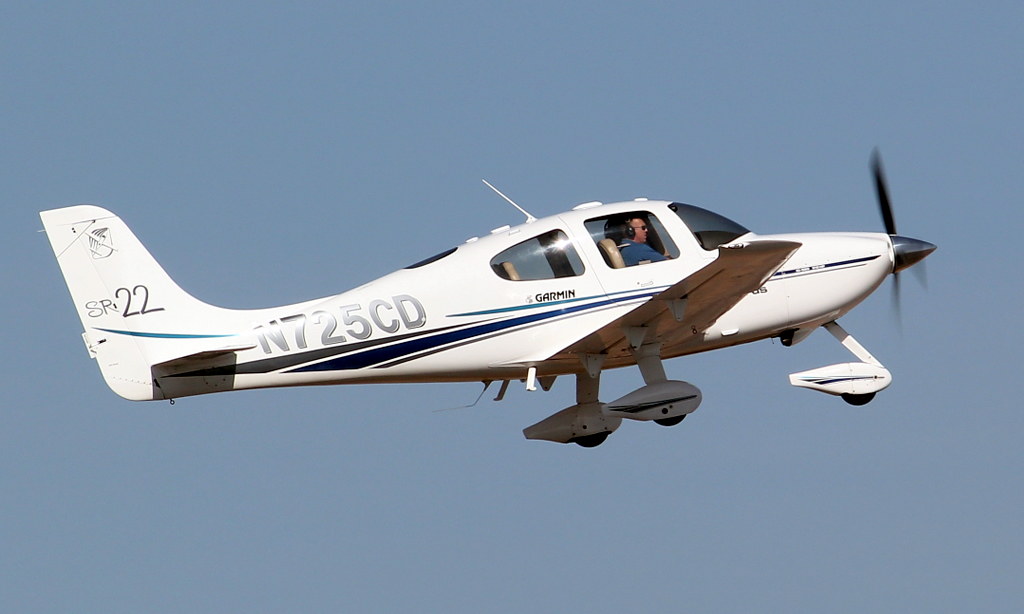
Cirrus SR22 N725CD, Garmin (stock photo)
(c) flickr.com

The Cirrus is, for sure, an amazing cross-country airplane.  Coupled with the advanced avionics (either the Garmin or the Avidyne systems) it’s just an excellent way to get from A to B.  That said, I never really liked the way it handled.  It has a mechanical sidestick, which leaves room in the cockpit for your legs and gives you a wide-open view of the instruments, but there’s a disharmony between pitch and roll controls and it’s difficult to precisely control the airplane.  It’s totally safe, just not fun or easy to fly.  As is often the case in aviation, you can’t have it all.  Aircraft design is a tradeoff.  The Cirrus trade is in favor of performance and it truly achieves that goal.  It’s CAPS (Cirrus Airframe Parachute System) also has been revolutionary in the private airplane market, achieving a number of saves.  
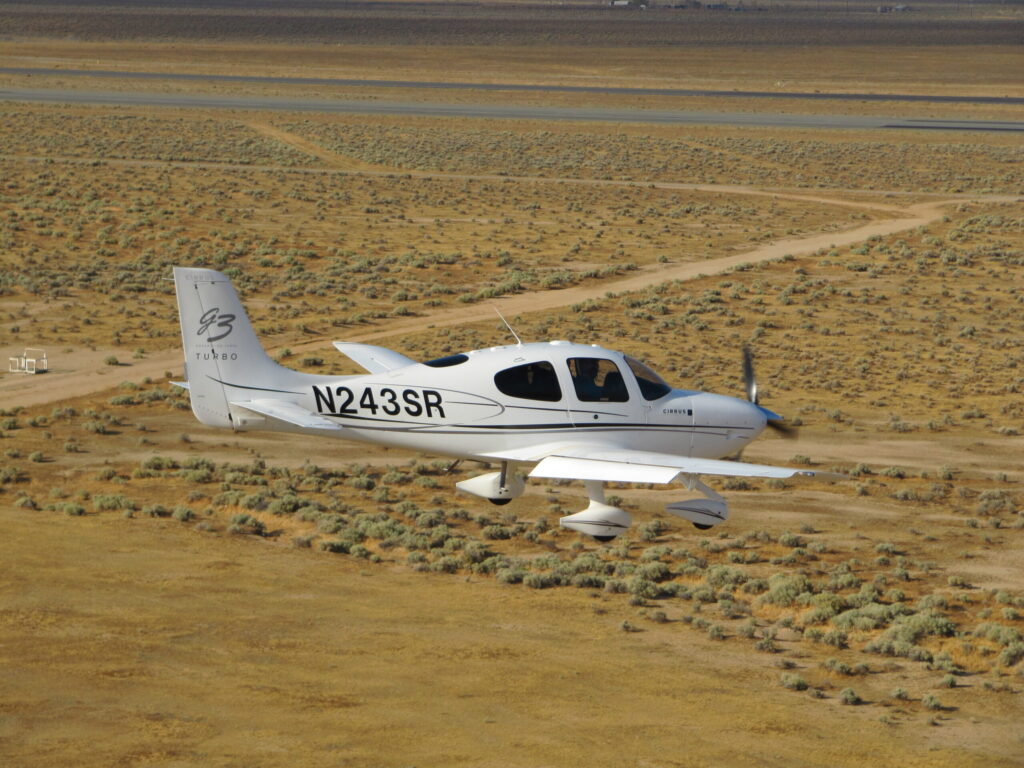
Cirrus SR22 N243SR, National Test Pilot School (stock photo)
(c) NTPS.edu

Filed Under: 126-150, Airplane SE Piston

Mooney M20

January 27, 2025 by Bob Stoney Leave a Comment

Aircraft Information
> Aircraft Make: Mooney Aircraft Model: M20 Nickname: Mooney
> Aircraft Mil Civ Description: Airplane SE Piston
> FAA Category and Class: Airplane Single Engine Land
> Engine Description: single piston

Aircraft Experience
> As of: 11/5/2024
> Number of Hours Flown: 19
> Number of Times Flown: 11
> Other Aircraft Models Associated: M20, M20F, M20E, M20J

First Flown Information
> Sequence First Flown: 14
> Date First Flown: 4/23/1985
> Location First Flown: NAS Moffett Field, CA (KNUQ)
> Who and/or What Organization First Flown With: Navy Moffett Flying Club

Recollections: The Mooney is a great cross country airplane and it handles really well.  The company has struggled, shut down a few times but returned.  The Mooney’s that I’ve flown have all been the older models, with manual flaps or manual gear or both.  These manual/mechanical systems require the pilot to apply a significant amount of force to the control to raise or lower the gear and flaps and this force application often results in the “Mooney bobble”, particularly after takeoff, as the pilot’s attention is drawn away from maintaining pitch attitude to trying to raise the gear/flaps.  

The airplane is small inside and, being 6’6″ tall, it was a pretty good squeeze for me.  But it was worth it, as the plane was fast and very fuel efficient.   It also is unique for it’s “all flying tail”, where the vertical and horizontal tail  pivot together  when trimming in pitch.

I got checked out at various FBO’s over the year, most recently in 2013 in Seattle but, unfortunately, the owner took it off of lease-back soon after my checkout.  This is an airplane I would consider owning for transportation purposes.

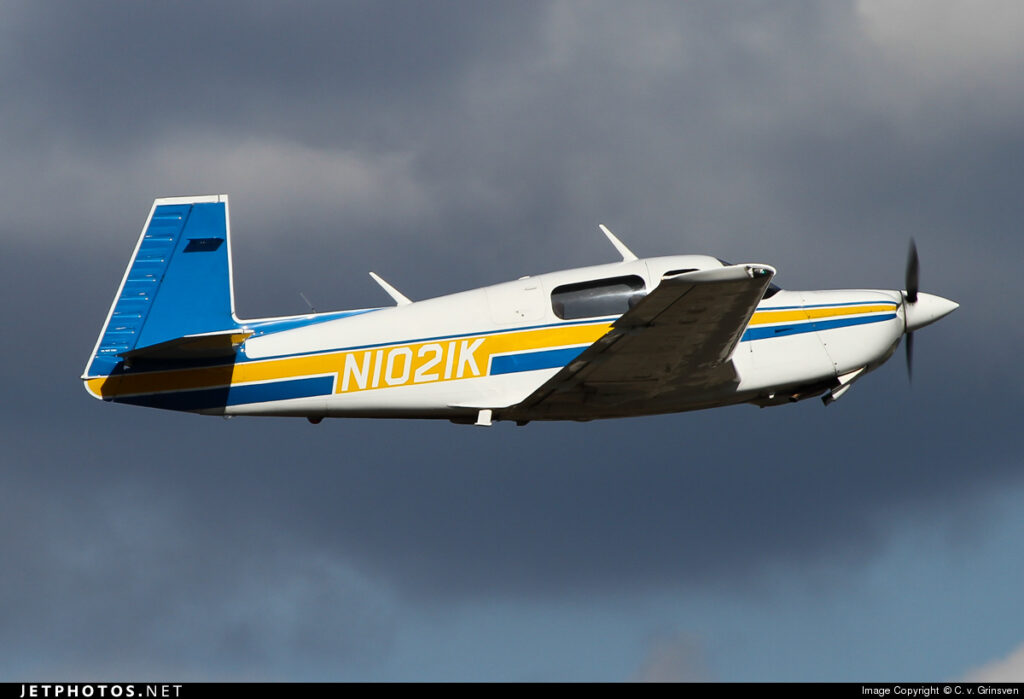
Mooney M20J, N1021K, Galvin FBO rental (stock photo)
(c) jetphotos.net

Filed Under: 1-25, Airplane SE Piston

Cessna 177RG Cardinal

January 25, 2025 by Bob Stoney Leave a Comment

Aircraft Information
> Aircraft Make: Cessna Model: 177RG. Nickname: Cardinal
> Aircraft Mil Civ Description: Airplane SE Piston
> FAA Category and Class: Airplane Single Engine Land
> Engine Description: single piston

Aircraft Experience
> As of: 11/5/2024
> Number of Hours Flown: 20
> Number of Times Flown: 7
> Other Aircraft Models Associated: C-177 and C-177RG

First Flown Information
> Sequence First Flown: 79
> Date First Flown: 9/7/1992
> Location First Flown: Monterey, CA airport (KMRY)
> Who and/or What Organization First Flown With: Navy Monterey Flying Club

Recollections: Wikipedia has an excellent description of the Cardinal’s history, intended as a replacement for the C-172 Skyhawk.  There’s some great “test pilot stuff” in this wiki article.

While I didn’t write a technical report on the 177 from my 20 hours of flying it, I do remember thinking it was a bit more of a handful than the 172, particularly on landing.  I guess that’s why the 172 survives to this day, while the 177 was discontinued (albeit after almost 4300 were built, one-tenth as many as the 172).

For me, I flew the airplane as transportation to travel all over California while attending Navy Postgrad school in Monterey.  Much as I’d done during my tour at Moffett, I traveled fairly widely in California, which has to be one of the best places for personal flying in the world, owing to a tremendous variety of airports and generally predictable weather.

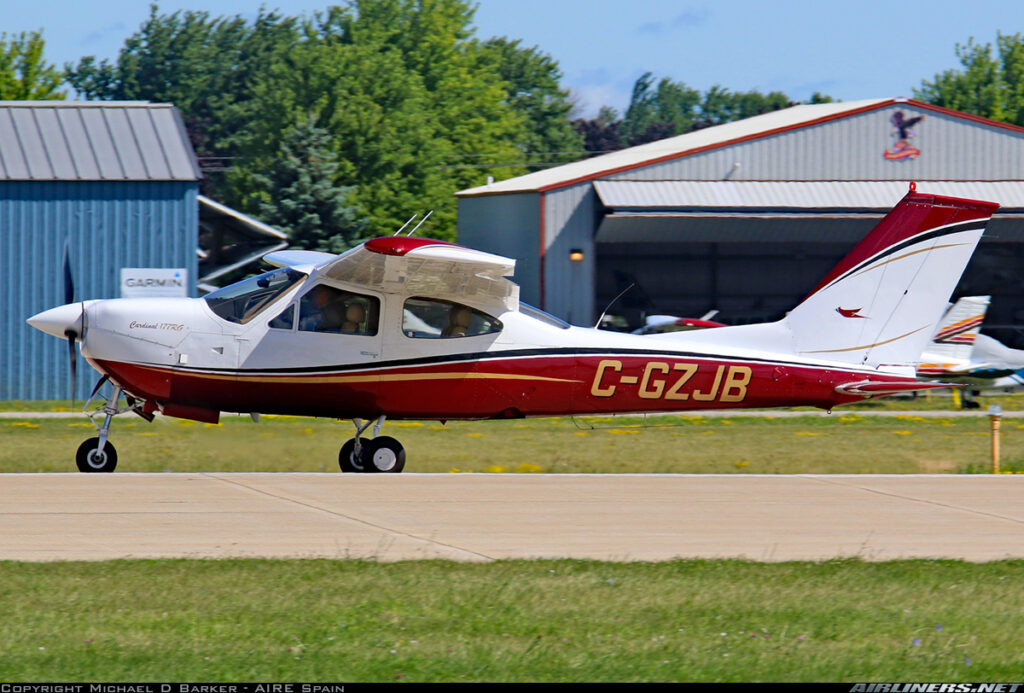
Cessna C-177RG Cardinal (stock photo)
(c) airliners.net

The C-177 I flew was an “RG” (Retractable Gear) model and I knew this was a setup for a gear-up landing (it’s a Cessna…the gear’s GOTTA be fixed, right?)  Luckily, I’m still in the “those who will” category (“there are two kinds of pilots: those who HAVE landed gear up and those that will”.  I live in fear of joining the “have” category…but I check the gear down at least twice every time I land, even in my fixed-gear Birddog). 

Filed Under: 76-100, Airplane SE Piston

Cessna 180/185 Skywagon

January 25, 2025 by Bob Stoney Leave a Comment

Aircraft Information
> Aircraft Make: Cessna. Model: 180/185. Nickname: Skywagon
> Aircraft Mil Civ Description: Airplane SE Piston
> FAA Category and Class: Airplane Single Engine Land (and Sea)
> Engine Description: single piston

Aircraft Experience
> As of: 11/5/2024
> Number of Hours Flown: 20
> Number of Times Flown: 63
> Other Aircraft Models Associated: C-180

First Flown Information
> Sequence First Flown: 89
> Date First Flown: 11/22/1996
> Location First Flown: NAS Patuxent River, MD (KNHK)
> Who and/or What Organization First Flown With: USNTPS Qual Eval (Seaplane from North Dakota State)

Recollections: My first flight in a C-185 was to fly with a Qual Eval with North Dakota State while assigned as the CFI at USNTPS.  The school hired a 185 Floatplane to come all the way out east and fly students (and staff). Not sure why we couldn’t find somebody closer (we also used the Department of Forestry’s Beaver from, I think, Minnesota). This may have been my first floatplane flight.

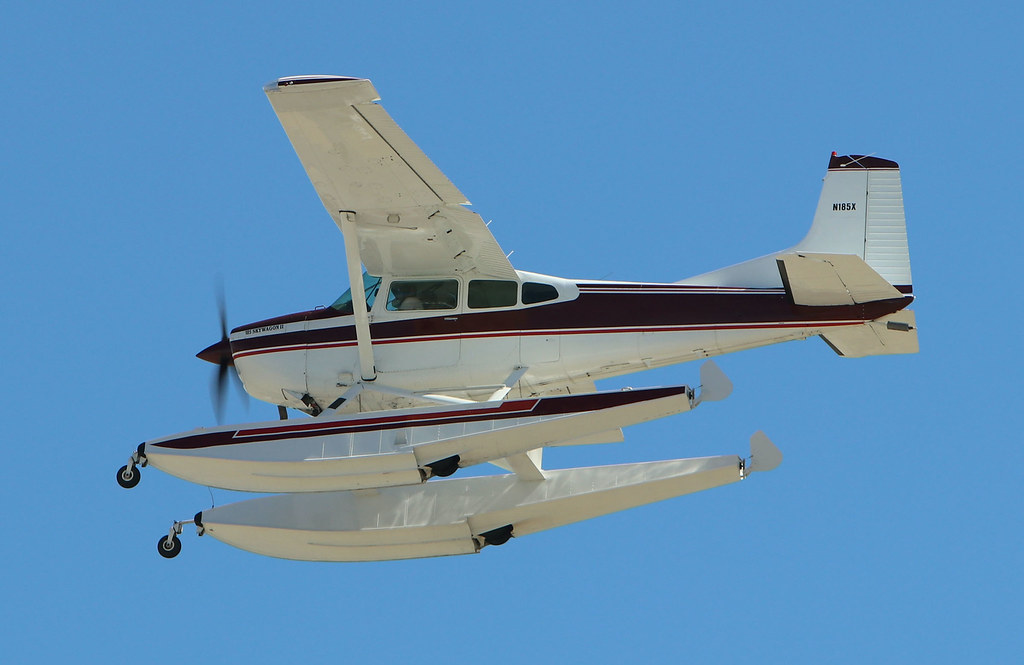
C-185 on floats (stock photo)
(c) flikr.com

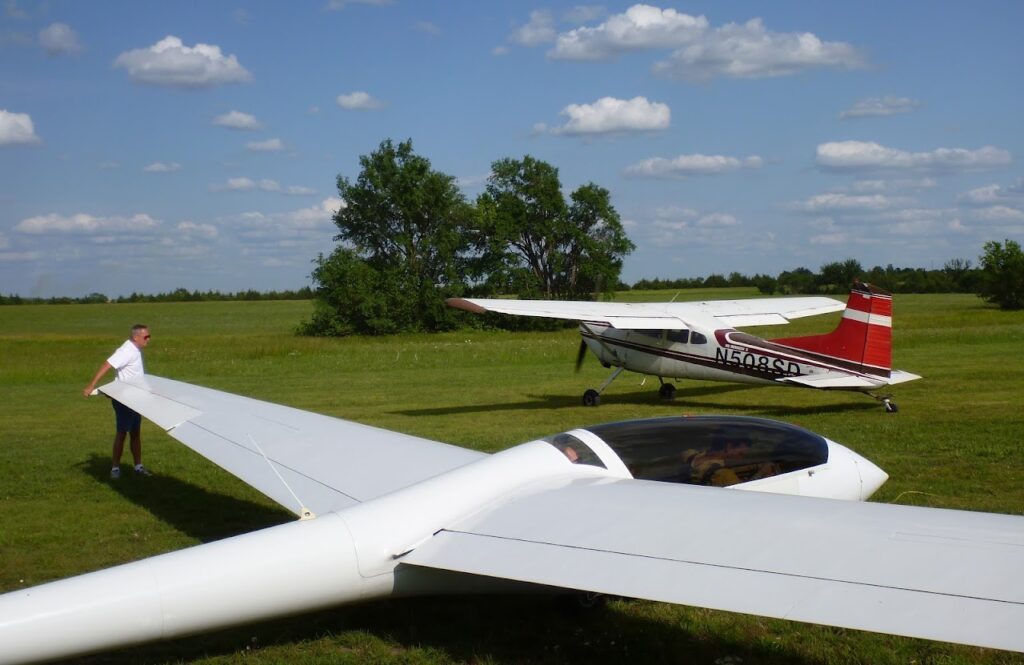
Next time was after retiring from the Navy and joining the FAA as a Test Pilot in their Wichita, KS office.  There I got checked out to tow gliders at McMaster Field, west of Wichita.  I don’t have a lot of time in the 185 but I believe it’s a wonderful airplane, honest handling and very capable. 

C-185 N508SD getting ready to tow at McMaster Field, Wichita, KS (stock photo)
(c) Wichita Glider Port

Filed Under: 76-100, Airplane SE Piston

Beechcraft T-34B Mentor

January 25, 2025 by Bob Stoney Leave a Comment

Aircraft Information
> Aircraft Make: Beechcraft. Model: T-34B. Nickname: Mentor
> Aircraft Mil Civ Description: Airplane SE Piston
> FAA Category and Class: Airplane Single Engine Land
> Engine Description: single piston

Aircraft Experience
> As of: 11/5/2024
> Number of Hours Flown: 21
> Number of Times Flown: 11
> Other Aircraft Models Associated:
D-45, Model 45; T-34C (turbine powered follow-on)

First Flown Information
> Sequence First Flown: 12
> Date First Flown: 6/23/1983
> Location First Flown: NAS Moffett Field, CA (KNUQ)
> Who and/or What Organization First Flown With: Navy Moffett Flying Club

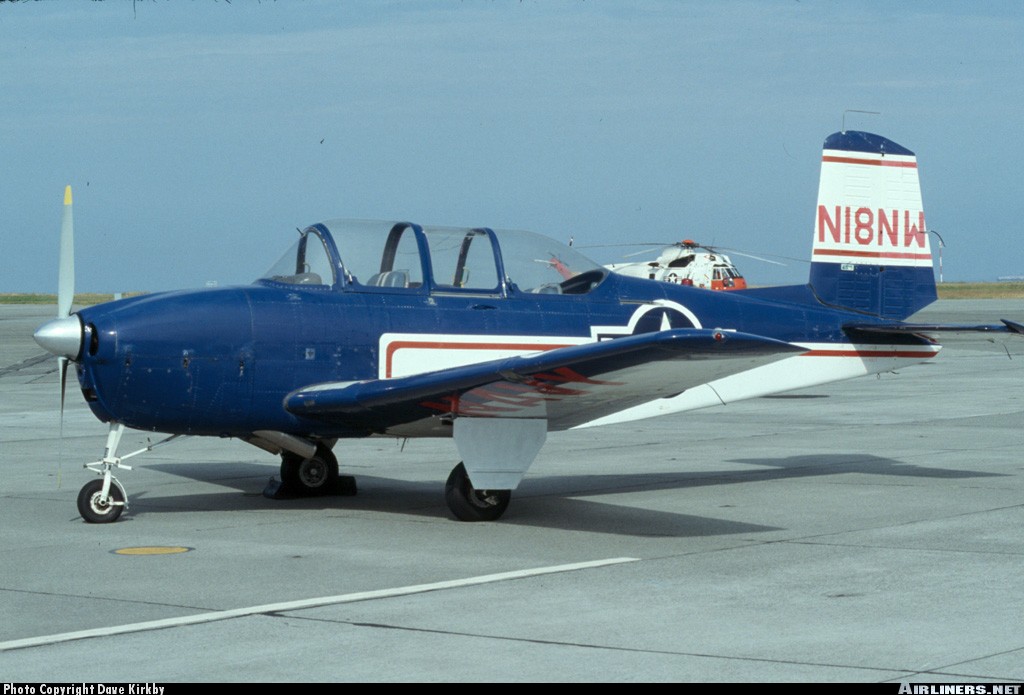
Recollections: While I hadn’t flown the T-34C (turbine) in flight school, I was excited about getting some experience in its older brother, the T-34B, powered by a 185 HP Continental recip.  This airplane was the first airplane flown by Student Naval Aviators (SNA) from about 1960 to 1975, in “primary”.  After this, SNA’s would then go to the T-28.   By the time I went to primary in 1980 you either flew the T-34C turbine-powered airplane or straight to the T-28.  As a “Trojan guy”, I was curious to explore whether the T-34B would’ve been a smarter first plane.  It certainly was easier to fly and probably a good lead-in to the Trojan but, based on my successful completion of primary in the T-28, I could see why the Navy had chosen to at least temporarily try “straight to the 28”.  

T-34B N18NW (stock photo)
(c) airliners.net

I flew the T-34B at three Navy Flying Clubs.  First NAS Moffett Field, CA (where I was in an operational P-3 squadron), then NAS Patuxent River, MD (TPS), and finally at the Monterey, CA airport (where I was in Postgraduate School).  At each location, I witnessed the retirement of the T-34B from flying club use and/or the total closing of the club.  It was a sad thing to watch…essentially the base commanders saw only risk and bad press and perhaps didn’t have enough civilian grass-roots flying experience to understand the huge value of flight training for Navy personnel.

Filed Under: 1-25, Airplane SE Piston

  • « Previous Page
  • 1
  • …
  • 5
  • 6
  • 7
  • 8
  • 9
  • …
  • 18
  • Next Page »

Recent Comments

  • Brian Paul on OV-1
  • Bob Stoney on Raytheon 390 Premier I

Contact Me.

Click Here.

Visitor Count

7796

Copyright © 2026 · Outreach Pro on Genesis Framework · WordPress · Log in