teakettle31

A Site To Catalog My Aircraft Adventures

  • About
    • About This Website
    • About Me
    • About My Favorite Aircraft
  • Aircraft I’ve Flown Organized By…
    • Mil/Civ Type
      • Airplane Single-engine Piston
      • Airplane Multi-engine Piston
      • Airplane Single-engine Turboprop
      • Airplane Multi-engine Turboprop
      • Tactical Jets
      • Large Jets
      • Business Jets
      • Helicopters
      • Gliders
      • Lighter than air
      • Other
    • Order Flown
      • Order Flown: 1-25
      • Order Flown: 26-50
      • Order Flown: 51-75
      • Order Flown: 76-100
      • Order Flown 101-125
      • Order Flown: 126-150
      • Order Flown: 151-175
      • Order Flown: 176+
  • Other Content
    • Favorite Links
    • Documents
    • My Store
  • Flight Test Services

Boeing B-52 Stratofortress

January 23, 2025 by Bob Stoney Leave a Comment

Aircraft Information
> Aircraft Make: Boeing. Model: B-52. Nickname: Stratofortress
> Aircraft Mil Civ Description: Large Jet
> FAA Category and Class: Airplane Multi-engine Land
> Engine Description: 8 engines (!)

Aircraft Experience
> As of: 9/2/2021
> Number of Hours Flown: 4
> Number of Times Flown: 1
> Other Aircraft Models Associated: none

First Flown Information
> Sequence First Flown: 41
> Date First Flown: 5/6/1988
> Location First Flown: Westover ARB, MA
> Who and/or What Organization First Flown With: USAF Squadron (TBV)

Recollections: Another DT-II exercise as an Instructor at USNTPS (you can see why being an instructor there is one of the best jobs in aviation!).  I remember three things about my flight in the “Buff” (Big Ugly Fat F-er):

1) We got to inflight refuel off of a USAF KC-135 tanker.  I pulled in and fought hard to stay in position, moving the yoke in roll fairly frequently and aggressively, along with frequent inputs on the throttles (eight of them!).  I was working pretty hard.  The IP in the right seat says to me “Bob, you’re staying in contact but you’re working too hard…mind if I show you how to do it?”  I relinquished the controls and watched him show me how.  He pulled in, moving the controls what appeared to me–as a trained test pilot–to be exactly the compensation I’d been using…relatively large/frequent lateral inputs, throttle inputs.  And he says “See?  It’s not that hard.”  I chuckled to myself and took it as a lesson concerning compensation and Cooper Harper ratings.
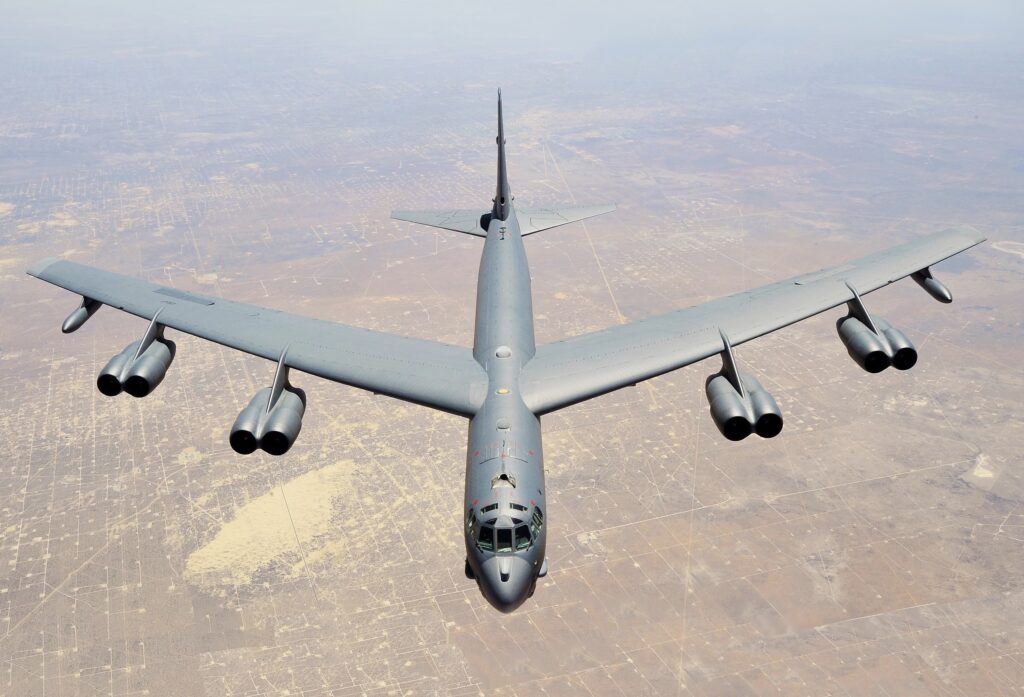
B-52 (File photo)
(c) Wikipedia

2) I shot an instrument approach during my “qual eval” and, while on the approach, I got about 3 knots below the target speed.  Over the intercom, I heard “you’re 3 slow”.  I looked at the IP sitting next to me and his lips weren’t moving.  I also didn’t recognize the voice.  So, I said “who’s talking?” and the response came “RADAR NAV”.  The Radar Navigator on the B-52 is located “downstairs”, on a lower deck below the cockpit, in a window-less area of the airplane.  I learned during the debrief that USAF Tech Order so-and-so requires that the Radar Nav verbally report any speed deviation on approach slower than 2 knots.  Good job Radar Nav!  (though what I was really thinking was “I KNOW I’m slow….I’m working it…YOU come up here and try to fly this thing!”)

3) On my flight, I lucked out and had about a 15-20 knot crosswind on landing.  The B-52 is unique in that crosswinds are handled by landing wings level in a “crab”…but the landing gear itself is aligned with the runway by a hydraulically powered system which rotates the landing gear…there’s a control on the aft portion of the center aisle stand where you set the angle/speed of the wind and the rest is automatic (see figure).  It worked like a champ!  Easiest crosswind landing ever.
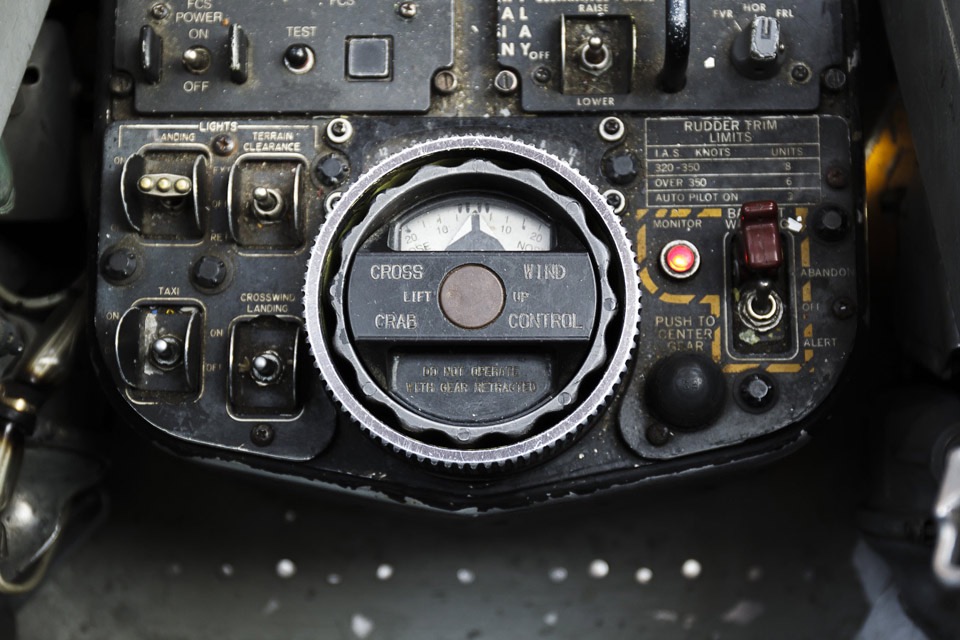
B-52 Crosswind landing gear control (stock photo)
(c) aopa.org

Filed Under: 26-50, INCOMPLETE, Large Jet

Cessna Citation X

January 23, 2025 by Bob Stoney Leave a Comment

Aircraft Information
> Aircraft Make: Cessna Model: 750. Nickname: Citation X
> Aircraft Mil Civ Description: Business Jet
> FAA Category and Class: Airplane Multi-engine land
> Engine Description: Twin jet

Aircraft Experience
> As of: 9/2/2021
> Number of Hours Flown: 8
> Number of Times Flown: 5
> Other Aircraft Models Associated: none

First Flown Information
> Sequence First Flown: 132
> Date First Flown: 10/29/2002
> Location First Flown: Mid-continent airport, Wichita, KS (KICT)
> Who and/or What Organization First Flown With: Cessna Flight Test

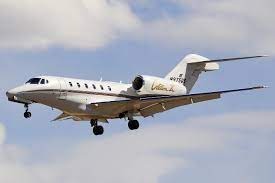
Recollections: When describing another Citation (the V), I made the statement “a Citation is a Citation”.  When one looks at the Citation X and its extremely complex and highly swept wing, it puts this statement to the test.  However, somehow, Cessna managed to design an airplane that–at the time–was the fastest production airplane (with a Max Mach of 0.92) that really flew and operated like all the straight-wind Cessnas that preceded it.  

The Citation 750 (“X”) stock photo
(c) Wikipedia

With two GIANT engines in pods near the tail, this airplane set the standard for speed and looks when it came out, and spurred a competition with Gulfstream to make “the fastest bizjet”.  

Even though I’m type-rated in the X, my experience level in the actual aircraft is low…consisting of a few avionics projects and production audits.

Filed Under: 126-150, Business Jet, Complete, Status

DeHavilland DHC-2/U-6 Beaver

January 10, 2025 by Bob Stoney Leave a Comment

Aircraft Information
> Aircraft Make: DeHavilland of Canada. Model: DHC-2 (Military: U-6). Nickname: Beaver
> Aircraft Mil Civ Description: Airplane SE Piston
> FAA Category and Class: airplane Single Engine Land
> Engine Description: Single Engine

Aircraft Experience
> As of: 11/4/2024
> Number of Hours Flown: 631
> Number of Times Flown: 368
> Other Aircraft Models Associated: U-6

First Flown Information
> Sequence First Flown: 22
> Date First Flown: 3/20/1986
> Location First Flown: NAS Patuxent River, MD (KNHK)
> Who and/or What Organization First Flown With: US Naval Test Pilot School, Baldwin

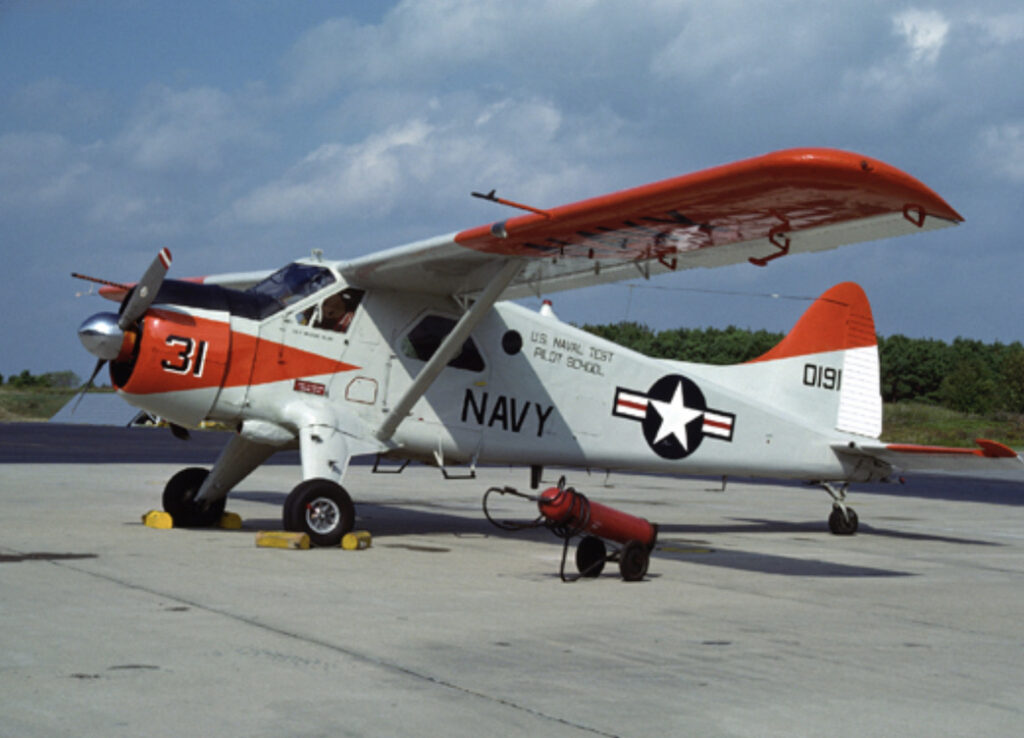
The original “Teakettle 31”, USNTPS U-6
(c) US Navy

Recollections: People often ask me “What’s your favorite aircraft?”  I usually answer with some variation of “Can’t pick just one”.  But, the short list ALWAYS includes the Beaver.  Why?  Because it’s a joy to fly but, beyond that, it is one of the best airplanes that the US Naval Test Pilot School (USNTPS) has in its curricula.  Period.  This statement often elicits skepticism.  I usually address this skepticism with the statement “The U-6 Beaver, as it’s used at TPS, is the perfect F-35 simulator.”  This generally confuses and/or adds to the skepticism.  I always go on to explain it this way:

     One of the missions of USNTPS is to begin to instill in its students “adaptability”.  The ability to adapt to new and foreign situations in the conduct of flight test.  Ultimately that’s what a tester does….adapts to a new aircraft, a new aerodynamic modification or engine, a new system installed in the aircraft.  They must PLAN for their test, CONDUCT the test, and REPORT on the test, all on something that may be very foreign to them.  They must adapt, and overcome–to one degree or another–that destabilizing feeling when you’re presented with something new or, to you, unusual.  The USNTPS curricula bakes this into their students by repetitive exposure to a huge variety of aircraft.  The students test plan, fly, and report on perhaps 20-25 different aircraft during the one year course.  And, perhaps the BEST at this role of teaching “adaptability” (at least for the Fixed Wing students) is the U-6 Beaver.  Think about it.  Most pilots and engineers/NFO’s come to USNTPS (even 30 years ago, and certainly today) without ever having flown a reciprocating-engined airplane.  Without operating an engine with 3 levers, just for one engine.  Certainly without ever having flown a tailwheel aircraft.  In that way, the “newness” of this admittedly 77 year old design is as foreign to a USNTPS student as the prototype F-35 was to the first cadre of its testers.  

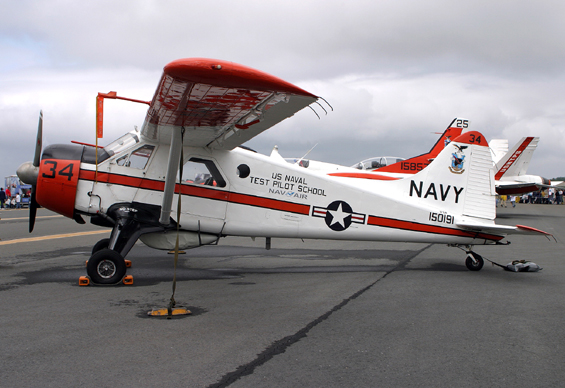
“Tester 34”, USNTPS U-6 (stock photo)
(c) US Navy

I always loved flying the Beaver, watching the students slowly learn how to fly it.  Thinking back on it, it’s amazing that the Navy let me do this because I wasn’t a “taildragger guy”.  It’s a testament to how forgiving the Beaver is and to the strength of the USNTPS Instructor checkout program.  

Flying the Beaver was also a lesson in variety.  My first flight in the Beaver (while a student) was with a Royal Navy helicopter pilot.  I flew it twice more as a student with an ex-Brit fighter pilot.  When I came back as an instructor, I was trained by Chris Wheal, Tom Russell, Jay Elliott, Mike Carriker and others.  I went on to fly it hundreds of times more, on Qual Eval 1 (the first chance for a student to evaluation how an airplane flies…it’s “handling qualities” and to communicate their perspective), Lateral-Directional intro and checkride flights (the U-6 has some interesting Lat-Dir characteristics) and on glider tow flights (the Beaver is a wonderful, if uneconomical, tow plane). 

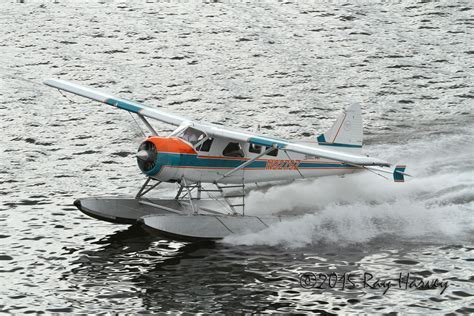
When my family asks me what I want for Christmas present, my answer is always “A DHC-2 Beaver on floats”.   I watch them fly by my house in the Seattle area almost daily and the sound is wonderful.  I’ve flown a Beaver on floats twice, both at the behest of the Navy.  USNTPS often hires a Beaver on floats for a Qual Eval (more of that “adaptability training”) and, in 1988, I flew one at Lake Tahoe to evaluate the idea of TPS buying their own set of floats and doing an exercise using our own floatplane (we already did our own float helicopter using an OH-58 equipped with floats).  I discovered that–as good as the Beaver is on wheels–it’s AMAZING on floats.  Almost bullet proof.  But, the CO decided against getting our own floatplane, concerned about currency and safety.  Rumor has it that TPS is modifying their U-1 to turbine power and purchasing floats.  Perhaps I’ll get recalled to be an instructor!

DHC-2 N9279Z (stock photo)
(c) Flickr.com

Filed Under: 1-25, Airplane SE Piston, Complete

Hawker Siddeley Nimrod MK-2P (MR2)

January 6, 2025 by Bob Stoney Leave a Comment

Aircraft Information
> Aircraft Make: Hawker Siddeley. Model: MK-2P Nickname: Nimrod
> Aircraft Mil Civ Description: Large Jet
> FAA Category and Class: Airplane Multi-engine Land
> Engine Description: Four engine jet

Aircraft Experience
> As of: 9/2/2021
> Number of Hours Flown: 6
> Number of Times Flown: 2
> Other Aircraft Models Associated: None

First Flown Information
> Sequence First Flown: 44
> Date First Flown: 5/11/1988
> Location First Flown: RAF Lossiemouth, Scotland
> Who and/or What Organization First Flown With: 120 Squadron

Recollections: I had the pleasure of flying the Nimrod as a staff monitor for a DT-II Graduation exercise at USNTPS.  In a classic “small world” situation, this particular assignment was with my squadron mate and first Navigator from P-3 days, Al Scott, so it was doubly fun. Al was the best Navigator and TACCO (and friend) a P-3 bubba could have. He saved my bacon on more than one occasion when we served in my first P-3 squadron together, including a time when we lost all navigation and depended solely on Al’s skill with celestial navigation (yes, the P-3 had a sextant–not like the ones on a sailing ship, our sextant fit thru a small port in the top of the fuselage and used mirrors to take readings of the stars’ position).

(Then Ensign, later CAPT) Al Scott, DT-II student
(c) Bob Stoney

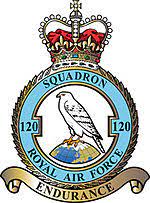
As a P-3 guy (which does the same mission for the US Navy as the Nimrod does for the RAF) I was fascinated to compare and contrast these two airplanes.  The Nimrod has a higher dash speed and the RAF guys always talked about how they could get “to datum” way faster than the relatively slow P-3…whereas the P-3 guys always criticized the Nimrod’s relatively limited endurance.  Flying the Nimrod, with the famous RAF 120 squadron was a treat, getting to see their professionalism and dedication to the mission–in that regard we were the same. 

Crest of RAF 120 Squadron
(c) Wikipedia

I liked the way the Nimrod handled and I was interested in the sonobuoys they carried…they were half-sized versions of what the P-3 carried and I’d never seen them before.  The other thing I learned during this time (besides how good Scotch tastes when sampled on the “Whiskey Trail”) was that, in an RAF squadron, a “back ender” could be in command of the airplane…be “the Captain”.  Very different from the US but, in the end, probably no effect as I assume the opinion of all would be carefully weighed and balanced in any emergent situation.

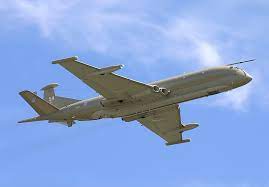
Nimrod MR2
(c) Wikipedia

Filed Under: 26-50, Large Jet

Learjet 40/45

January 6, 2025 by Bob Stoney Leave a Comment

Aircraft Information
> Aircraft Make: Learjet. Model: 40/45. Nickname: None
> Aircraft Mil Civ Description: Business Jet
> FAA Category and Class: Airplane Multi-engine Land
> Engine Description: Twin Jet

Aircraft Experience
> As of: 9/2/2021
> Number of Hours Flown: 6
> Number of Times Flown: 1
> Other Aircraft Models Associated: none

First Flown Information
> Sequence First Flown: 145
> Date First Flown: 5/4/2004
> Location First Flown: Wichita Mid-continent Airport (KICT)
> Who and/or What Organization First Flown With: Learjet Flight Test

Recollections: Only flew this one time as well.  In this case, though, the flight was a project flight, conducting Steep Approaches (5.5 deg ILS beam at the Blythe, CA airport…a test facility that I don’t believe exists anymore) to certify this airplane for use at the London City, UK airport.  

I have very little Learjet time, even though I was assigned to the FAA office in Wichita.  This is for a couple of reasons, including having a boss who loved flying the Learjet (so that cut down on my opportunities), co-workers who were senior to me (further reducing the chances), and the fact that Learjet had turned down its production and development efforts, shifting much to Bombardier in Canada.

But, I do know that Steep approaches can be challenging and so, the fact that I was able to fly this aircraft for the first time doing steep approaches means it must handle well!

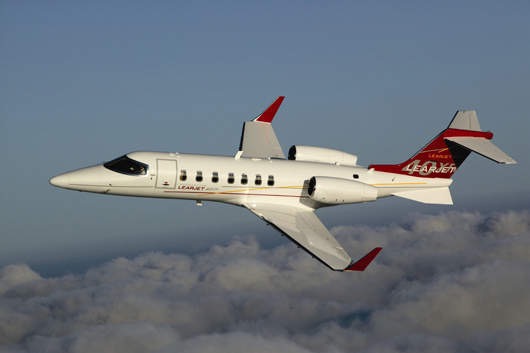
Learjet 40 (Stock photo)
(c) elitetraveler.com

Filed Under: 126-150, Business Jet

  • « Previous Page
  • 1
  • …
  • 13
  • 14
  • 15
  • 16
  • 17
  • 18
  • Next Page »

Recent Comments

  • Brian Paul on OV-1
  • Bob Stoney on Raytheon 390 Premier I

Contact Me.

Click Here.

Visitor Count

7796

Copyright © 2026 · Outreach Pro on Genesis Framework · WordPress · Log in